
- Best overall first Asia trip: Japan, for variety and easy travel on your own
- Best for a short city trip or K-culture: South Korea, based in Seoul
- Best if you can’t pick: both, joined by a Fukuoka–Busan ferry or 1-hour flight
- On a tight budget: price your actual route, not each country’s reputation
- Japan stay
- Up to 90 days visa-free for many
- Korea paperwork
- K-ETA waived to 31 Dec 2026 for many
- Tokyo–Osaka train
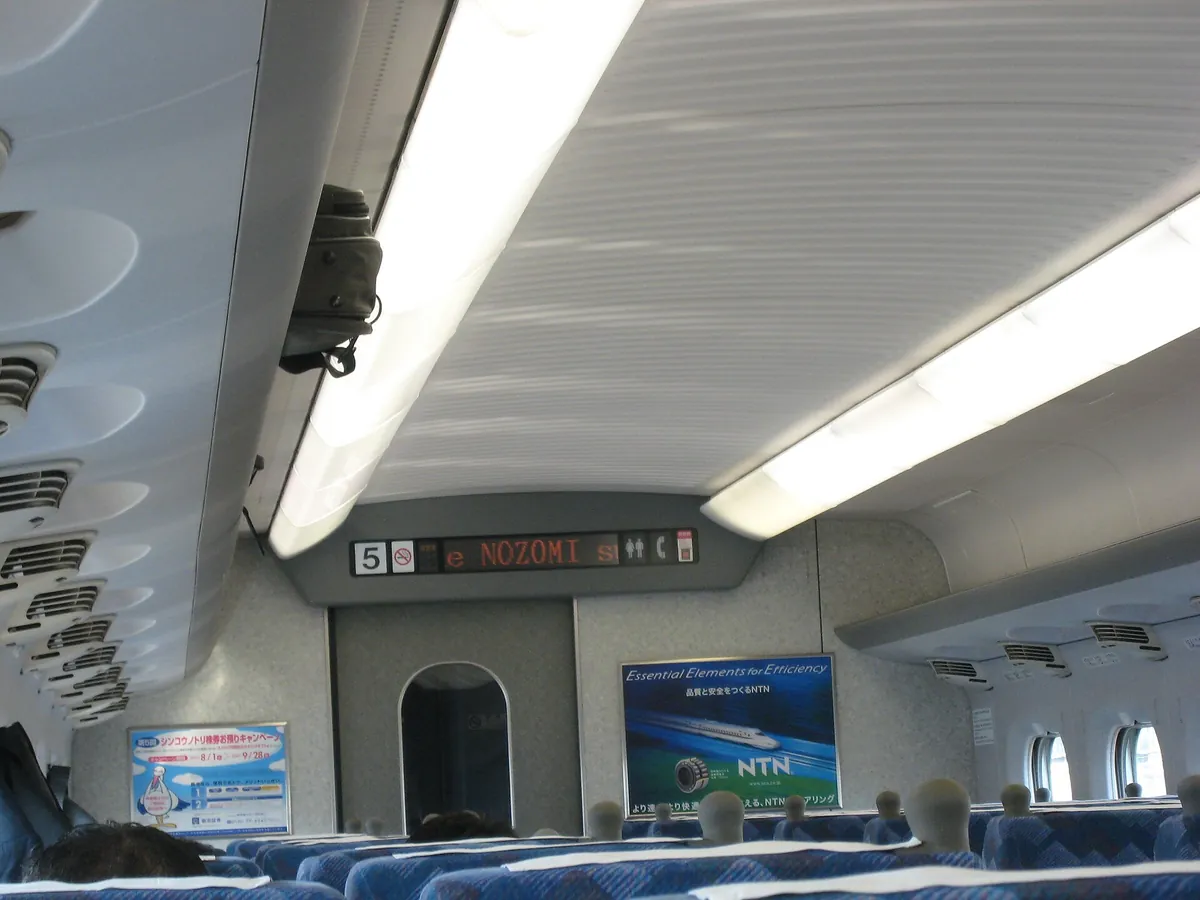
- Nozomi, 2 h 21 min
- Busan–Fukuoka
- About 1 h by air, or a ferry
- Transit card
- Suica: no deposit. T-money: cash only
- Prices checked
- October 2026
Top picks
Where we would book this
Booking.com
Largest inventory in Japan for English-speaking travellers
- Best for
- Hotels, business hotels, ryokan and apartments in every city
- Checked
- September 2026
Official site. Same price for you.
Where we would book this
Klook
One account for passes, tickets and transfers
- Best for
- JR Pass and regional rail passes, theme-park tickets, airport…
- Checked
- September 2026
Official site. Same price for you.
Two hours and 21 minutes on a Nozomi from Tokyo to Shin-Osaka, or about one hour in the air from Fukuoka to Busan. The two countries sit close together, yet a first trip to each feels different from the moment you land.
Here is our verdict for first-timers from the US, UK, Australia or Europe: pick Japan if you want the most variety and the easiest independent travel, and pick Korea for a shorter, city-focused trip or one built around K-culture. You can also do both by crossing between Fukuoka and Busan.
We compared the parts you can check on official pages: entry paperwork, trains, transit cards, map apps, taxes and the sea crossing. Japan budget detail lives in our Japan trip cost guide, so this page sticks to the differences.
Prices are fares and fees checked in October 2026; confirm on the official site before you book.
Five Questions That Decide Japan or South Korea for You
Forget the “which country is better” debate. A first Asia trip goes well when the country fits your days, your patience with apps and cards, and what you came to see.
Five things separate the two.
Trip length comes first. Japan’s classic sights run along one long rail line from Tokyo through Kyoto and Osaka to Hakata. A Korea trip can stay mostly in Seoul with one train ride out. That is our judgement, not a rule, but it shapes everything else.
Paperwork is second. Japan needs no visa for many short-stay tourists, and its online arrival form is optional. Korea has a travel authorization, K-ETA, that many nationalities can skip until 31 December 2026.
Third, getting around without the language. In Japan, a no-deposit Welcome Suica and, in our view, Google Maps cover most of it. Korea’s official transport guide sends visitors to Naver Map or KakaoMap, and you pay for its T-money card in cash.
Fourth, your interests. Temples, gardens, hot-spring towns and long scenic train rides point to Japan. A dense, late-night city with shopping, food streets and K-pop or K-drama locations points to Korea.
Fifth, where the budget bites. Long-distance rail is the big line in Japan; a reserved Nozomi seat from Tokyo to Shin-Osaka is ¥14,520 one way on smartEX. Our official Korean price checks were thinner, as the cost section explains.
- I want several regions, not one city
- I’d like to use Google Maps for everything
- I’d rather not carry much cash
- Temples, gardens and hot springs top my list
- K-pop, K-drama or Seoul nightlife is why I’m going
- I have a week or less
- I’d like to see both countries on one trip
Most of your ticks in the first four? Choose Japan. Mostly the fifth and sixth means Korea, and if you ticked the last one, the Fukuoka–Busan section below is for you.
Paperwork Before You Fly: Visit Japan Web vs K-ETA and e-Arrival
Neither country makes entry hard for most Western passports. The forms are different, though, and Korea’s exemption has an end date. Check your own nationality on the official pages below before you book flights.
Japan: no visa for many, and an optional online form
JNTO says many nationalities do not need a visa for tourism stays of 90 days or less, and some are granted 15, 30 or 180 days instead. UK citizens get up to 90 days, and the UK government says your passport only needs to be valid for the length of your stay.
Visit Japan Web is the online form for arrival. JNTO’s visa page says registration is not required, but registering in advance makes things like tax-free shopping more convenient.
Fill it in anyway.
There’s also one cost you won’t see at the airport. Japan’s international tourist tax rose from ¥1,000 to ¥3,000 on 1 July 2026. It is included in your air ticket, so there is nothing to pay at the counter.
South Korea: K-ETA exemption until 31 December 2026
Korea uses an electronic travel authorization called K-ETA. Korea’s foreign ministry says travellers from exempt countries, including the USA, don’t need one from 1 January to 31 December 2026. The UK government says the same for British citizens.
You can still apply for a K-ETA if you want one. It costs ₩10,000 (about US$7–8) on the official K-ETA site, processing generally takes up to 72 hours, and holders don’t have to submit an arrival card.
Without a K-ETA, expect an arrival card. The e-Arrival card is the online version: it’s free, and you can send it from 3 days before you land.
British travellers also need an onward or return ticket, according to the UK government’s Korea entry page. Keep it on your phone.
The K-ETA exemption runs until 31 December 2026. Flying in 2027? Check k-eta.go.kr before you book, because next year’s rules were not confirmed when we checked.
That date matters for anyone booking now.
Shinkansen and Suica vs KTX and T-money: Getting Around
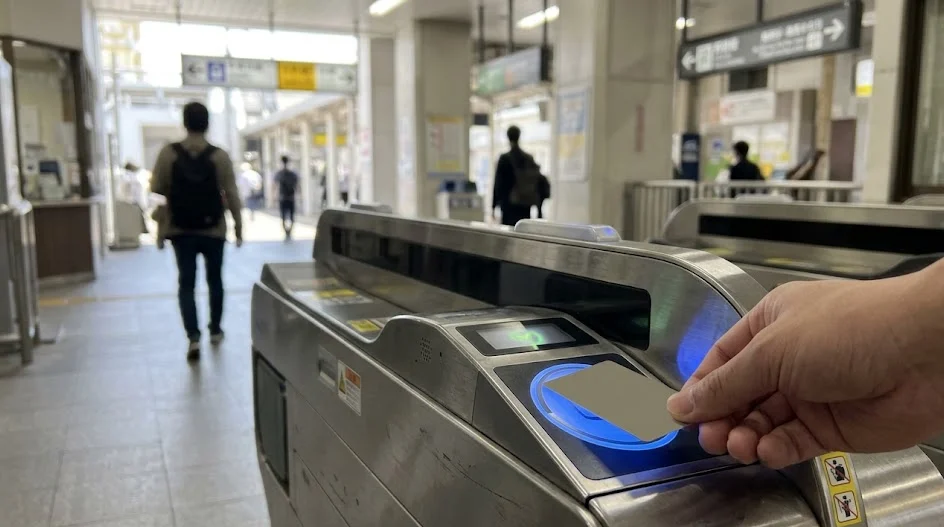
Transport is where the two countries feel most different on day one. Japan lets you tap a phone or a no-deposit card almost everywhere. Korea works smoothly too, once you have won in your pocket and the right map app.
Japan: frequent Nozomi trains and a no-deposit Suica
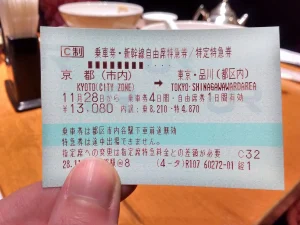
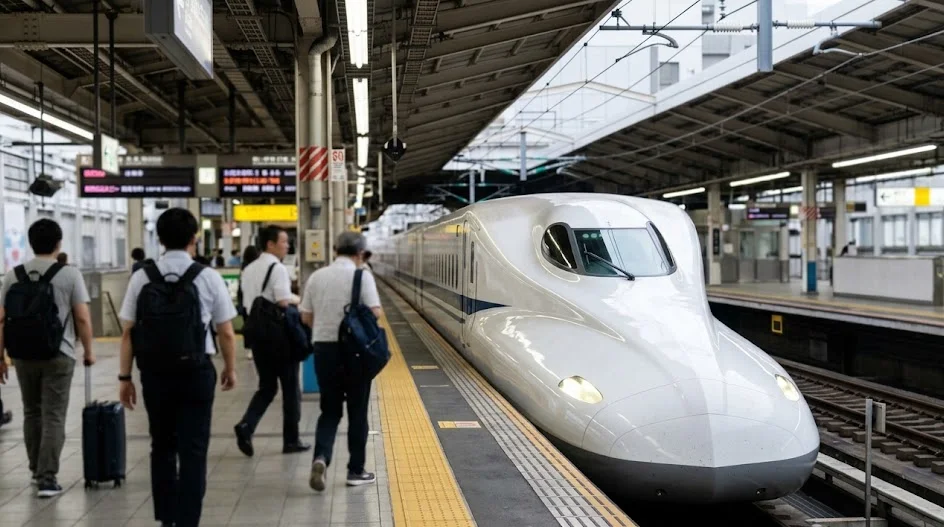
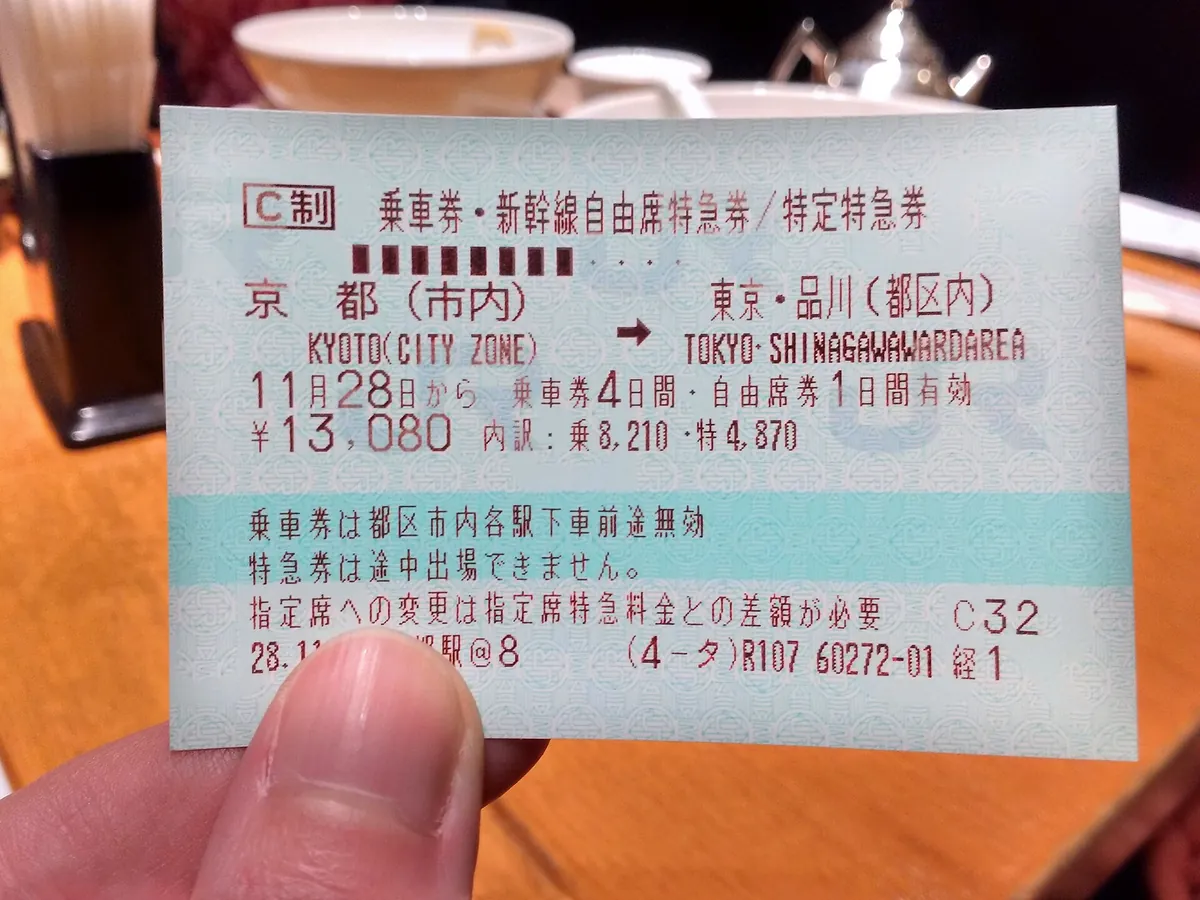
JR Central lists the Nozomi from Tokyo to Shin-Osaka at 2 hours 21 minutes, with trains every few minutes at peak times. On smartEX, an adult reserved Nozomi seat in regular season is ¥13,970 from Tokyo to Kyoto and ¥14,520 to Shin-Osaka, one way.
Those fares come from the smartEX fare table dated 1 April 2025, still the current table in October 2026.
Fares move by ¥200 in off-peak and peak seasons (+¥400 at super peak). Trips that cross from one Shinkansen line to another move by ¥400 (+¥800 at super peak).
For city trains, Japan’s IC cards work nationwide. JNTO says Welcome Suica and TOURIST PASMO need no deposit, while standard cards carry a ¥500 one. A Tokyo Metro ride starts at ¥178 by IC card or ¥180 on a paper ticket, and a 24-hour ticket is ¥700.
In our judgement, Google Maps handles most train routing in Japan, and our train apps guide compares it with the alternatives. Not sure which IC card to get? Our Suica vs Pasmo vs Icoca guide sorts it out quickly.
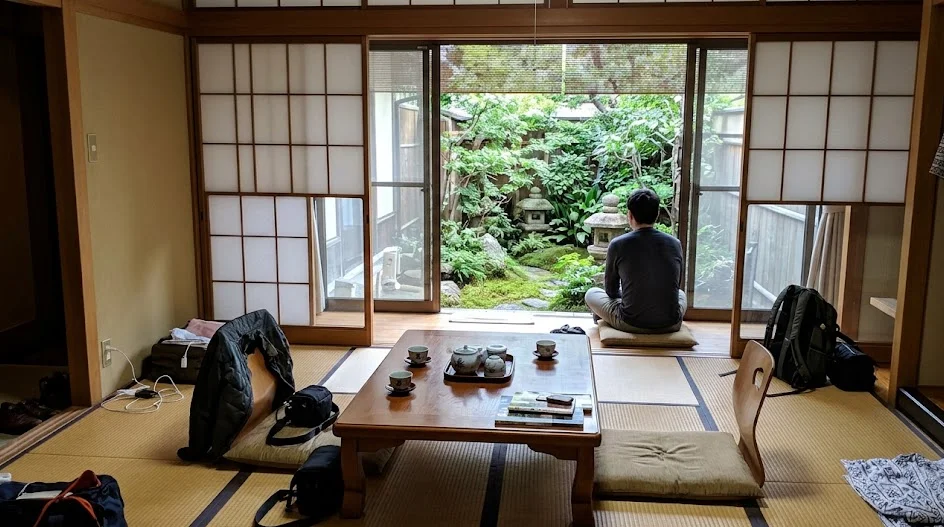
Korea: KTX at 330 km/h and a T-money card paid in cash
KTX is Korea’s high-speed train, with a top speed of 330 km/h according to VisitKorea. We could not confirm the Seoul–Busan fare or journey time on an official page, so check both on KORAIL’s site.
The KORAIL PASS comes in 2, 3, 4 and 5-day versions, used within 10 days, with up to two seat reservations a day. The VisitKorea rail page says it is not valid on SRT trains or the subway. A KORAIL PASS+ adds transport-card use for an extra ₩8,000.
City travel runs on T-money. Korea’s official transport guide says you can only buy and top up T-money with cash, and foreign credit cards aren’t accepted. Subway and bus readers don’t take foreign cards either.
So get won early.
A Seoul-area subway ride starts at ₩1,550 with a transport card or ₩1,650 on a single-journey card. For directions, VisitKorea recommends Naver Maps (English, Chinese and Japanese), and KakaoMap has English too.
Two more things worth saving, both listed on VisitKorea’s travel apps page: the 1330 Korea Travel Helpline (+82-2-1330) and the Papago translator.
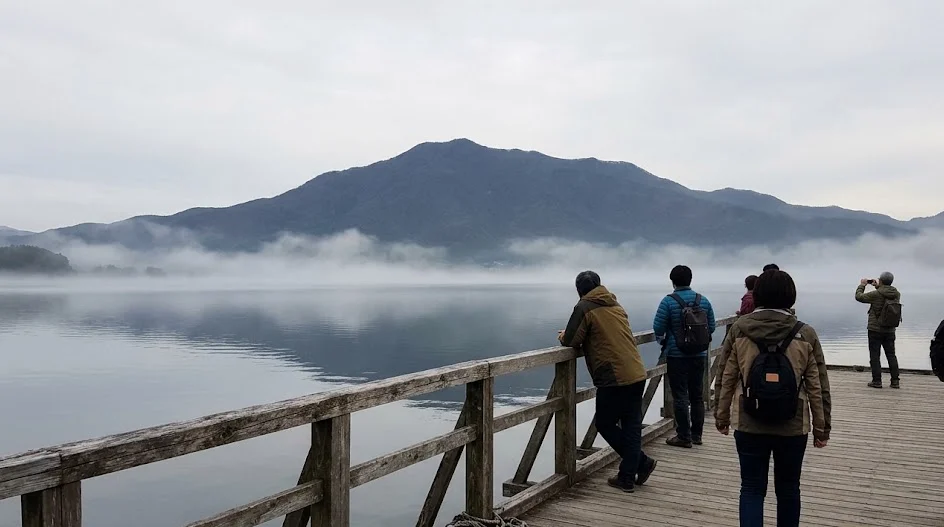
Where Japan and Korea Costs Really Differ
You’ll read that Korea is cheaper. Maybe it will be for your trip. We found no official numbers that prove it across the board, so this section sticks to costs we could check, as of October 2026; confirm them on each official site.
Rail fares: the JR Pass and the KORAIL PASS
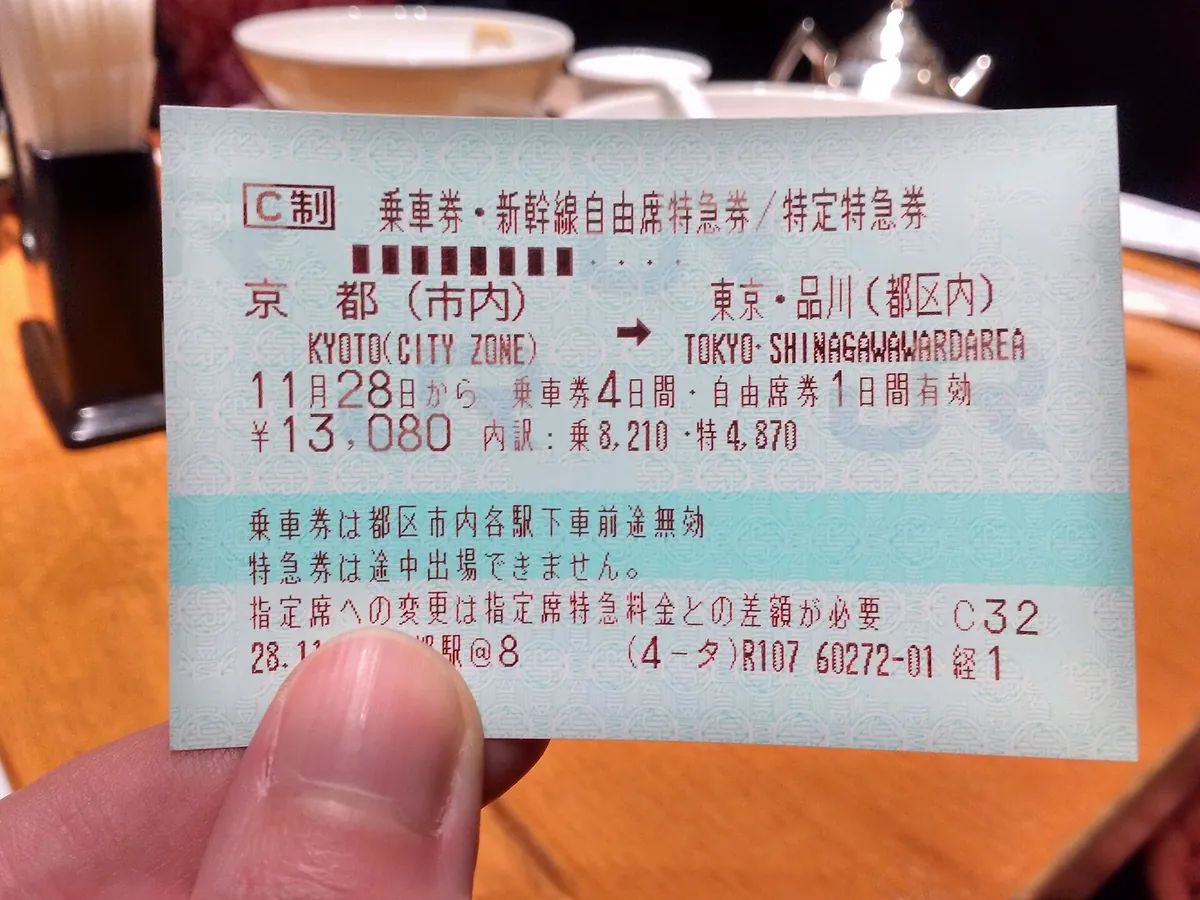
Long-distance trains are the cost to plan around in Japan. A Tokyo–Shin-Osaka round trip by Nozomi is ¥29,040 on smartEX (two ¥14,520 fares), and going on from Shin-Osaka to Hakata adds ¥15,820 each way.
Riding straight through? A single Tokyo–Hakata Nozomi ticket on smartEX is ¥23,610 in regular season, far below the ¥30,340 you’d pay for the two legs bought separately.
When we checked, the official Japan Rail Pass price page listed ¥50,000 for 7 days, ¥80,000 for 14 and ¥100,000 for 21 days online, and more through overseas agencies. JNTO notes the pass does not cover the Nozomi.
Whether the pass pays off depends on your route, so add up the individual fares first. Klook also sells rail passes; compare its price with the official site.
For Korea, we could not verify KORAIL PASS prices. The VisitKorea rail page explains how the pass works; check the price on KORAIL’s official site before you build a budget around it.
Taxes: Japan’s new tax-free refunds and departure tax
From 1 November 2026, Japan’s tax-free shopping becomes a refund system. JNTO says you pay the full tax-inclusive price in the shop, on purchases of ¥5,000 or more (before tax) per shop per day.
Customs then checks the goods when you leave, within 90 days of purchase and before you check in your luggage. JNTO’s tax-free guide has the full process.
Korea has tax refunds too, but the limits we found came from blogs only. Ask in the shop.
On the Japan side, remember the ¥3,000 departure tax as well.
Food for a first-timer who doesn’t speak the language
We found no official meal prices for Korea, so we won’t guess a number. For Japan, our food budget guide breaks meals down by type.
The real food difference for a first-timer is how you order and pay. In Korea, VisitKorea lists the Papago translator, which helps at counters where you and the staff share no language.
In Japan, bring cash for smaller places. JNTO says Visa, JCB and Mastercard are the most widely accepted at shops that take overseas cards, but some places still take only cash, even hotels.
Don’t let food alone decide this trip.
Japan vs South Korea Side by Side: The First 48 Hours

This table shows what a first-timer runs into in the first two days in each country. Every fact comes from official pages checked in October 2026, and fares are one adult, one way.
← Swipe to see the full table →
| What you compare | Japan | South Korea |
|---|---|---|
| Entry form | Visit Japan Web, optional | K-ETA optional to 31 Dec 2026, or arrival card |
| Visa-free stay (UK) | Up to 90 days | Up to 90 days |
| Transit card | Welcome Suica, no deposit | T-money, cash only |
| Foreign card at gates | Use an IC card | Not accepted; use T-money |
| Map app | Google Maps (our pick) | Naver Map or KakaoMap |
| Base city fare | Tokyo Metro ¥178 by IC | Seoul area ₩1,550 by card |
| Fast train | Nozomi Tokyo–Shin-Osaka 2 h 21 min | KTX, up to 330 km/h |
| Rail pass | JR Pass ¥50,000 / 7 days online | KORAIL PASS, check official price |
| Tax-free | Refund system from 1 Nov 2026 | Ask in the shop |
| Departure tax | ¥3,000, in the ticket | Not checked |
Plan your trip: the tools we use

Our pick: Japan for a first trip across several cities; Korea for a week in Seoul if you don’t mind carrying cash.
Two rows decide most trips. If paying for transit in cash sounds stressful, Japan’s no-deposit Suica is the easier start. If one city is enough, Korea’s short trains and simple subway fares keep things easy.
What about hotels? Prices depend heavily on your dates in both countries, so compare Tokyo and Seoul for the same nights on Booking.com or Agoda before you decide.
Partner link.
Doing Both: The Fukuoka–Busan Crossing, Costed
If the checklist pulled you both ways, you don’t have to choose. Fukuoka’s tourism site lists Busan about 1 hour away by air, and the Camellia Line runs a ferry between Hakata and Busan.
Flight: about 1 hour from Fukuoka to Busan
Speed is the flight’s main advantage, and you aren’t tied to the ferry’s fixed sailing times. We did not check flight prices, so compare them for your dates.
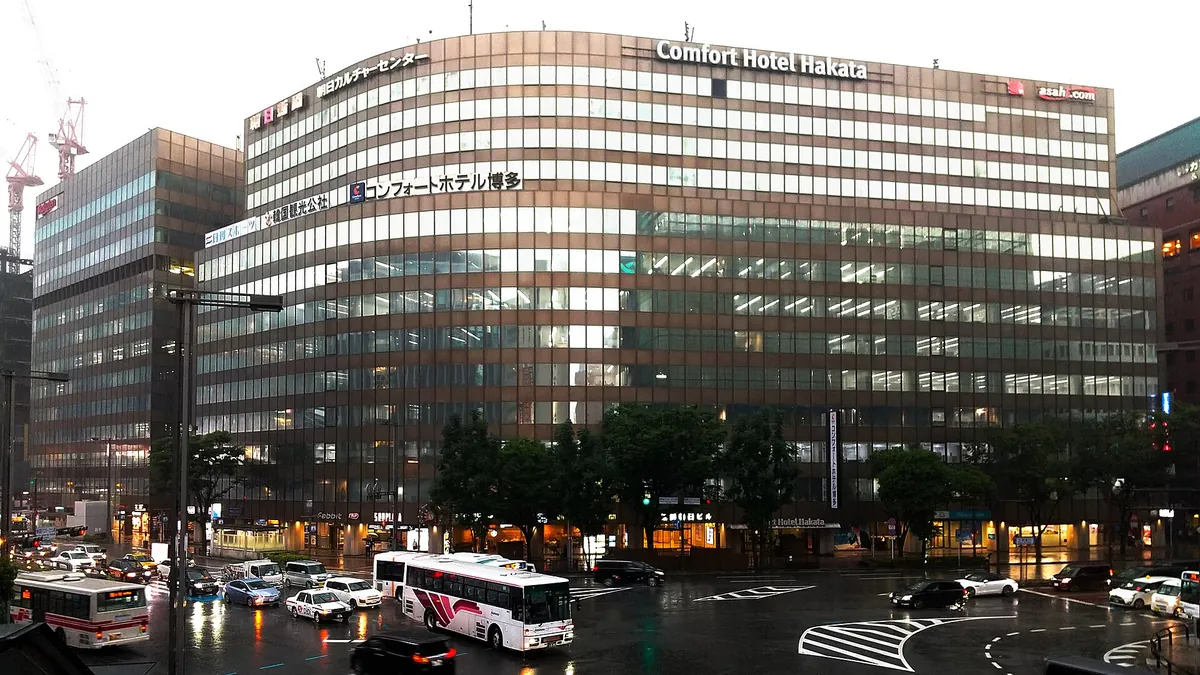
Fukuoka also makes an easy last stop in Japan. Our Fukuoka first-timer guide covers where to stay near Hakata before you cross.
Camellia Line ferry: about ¥19,900 from Hakata, one way
The Camellia Line fare page lists second class at ¥15,000 one way from 1 October 2026. From Hakata, add a ¥1,400 fuel surcharge, the ¥3,000 tourist tax and a ¥500 terminal fee.
That makes about ¥19,900 per adult from Hakata to Busan, our estimate from the operator’s own numbers. The ferry leaves Hakata at 12:30 and reaches Busan at 18:30.
The other direction is the clever one. It leaves Busan at 22:30 and arrives in Hakata at 7:30 the next morning, so the crossing replaces a hotel night. From Busan, the fare page lists a ₩14,000 fuel surcharge, a ₩6,000 port fee and a ₩1,000 tourism fund.
There is usually one sailing a day each way, and the operator warns of irregular suspensions. On some Saturdays (28 Nov, 5 and 19 Dec 2026; 13 and 20 Feb, 6 and 13 Mar 2027) the Hakata sailing runs overnight instead: board by 20:00, arrive about 7:30.
Check the schedule for your date on Camellia Line’s reservation page before you book, and keep the flight as your backup.
A route idea for a two-country first trip
Here’s how we’d sketch it. It’s an idea, not a tested plan: land in Tokyo, take the Shinkansen west, cross from Hakata to Busan, take the KTX to Seoul and fly home from Incheon.
- Tokyo Station
- Nozomi · 2 h 21 min · ¥14,520 on smartEX
- Shin-Osaka
- Shinkansen west · ¥15,820 on smartEX
- Hakata
- Camellia Line, usually 12:30–18:30, or about 1 h by air
- Busan
- KTX north · check fare and time with KORAIL
- Seoul
- To the airport · fly home
- Incheon Airport
The key booking is your flights: fly into Tokyo and out of Incheon so you never backtrack. Skipping the Osaka stop? The ¥23,610 Tokyo–Hakata through ticket beats the two legs above. Hotels for each stop can go on Booking.com or Agoda once the crossing date is fixed.
Fix the ferry or flight first.
Your First 48 Hours in Japan or Korea, Step by Step
The first two days set the tone. Most of the hassle comes from forms, cards and phone data, and you can sort nearly all of it before you leave home or within an hour of landing.
Step 1: Send Visit Japan Web or the e-Arrival card
Visit Japan Web is optional but makes tax-free shopping easier. Korea’s e-Arrival card is free and opens 3 days before arrival; K-ETA holders skip it.
Step 2: Get the transit card that fits the country
In Japan, a Welcome Suica needs no deposit. In Korea, buy and top up T-money with cash, since foreign cards are not accepted.
Step 3: Install the map app that works there
For Japan, we’d use Google Maps; our train apps guide compares the options. For Korea, Naver Map or KakaoMap, the two apps the official transport guide points to.
Step 4: Carry some cash
Some places in Japan take only cash, even hotels. In Korea, you need won for T-money top-ups.
Step 5: Set up an eSIM before you fly
Your map app and translator both need data. Airalo and Ubigi sell eSIMs; install one at home on Wi-Fi.
Need help comparing eSIMs? Airalo and Ubigi list their country plans on their own sites, so check that yours covers the right country before you pay.
Tips from the official pages
What most first-timers do
- Expect a credit card to work on the Seoul subway
- Buy a JR Pass before adding up the fares
- Trust the ferry fare in an old pamphlet
- Plan a 2027 Korea trip on 2026 rules
What actually works
- Carry won for T-money top-ups
- Price the route on smartEX first
- Use the Camellia Line fare page
- Check k-eta.go.kr for 2027
That pamphlet point is easy to miss. The Camellia Line’s English pamphlet still shows an older, lower fare than its fare page, which changed on 1 October 2026. Use the pamphlet only for sailing times.
- Save the 1330 Korea Travel Helpline before you land in Korea
- Keep Japan tax-free goods in your hand luggage until customs sees them
- Switch to Naver Map before you need directions in Korea
- Book airport transfers on Klook or GetYourGuide only once your flights are fixed
Small habits, big difference.
How We Chose, and Who Each Country Suits
What we checked and what we couldn’t
We compared the two countries on paperwork, transport, map apps, rail fares, taxes and the sea crossing. Every number here comes from official pages checked in October 2026.
Those pages include JNTO, the UK government, Korea’s foreign ministry, the K-ETA and e-Arrival sites, JR Central, smartEX and the Japan Rail Pass site. We also used Tokyo Metro, VisitKorea, Incheon city, Go Fukuoka and Camellia Line.
We could not verify KORAIL PASS prices, the KTX Seoul–Busan fare and time, or K-ETA rules for 2027. Korean hotel and food prices, Korea’s tax refund limits and the Tokyo–Seoul flight time were also out of reach, so none appear here as facts.
Who each country is for
- Time for several cities and a wish for variety: Japan
- Prefer one familiar map app and a no-deposit card: Japan
- A week or less, mainly one city: Korea, based in Seoul
- K-pop, K-drama, food streets and shopping: Korea
- Can’t decide and have a flexible route: both, via Fukuoka–Busan
Going with Japan? Our first time in Japan guide covers the basics after you book.
Our final pick: for most first Asia trips, start with Japan, and add Busan and Seoul by ferry or flight if you have the time.
FAQ
QIs South Korea cheaper than Japan?
It depends on your route, and we found no official figures showing either country is cheaper overall. Japan’s biggest cost is long-distance rail, so price your Shinkansen legs on smartEX and compare hotels for the same dates in both.
QDo I need a K-ETA in 2027?
Exempt countries, including the USA and the UK, are exempt until 31 December 2026. The rules for 2027 were not confirmed when we checked, so look at k-eta.go.kr before you book a 2027 trip.
QCan I use Google Maps in Korea?
Korea’s official transport guide points visitors to Naver Maps and KakaoMap for route searches, and VisitKorea recommends Naver Maps. Install one of them before you arrive.
QIs the JR Pass or the KORAIL PASS worth it?
Whether either pass pays off depends on your route. Add up the individual fares first. The JR Pass does not cover the Nozomi, and the KORAIL PASS is not valid on SRT trains or the subway.
QCan I do both countries in two weeks?
In our view, yes, if you keep to a few bases and cross once. The Tokyo–Hakata–Busan–Seoul line above avoids backtracking, and the overnight ferry from Busan saves a hotel night if you travel the other way.
QDoes the November 2026 tax-free change affect me?
Yes, if you shop in Japan from 1 November 2026. You pay the full price, then get the refund after customs checks your goods when you leave, within 90 days of purchase.
Choosing your first Asia trip between two countries this close can feel like a decision you’ll get wrong.
Instead of re-reading one more comparison blog, decide on the country and your flights tonight, and adjust everything else later.
Keep planning
- ① Install and test your eSIM before take-offAiralo and Ubigi eSIMs activate on arrival, but the install itself needs Wi-Fi. Do it at home and confirm the profile shows up in your phone settings.
- ② Save your first hotel’s address in JapaneseTaxi drivers and station staff read Japanese addresses far faster than romanised ones. Copy it from the booking confirmation into your notes app.
- ③ Set aside cash for day oneMany small restaurants, temples and rural buses are still cash-only. Airport ATMs at 7-Eleven and the post office accept most foreign cards.
Skip these and your first hour in Japan goes on finding Wi-Fi at the station instead of getting to your hotel.
🔍 How to sanity-check any price you read online
Blogs (including this one) go out of date. The official page always wins over a screenshot from two years ago.
Cover Photo: Marek Ślusarczyk (Tupungato) Photo portfolio, CC BY 3.0, via Wikimedia Commons