
- Yes for most trips, with two specific risks that official advice names
- Risk 1: touching and upskirting on crowded commuter trains
- Risk 2: drink spiking and card fraud in nightlife districts
- Both have simple fixes: women-only cars, no touts, eyes on your drink
You will read it in many Japan guides: the country is so safe that a woman travelling alone can switch off completely. The UK government’s travel advice does not say that. It asks visitors to take “the same precautions you would at home”, and it names two risks that fall mostly on women.
So here is the verdict. Yes, Japan works well for a solo woman, as long as you plan for packed rush-hour trains, where touching and upskirting are reported, and for nightlife-district bars, where drink spiking and card fraud are reported. Both are easy to plan around.
This page covers only that women-specific layer. For earthquakes, heat, everyday scams and the general picture, read our honest verdict on whether Japan is safe for tourists.
- Main risk 1
- Groping on rush-hour trains
- Main risk 2
- Drink spiking in nightlife areas
- Emergency
- 110 police, 119 ambulance
- Tourist hotline
- 050-3816-2787, 24 hours
- Women-only cars
- Mostly weekday mornings, voluntary
- Checked
- October 2026
Rules, hours and phone numbers checked in October 2026; confirm on the official page before you travel.
Safe for a Woman Alone? The Short Answer and the 2 Caveats
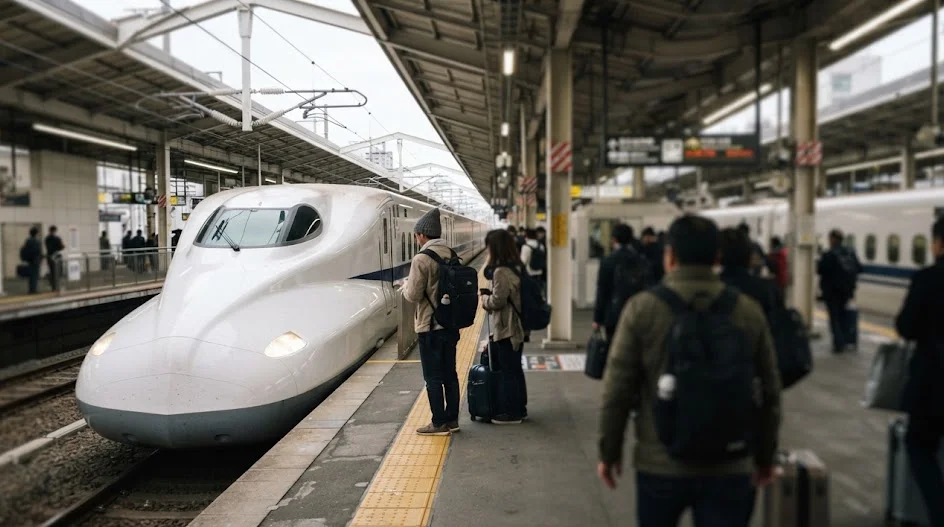
“Safe” means something specific when a woman travels alone. It usually comes down to three questions. Can I walk back to my room at night? Will someone bother me on the train? And who helps, in English, if something goes wrong?
The UK Foreign, Commonwealth and Development Office (FCDO) keeps one of the most detailed English pages on this, its Japan safety and security advice. On sexual crime it is plain: “Rape and sexual assault are rare but can happen.”
Rare is not never. That is the honest caveat.
The same page adds a legal point worth knowing before you go, so it does not catch you off guard later: “Japanese law puts a high burden of proof on victims to demonstrate sexual relations were not consensual.” That is one reason the support lines further down this page matter.
The two everyday risks the FCDO describes are narrower. One is inappropriate behaviour on commuter trains. The other is drink spiking and credit card fraud in entertainment districts. Neither needs you to change where you go, only how and when.
- Walking, eating and sightseeing alone: the same care you take at home
- Rush-hour trains: ride outside the peak or use a women-only car
- Nightlife bars: pick them yourself and never leave a drink
- Help in English: 110, #9110 in Tokyo and the JNTO hotline
Earthquakes, typhoons and summer heat affect every visitor in the same way, so we keep them to one short section here. Our general safety verdict goes into them properly.
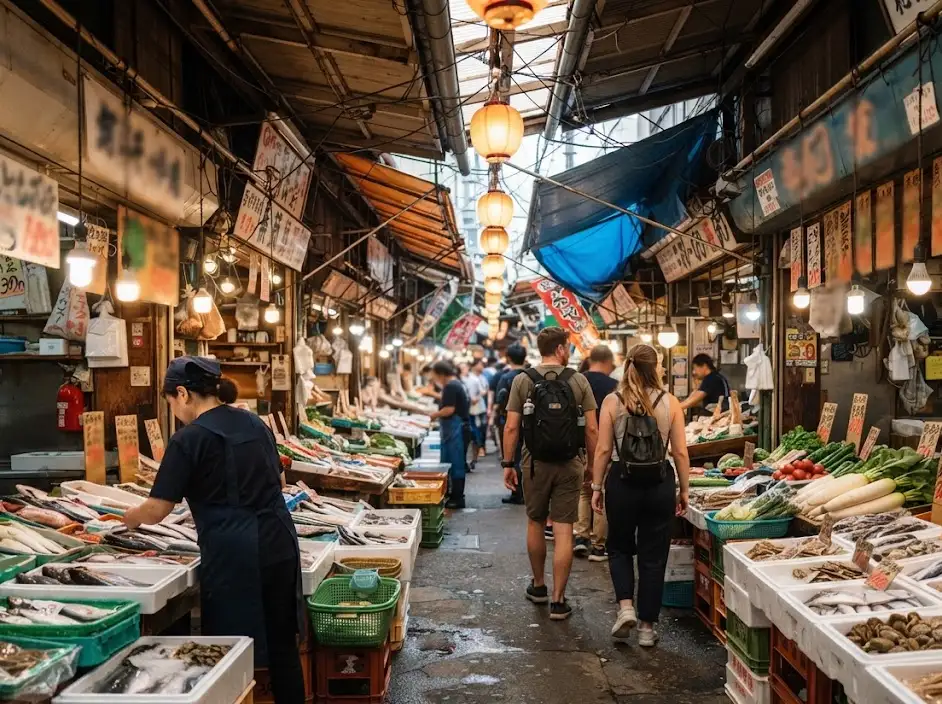
5 Risks for Women Travelling Alone in Japan
These are the five risks the official pages name, described in their own wording rather than invented numbers. No source ranks them by likelihood, and no reliable figure exists for tourists specifically, so you will not find one here.
1. Rush-hour trains: touching and upskirting
The FCDO says it directly: “Female passengers travelling on commuter trains have experienced inappropriate behaviour.” It means touching, and upskirting, which is taking photos or videos from below while a woman walks or stands nearby.
Japanese even has a word for train groping: chikan. The risk sits on packed commuter trains, so the weekday morning rush is the time to plan around, either by riding later or by using a women-only car.
What should you do if it happens? Police advice, as the FCDO reports it, is to shout at the person to draw attention and ask a fellow passenger to call train or station staff. You can also dial 110, which Tokyo police say to use for any crime.
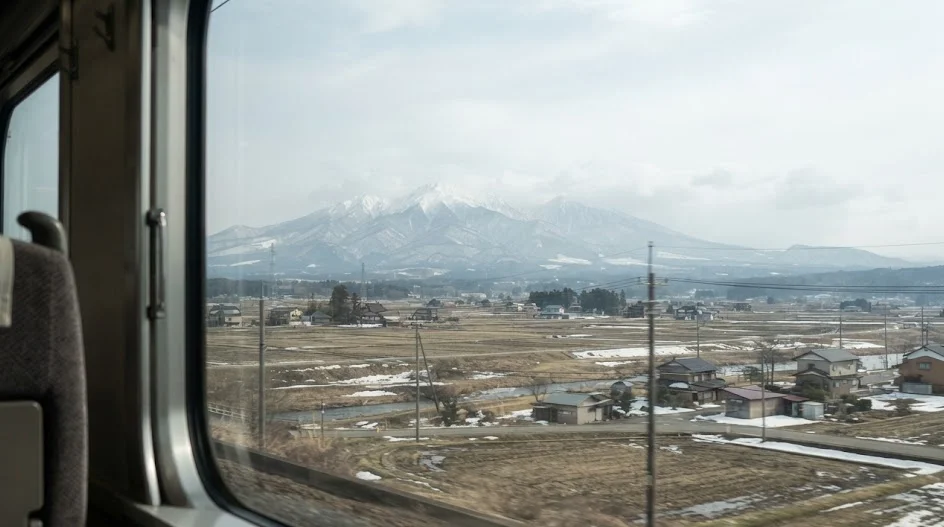
Shout first. Then get staff.
2. Drink spiking and card fraud in nightlife districts
This is the risk with the worst outcome. The FCDO notes “increased reports of drink spiking and credit card fraud”, with victims waking up with no memory of what happened and large amounts billed to their card.
According to the same page, risks are higher in all entertainment and nightlife districts across Japan. In Tokyo, the Japanese police have named four high-risk zones: Kabukicho, Roppongi, Shibuya and Ikebukuro. Osaka and Kyoto have nightlife districts too, so the rule travels with you.
The FCDO’s fix is simple: do not leave drinks unattended, or ask a trusted friend to keep an eye on your unfinished drink. Travelling alone, that means finishing it or leaving it before you go to the restroom.
3. Street touts who lead you to a bar
Tokyo’s Metropolitan Police Department warns in its safety tips for visitors that street touts and rip-offs aimed at foreigners are on the rise. Some lure people to partner bars, then charge huge fees or use their card while they are drunk.
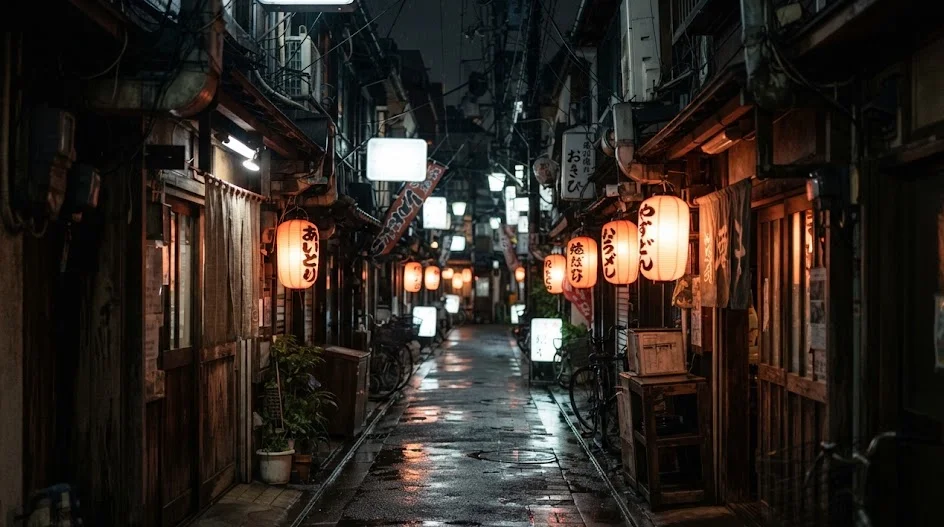
Its advice has no exceptions: “Do not follow street touts under any circumstance.” A friendly invitation on the pavement in Kabukicho or Roppongi is exactly the pattern police describe.
Choose the bar first, then walk to it.
4. Bag theft on trains
Theft is not a women-only risk, but a solo traveller has nobody watching her bag. Tokyo police suggest keeping belongings close, using bags with zips and carrying a backpack in front of you on trains.
If something is stolen or lost, the same police page points you to the nearest koban, the small police box you see near many stations. It is also a good place to ask for directions late at night.
5. Earthquakes, typhoons and heat
Natural hazards affect everyone the same way, so one paragraph is enough here. Install the Japan Tourism Agency’s Safety Tips app, which pushes alerts about earthquake early warnings, tsunami warnings and other weather warnings in 15 languages. The rest is in our general safety guide.
← Swipe to see the full table →
| Risk | What official sources say | What to do |
|---|---|---|
| Groping or upskirting on trains | Reported on commuter trains (FCDO) | Avoid the rush; women-only car; shout |
| Drink spiking, card fraud | Increased reports (FCDO) | Never leave a drink unattended |
| Touts leading to rip-off bars | On the rise in Tokyo (police) | Never follow one |
| Bag theft on trains | Police advise zipped bags (Tokyo police) | Zipped bag, backpack in front |
| Earthquake, typhoon, heat | Same for every visitor | Safety Tips app |
| Sexual assault | Rare but can happen (FCDO) | 110, then a support line |
Plan your trip: the tools we use
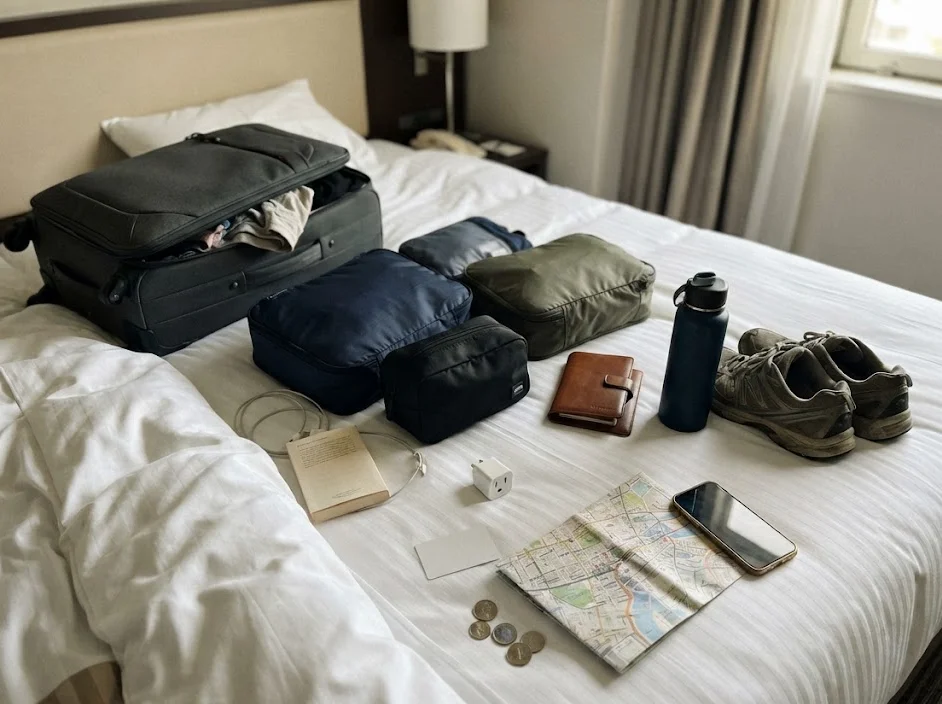
Our pick: if you change only one habit, make it the drink rule, because it guards against the worst outcome on this list.
Women-Only Cars at 4 Rail Companies: Which Car and Which Hours
Osaka Metro, Kintetsu, Odakyu and Toei set aside one car for women at busy times. The table below uses only what each operator publishes on its own English page, as of October 2026. Blog lists often show more lines and exact minutes; we left out everything we could not confirm with the operator.
← Swipe to see the full table →
| Line | When (weekdays) | Which car |
|---|---|---|
| Osaka Metro Midosuji Line | All trains, all day, Mon–Fri | Marked on the platform |
| Osaka Metro Tanimachi Line | First train until 9:00 | Marked on the platform |
| Kintetsu Nara Line, Nara to Osaka-Namba | First train to arrivals by 9:30 | Car 10 of rapid express trains |
| Odakyu, toward Shinjuku | 10-car express-type trains arriving 7:30–9:30 | Car 1, the last car toward Shinjuku |
| Toei Shinjuku and Oedo Lines | Morning rush hours | Labelled on windows and platform |
On Odakyu, the rule covers 10-car Rapid Express, commuter express and express trains heading for Shinjuku. Hours and cars can change, so check the operator’s page before a weekday morning ride.
Two rules hold across these operators. First, the cars are voluntary, not law. Osaka Metro says they “operate on voluntary basis”: not mandatory, but passengers are encouraged to respect their purpose.
Second, some others may board too. Each company words it a little differently:
- Osaka Metro: elementary-school boys, disabled passengers and caretakers
- Odakyu: boys up through elementary school, disabled men and male caregivers
- Toei: pre-schoolers, disabled male passengers and their caretakers
Toei says its women-only car service may be suspended without notice because of accidents or delays, so on a disrupted morning the car can be a normal one.
If your line is not in the table, look for the women-only signs on the platform rather than trusting a timetable copied from a blog.
The catch: direction matters
Two of these cars only run one way. Odakyu’s is on trains heading into Shinjuku, so it does not help on the way out to Hakone. Kintetsu’s runs from Nara toward Osaka-Namba, which helps if you sleep in Nara and ride into Osaka on a weekday morning, not on a day trip from Osaka to Nara.
The Midosuji Line is the easy one. All day on weekdays, every train.
Planning your visit?
Women-Only Cars Aside: First Trips, Nights Out and Travelling With Kids
Worry tends to push people into choices that cost money and add risk somewhere else. Here is the pattern side by side.
What worried first-timers do
- Stay far out to save money, then ride back late
- Squeeze onto the 8:00 commuter train with luggage
- Say yes to a friendly tout’s bar offer
- Leave a drink on the bar to visit the restroom
- Save only their home emergency number
What actually keeps you safe
- Book a room a short walk from a station
- Ride after the rush, or use the women-only car
- Pick bars yourself and walk straight in
- Finish or leave the drink before you get up
- Save 110, 119, #9110 and the JNTO hotline
Solo women on a first trip
A first trip is mostly daytime sightseeing, stations and restaurants. The one moment to plan is the weekday morning commute, especially on a travel day with a suitcase. Start transfer days after the rush, or board the women-only car where one runs.
Arriving late is the other pinch point. A room near the station you arrive at keeps the walk short. If your flight lands late, a pre-booked airport transfer on Klook or GetYourGuide is one way to skip a long train ride when you are tired.
Women going out at night
In our view, a woman alone at a bar counter is nothing unusual in Japan’s drinking areas. The risk is not the bar itself but the approach: a tout, a stranger buying a round, a drink left alone. Keep those three in mind and a night out is a normal night out.
Check your last train in your maps app before the first drink, not after the third. For counter bars where eating and drinking alone is the norm, see our Osaka izakaya guide to drinking alone.
Older women and women with small children
The women-only cars are useful here too. Osaka Metro and Odakyu let boys up to elementary-school age ride, and Toei allows pre-schoolers, so a mother with a young son can usually use them.
Carers count as well: each operator lets disabled passengers and their carers board, though the wording differs, as the list above shows.
 ReaderYuki
Before You Fly: 5 Steps for a Solo Woman’s Trip
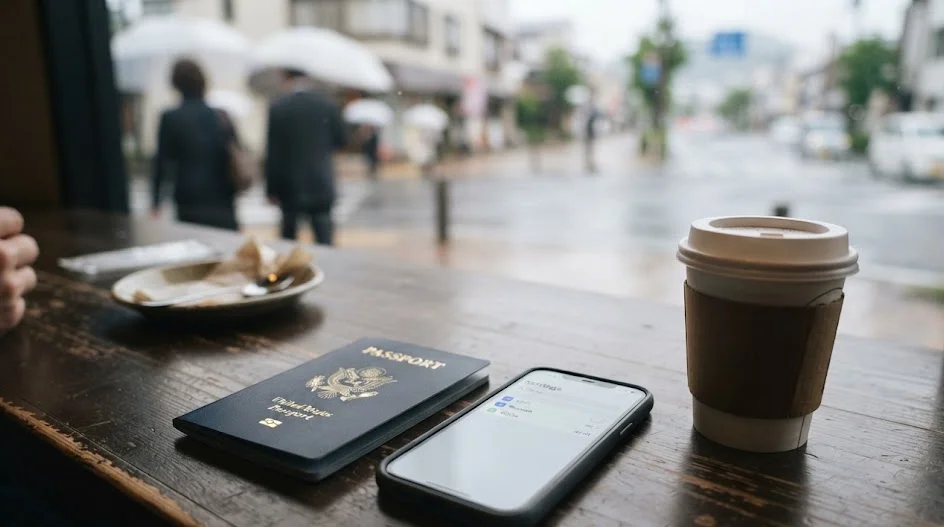
Most of the work happens at home, before you pack. None of these steps is women-only, but each one matters more when there is nobody next to you to help.
Step 1: Buy travel insurance that covers you alone
Check medical cover and theft cover, and save the insurer’s emergency line. Our guide to travel insurance for a first trip to Japan explains what to look for.
Step 2: Install the Safety Tips app
The Safety Tips app from the Japan Tourism Agency sends earthquake, tsunami and weather warnings in 15 languages. Allow notifications before you land.
Step 3: Save the numbers in your phone
Add 110 (police), 119 (ambulance), #9110 (Tokyo police advice line) and the Japan Visitor Hotline, 050-3816-2787, which answers 24 hours a day in English.
Step 4: Get data that works the moment you land
Maps, translation and chat lines all need data. Airalo and Ubigi sell Japan eSIMs. A data-only eSIM has no Japanese phone number; if you want one, read our eSIM with a phone number guide.
Step 5: Book a room near a station
A short walk at night beats a cheap room far out. Women-only stays exist, for example the women-only capsule hotel Akihabara Bay Hotel and 9h nine hours woman Kanda. Compare rooms on Booking.com or Agoda.
One detail to plan around: Akihabara Bay Hotel’s own page lists check-in after 16:00 and check-out before 10am, as of October 2026. A morning arrival means a few hours before you can get in, so plan that first afternoon around it.
The location helps, though. The hotel says Akihabara Station on the Hibiya Line is about 2 minutes on foot and JR Akihabara about 4 minutes.
Short walk, women-only building, early night.
If a capsule is not for you, our comparison of capsule, hostel and business hotel stays covers the other types. Whichever you pick on Booking.com or Agoda, check the walk from the station on the map before you pay.
Partner link.
On the Ground: 8 Habits and the Numbers to Call
Once you are in Japan, safety is a handful of habits. They take no money and very little effort.
- On a weekday morning, stand where the women-only car stops
- If someone touches you, shout and ask a passenger to call staff
- Never leave a drink unattended, even for a minute
- Never follow a street tout, however friendly
- Keep your bag zipped and your backpack in front on trains
- Lost or stolen item: go to the nearest koban
- Emergency or crime: 110. Advice, not urgent: #9110 in Tokyo
- Not sure who to call: the Japan Visitor Hotline, any hour
When you dial 110, Saitama Prefectural Police’s English guide suggests saying what happened, where, and when. From a public phone the call costs nothing: on newer digital phones just dial 110; on older coin or card phones, press the red emergency button first, then dial 110.
Here are the numbers, with what each one is for.
← Swipe to see the full table →
| Number | What for | Language and notes |
|---|---|---|
| 110 | Police emergency, any crime | Say what, where, when |
| 119 | Ambulance | Tokyo: three-way interpretation incl. English |
| #9110 | Tokyo police advice, not urgent | “English is available”; also 03-3501-0110 |
| 050-3816-2787 | JNTO Japan Visitor Hotline | 24 hours, English, Chinese, Korean |
| #8103 | Police sexual-crime line | Japanese; English not stated |
| Cure Time chat | Sexual violence support | Daily 17:00–21:00, anonymous |
Tokyo police say that if you have just been a victim of a crime, call 110 rather than the #9110 advice line.
A little more on the last three. The JNTO hotline (+81-50-3816-2787 from a foreign number) handles emergencies such as accidents and illness, natural disasters and general tourist questions, 24 hours a day, 365 days a year.
The National Police Agency’s #8103 line connects you to the sexual assault consultation window of the police in the area you call from; at night and on holidays, on-duty staff answer. Its page is in Japanese.
The Cabinet Office’s Cure Time is an anonymous chat about sexual violence, open daily from 17:00 to 21:00, with foreign-language support and an email option. There is also #8891, which connects to the nearest one-stop support centre for sexual violence, according to the Cabinet Office page.
Save them now. You will probably never use them.
4 Things Women Hear About Japan, and What Is True
Some of what gets repeated about Japan is too relaxed, and some is too anxious. Here are four lines you will meet while planning, checked against official pages.
“There is no crime against women in Japan”
Not true, and nobody official says it. The FCDO calls rape and sexual assault “rare but can happen”, and it describes touching and upskirting on commuter trains. Low risk is a fair summary; zero is not.
“Women-only cars are the law”
They are not. Osaka Metro states that its cars run on a voluntary basis and are not mandatory, though passengers are asked to respect them. A man who boards one by mistake has not broken a law, and some men, such as carers and young boys, are allowed in.
“The police will not understand English”
It depends on the line you call. Tokyo police say English is available on #9110, and their advice centre lists Japanese, English, Chinese and Korean. In Tokyo, 119 offers three-way interpretation in English, Chinese, Korean, Portuguese and Spanish.
For anything else, the Japan Visitor Hotline answers in English around the clock and can help you work out the next step.
“A woman eating or drinking alone looks odd”
In our view, this is the least true of the four. Ramen shops, standing bars and izakaya counters are built for people on their own, and a woman at one of them is an ordinary sight. Our Osaka izakaya guide lists counters that suit a solo evening.
Eat where you like. Watch the drink, not the room.
FAQ
QAre women-only capsule hotels worth it?
If shared sleeping space is what worries you, yes. Places such as Akihabara Bay Hotel take women only, and its page lists stations 2 to 4 minutes away on foot. Compare prices on Booking.com or Agoda and check the house rules before you book.
QWhat if a man gets on the women-only car?
Nothing official happens. The cars are voluntary, and some men are allowed in, such as carers and young boys. If anyone makes you uncomfortable, move cars or tell station staff.
QWhat if my drink tastes strange?
Stop drinking it, tell the staff, and leave with someone you trust if you can. If you feel suddenly unwell, call 119 for an ambulance. If you think a crime has happened, call 110.
QIs Osaka or Kyoto different from Tokyo?
The FCDO says nightlife risks are higher in entertainment districts across Japan, not only in Tokyo, so the same bar rules apply. Osaka has one advantage: the Midosuji Line’s women-only car runs all day on weekdays.
So, Is Japan Safe for a Woman Travelling Alone?
Yes, with your eyes open. Official advice calls sexual assault rare, and most of a sightseeing trip involves nothing special to women. The two that are special, rush-hour trains and nightlife bars, both have clear fixes.
Ride after the rush or in the women-only car. Choose your own bar, keep your drink with you and ignore touts. Save the numbers before you fly, and book a room near a station.
That is the whole plan.
Planning a trip alone can feel like a lot of what-ifs, and safety is usually the loudest one.
You could keep reading worried forum threads, or lock in the two decisions that matter, where you sleep and how you handle nights out, and adjust the rest once you land.
Keep planning
- ① Install and test your eSIM before take-offAiralo and Ubigi eSIMs activate on arrival, but the install itself needs Wi-Fi. Do it at home and confirm the profile shows up in your phone settings.
- ② Save your first hotel’s address in JapaneseTaxi drivers and station staff read Japanese addresses far faster than romanised ones. Copy it from the booking confirmation into your notes app.
- ③ Set aside cash for day oneMany small restaurants, temples and rural buses are still cash-only. Airport ATMs at 7-Eleven and the post office accept most foreign cards.
Skip these and your first hour in Japan goes on finding Wi-Fi at the station instead of getting to your hotel.
🔍 How to sanity-check any price you read online
Blogs (including this one) go out of date. The official page always wins over a screenshot from two years ago.