- Mid-range, per person, without flights or shopping: about ¥175,000–210,000 for 1 week, ¥350,000–420,000 for 2 weeks and ¥525,000–630,000 for 3 weeks.
- Accommodation is the biggest line. It was 36.6% of all visitor spending in Japan in 2025, according to the Japan Tourism Agency.
- On a typical 3-week loop, paying as you go for trains costs about ¥72,000. The 21-day JR Pass is ¥100,000.
- Long trips get cheaper per day: rail is a fixed cost, laundry replaces packing, and fewer hotel moves mean fewer forwarding fees.
- Currency
- Japanese Yen (JPY)
- Avg. Daily Spend
- ¥25,000–¥30,000 (mid-range, excluding shopping)
- Best Payment Method
- Card or IC card for most things, plus some cash
- Departure Tax
- ¥3,000 since 1 July 2026, usually inside your air ticket
- Top Budget Hack
- Add up single train fares before buying a pass
Prices are as of November 2026. Check the official sites before you book.
How much does a trip to Japan really cost? It depends on three things: how many nights you stay, what kind of room you book, and how far you travel by Shinkansen.
This guide gives you totals for 1, 2 and 3 weeks, and for a month. The mid-range numbers are built from the Japan Tourism Agency’s 2025 spending survey and official rail fares, not from guesses. Budget and comfortable ranges are our editor estimates, and we label them that way.
Flights are left out, because they swing more than anything else. So is shopping, which is optional.
Japan Trip Cost at a Glance: 1, 2 and 3 Weeks
Here are the totals per person, excluding international flights and shopping.
← Swipe to see the full table →
| Travel Style | Per Day | 1 Week (7 days) | 2 Weeks (14 days) | 3 Weeks (21 days) |
|---|---|---|---|---|
| Budget (estimate) | ¥13,000–¥18,000 | ¥91,000–¥126,000 | ¥182,000–¥252,000 | ¥273,000–¥378,000 |
| Mid-range | ¥25,000–¥30,000 | ¥175,000–¥210,000 | ¥350,000–¥420,000 | ¥525,000–¥630,000 |
| Comfortable (estimate) | ¥45,000+ | ¥315,000+ | ¥630,000+ | ¥945,000+ |
Plan your trip: the tools we use
How we built the mid-range row: visitors from the US, UK and Australia spent about ¥25,300–¥27,900 per night in Japan on everything except shopping (Japan Tourism Agency, 2025). We rounded that to ¥25,000–¥30,000 a day.
The 3-week figure is before long-stay savings. Our sample 3-week loop further down comes to about ¥554,000.
Need a route to go with the number? See our 7 Days in Japan plan or The 14-Day Japan Itinerary.
What the Official Numbers Say Visitors Spend
The Japan Tourism Agency (JTA) surveys visitors as they leave Japan. Its final 2025 report shows what sightseeing visitors spent in Japan per person, per trip.
← Swipe to see the full table →
| From | Total | Lodging | Food | Transport | Shopping | Avg. Nights |
|---|---|---|---|---|---|---|
| USA | ¥350,133 | ¥151,033 | ¥69,704 | ¥42,074 | ¥71,630 | 10.7 |
| UK | ¥411,337 | ¥202,648 | ¥85,534 | ¥52,019 | ¥54,302 | 12.8 |
| Canada | ¥329,617 | ¥134,921 | ¥72,889 | ¥44,018 | ¥56,902 | 12.5 |
| Australia | ¥403,966 | ¥166,240 | ¥86,467 | ¥44,206 | ¥69,685 | 13.2 |
| All visitors | ¥224,583 | ¥80,712 | ¥48,777 | ¥23,226 | ¥61,830 | 7.1 |
Totals also include entertainment, which is not shown as a column. Average nights are counted from entry and exit dates.
Divide by the nights and a pattern appears. A US visitor spent about ¥14,100 a night on lodging and ¥6,500 on food. Across all visitors, lodging was the largest share of spending at 36.6%, ahead of shopping (27.0%) and food (21.9%).
These are averages of everyone surveyed, from hostel guests to luxury travellers. Treat them as a reality check, not as a style label.
International Flights: The Biggest Cost Variable
Your flight is the one cost that swings the most, by season, by city and by how early you book. That is why every total in this guide leaves it out.
Flexible search tools that compare nearby dates and airports usually beat aiming for one airline. If you plan to spend time in the Kansai region, compare fares into Kansai International Airport (KIX) as well as Tokyo, and look at a multi-city ticket to avoid back-tracking.
One fixed line: Japan’s International Tourist Tax went up from ¥1,000 to ¥3,000 on 1 July 2026. In almost all cases it is already built into your ticket price, so you do not pay it at the airport.
When to book
Avoid Japanese holiday windows such as Golden Week (late April to early May) and Obon (mid-August). If your dates are flexible, set price alerts for your route and watch them for a few weeks before you commit.
Accommodation: The Biggest Line, Plus Local Taxes
The “per-person” pricing structure catches many couples off guard. A room that looks like ¥15,000 on Agoda might be priced per person, so the real bill for two is ¥30,000. Check the final checkout screen before you confirm.
Business hotel chains such as APA, Dormy Inn, Sotetsu Fresa Inn or Toyoko Inn are a common middle ground. They are built for Japanese business travellers, so the rooms are compact, clean and usually close to a station.
Avoiding the accommodation traps
- Check the walking distance to the nearest station. A cheap room that needs a bus or taxi every day is not cheap.
- Compare “no breakfast” rates. A bakery or cafe nearby is often the simpler choice.
- Couples can look at “semi-double” rooms, which are smaller than standard doubles.
- Many hostels now have small private rooms if you want a lock on the door.
Use Booking.com or Rakuten Travel to filter by distance from hubs like Shinjuku or Osaka Station, and set price alerts for your dates.
Accommodation tax in Tokyo, Kyoto and Osaka
Several cities add a small tax per person, per night. The rate depends on the room price.
← Swipe to see the full table →
| Where | Room price per person, per night | Tax per person, per night |
|---|---|---|
| Tokyo | Under ¥10,000 / ¥10,000–¥14,999 / ¥15,000+ | None / ¥100 / ¥200 |
| Kyoto City (from 1 March 2026) | Under ¥6,000 / ¥6,000–¥19,999 / ¥20,000–¥49,999 / ¥50,000–¥99,999 / ¥100,000+ | ¥200 / ¥400 / ¥1,000 / ¥4,000 / ¥10,000 |
| Osaka Prefecture (from 1 September 2025) | Under ¥5,000 / ¥5,000–¥14,999 / ¥15,000–¥19,999 / ¥20,000+ | None / ¥200 / ¥400 / ¥500 |
For most mid-range rooms that means ¥100 a night in Tokyo, ¥400 in Kyoto and ¥200 in Osaka. Tokyo plans to switch to 3% on rooms of ¥13,000 and up from 1 April 2027.
Kyoto asks you to pay at the property, but if you already paid the tax through a booking site, you do not pay it again. Look for the tax line on your booking before you arrive.
Where we would book this
Booking.com
Largest inventory in Japan for English-speaking travellers
- Best for
- Hotels, business hotels, ryokan and apartments in every city
- Checked
- September 2026
Official site. Same price for you.
Food: Convenience Stores vs. Izakayas
JTA’s 2025 survey puts food spending by US visitors at about ¥6,500 per night. That is a good mid-range planning figure, and it leaves room for a sit-down dinner most days.
You can spend much less if you lean on konbini (convenience stores like 7-Eleven or Lawson), but that is not why most people fly to Japan.
Strategies for a food budget
- Lunch sets (teishoku) are usually cheaper than dinner at the same restaurant.
- Depachika (department store basement food halls) often mark down prepared food in the evening.
- Skip “tourist-menu” spots right outside famous shrines.
- Ramen and udon counters are fast and reliable.
For meal-by-meal prices, see Japan Food Budget per Day.
Getting Around: The Shinkansen and IC Cards
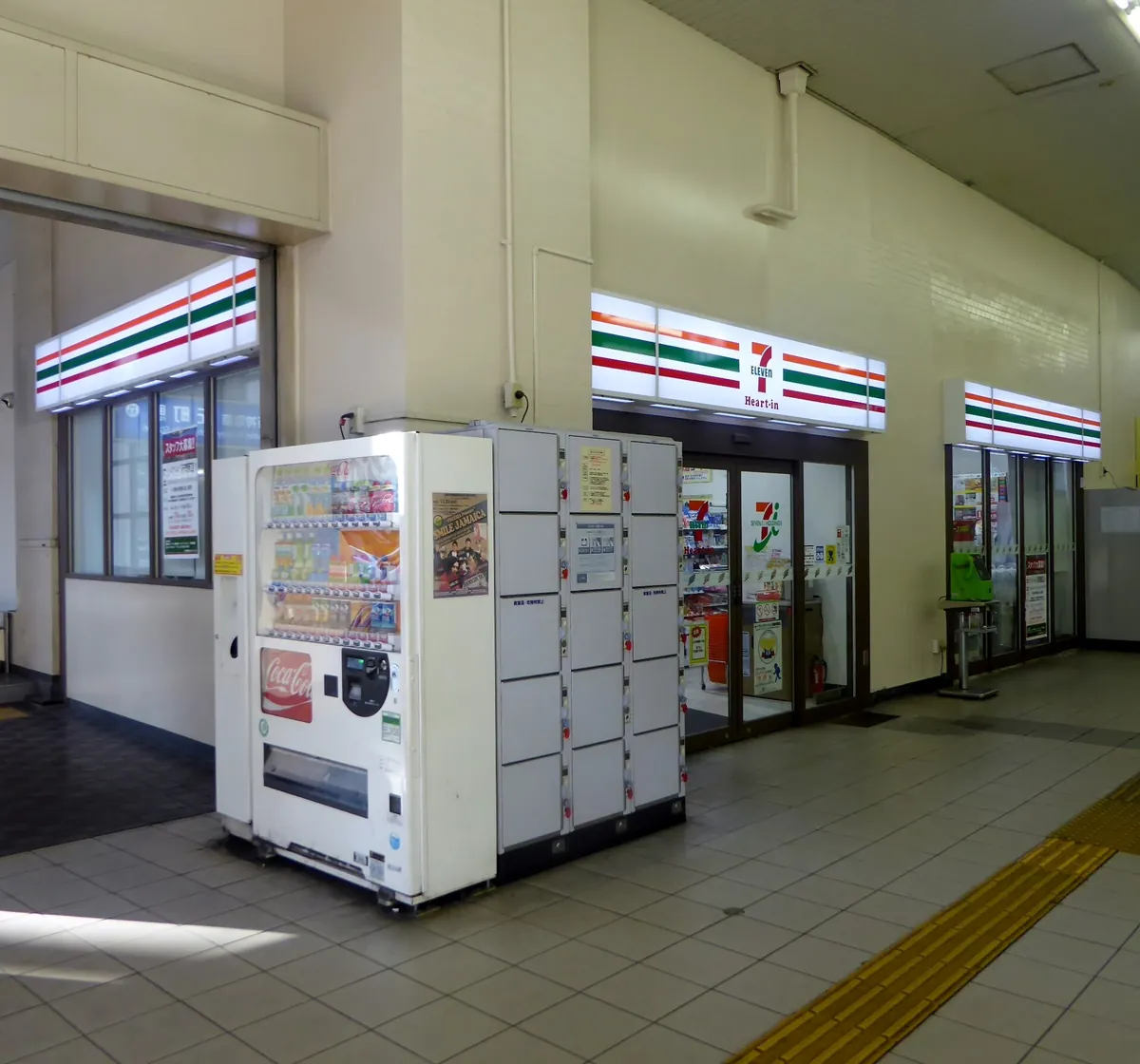
The JR Pass is now a real calculation. Bought online, the Ordinary pass costs ¥50,000 for 7 days, ¥80,000 for 14 days and ¥100,000 for 21 days (adult). Through an overseas agency it is ¥53,000, ¥84,000 and ¥105,000. JR notes that prices can change.
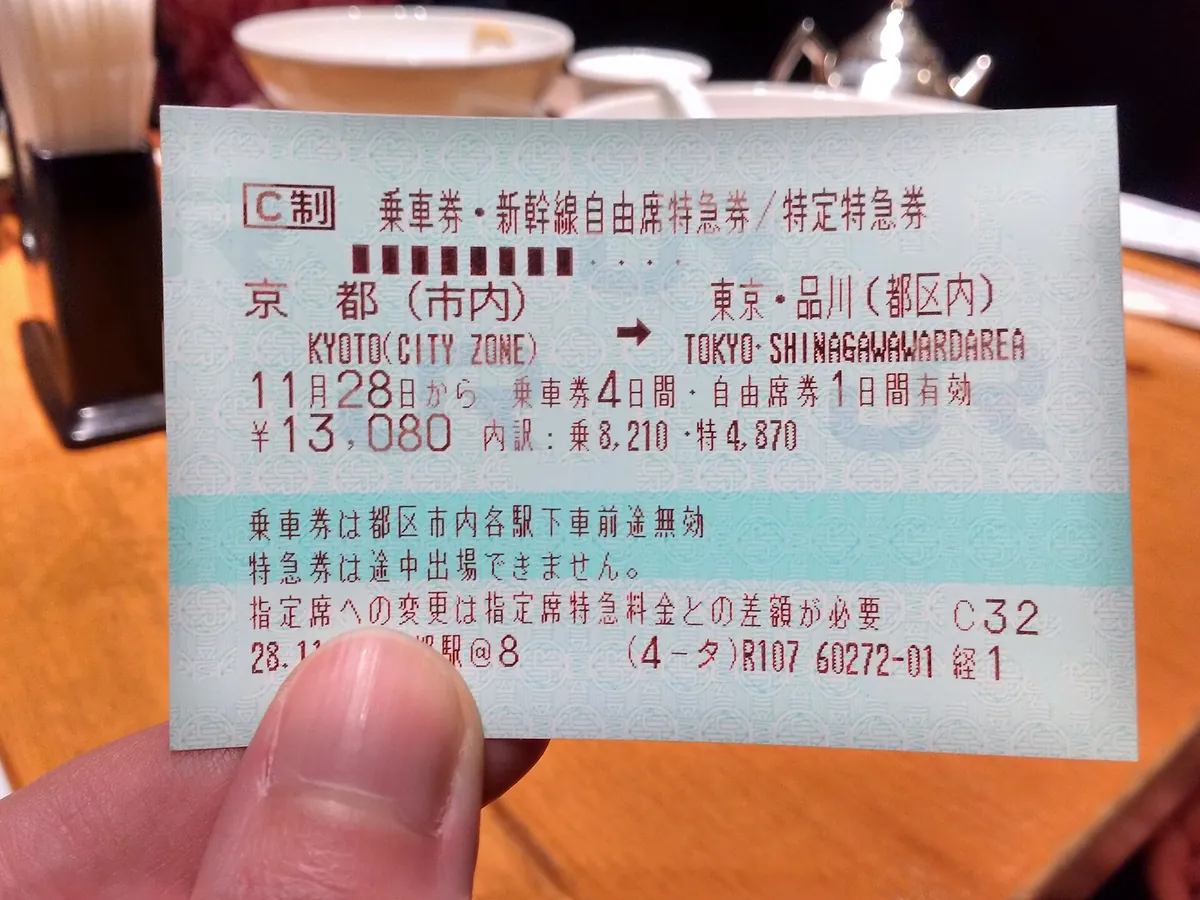
Compare that with single tickets. A one-way Nozomi from Tokyo to Shin-Osaka costs ¥14,520 with a reserved seat on smartEX (JR Central’s online booking service), or ¥13,870 non-reserved, in the regular season. The pass also needs a special extra ticket if you want to ride the Nozomi or Mizuho.
| One-way Nozomi, reserved seat (smartEX, regular season) | Adult fare |
|---|---|
| Tokyo – Kyoto | ¥13,970 |
| Tokyo – Shin-Osaka | ¥14,520 |
| Tokyo – Hiroshima | ¥19,560 |
| Kyoto – Hiroshima | ¥11,740 |
| Shin-Osaka – Hiroshima | ¥10,750 |
smartEX lists the fares “as of April 1, 2025”. Off-peak dates are ¥200 cheaper and peak dates ¥200 dearer (super-peak ¥400).
On routes that cross from the Tokaido to the Sanyo Shinkansen, such as Tokyo–Hiroshima or Kyoto–Hiroshima, the adjustment doubles: −¥400 / +¥400 / +¥800. The full pass-versus-ticket maths is in JR Pass vs Individual Tickets.
In cities, an IC card (Suica, ICOCA or Pasmo) in your phone’s wallet covers most local trains. In Tokyo, the Tokyo Subway Ticket costs ¥1,000 for 24 hours, ¥1,500 for 48 hours and ¥2,000 for 72 hours (adult), at the prices in force since 14 March 2026.
3 Weeks to a Month in Japan: What It Costs and What Gets Cheaper
A longer trip does not cost 3 times a 1-week trip. Some costs are fixed no matter how long you stay, and a few habits only pay off on long trips.
Totals for a month by style
For 3-week totals, see the table at the top. A full month looks like this:
| Travel Style | 1 Month (28 days) |
|---|---|
| Budget (estimate) | ¥364,000–¥504,000 |
| Mid-range | ¥700,000–¥840,000 |
| Comfortable (estimate) | ¥1,260,000+ |
Per person, without flights or shopping, before the savings below. Treat the top of each range as a ceiling, not a target.
Rail maths for a 3-week loop
Take the route in our Japan Itinerary 21 Days: Tokyo, Kanazawa, Kyoto, Hiroshima, Osaka and back to Tokyo. Here is the long-distance rail, adult, regular season.
← Swipe to see the full table →
| Leg | Ticket | Fare |
|---|---|---|
| Tokyo → Kanazawa → Kyoto | Hokuriku Arch Pass (7 days) | ¥35,000 |
| Kyoto → Hiroshima | Nozomi, smartEX reserved | ¥11,740 |
| Hiroshima → Shin-Osaka | Nozomi, smartEX reserved | ¥10,750 |
| Shin-Osaka → Tokyo | Nozomi, smartEX reserved | ¥14,520 |
| Total | ¥72,010 |
The 21-day JR Pass costs ¥100,000 online. On this loop, paying as you go saves ¥27,990, even using the Arch Pass for the Hokuriku stretch. The Arch Pass is only for visitors with a foreign passport entering as a “Temporary Visitor”.
The pass only wins if you add roughly ¥28,000 more of JR travel to this route. Add up your own legs first.
Now the per-day view. ¥72,010 spread over 21 days is about ¥3,430 a day. Squeeze the same legs into 14 days and it is about ¥5,140 a day. Long-distance rail is a fixed cost, so every extra day makes it cheaper per day.
Weekly and monthly stays
Staying put is where long trips save the most. On Airbnb, hosts can set a weekly discount for stays of 7 nights or more, and a monthly discount for 28 nights or more. The size of the discount is up to each host, so compare the total for your dates rather than the nightly rate.
A base of a week or more in Tokyo or Kyoto, with day trips out, also cuts check-in time and packing.
Laundry instead of a bigger suitcase
Many hotels have coin laundry. For example, one hotel in Shin-Yokohama charges ¥300 per wash (detergent added automatically) and ¥100 per dryer run. A few loads over 3 weeks cost very little and let you pack for one week, not three.
Fewer moves, fewer forwarding fees
Each hotel change can mean another luggage shipment. Yamato Transport lists a size-160 suitcase from Tokyo to Kyoto from ¥3,160, arriving as early as the next day. Two shipments on a 3-week trip are a small line. Six are not.
Sample 3-week budget (mid-range, per person)
This uses the 21-day loop above: 21 days, 20 nights, with 7 nights in Tokyo, 4 in Kyoto and 4 in Osaka.
← Swipe to see the full table →
| Item | Basis | Amount |
|---|---|---|
| Lodging, 20 nights | ¥14,000 a night (JTA: US visitors about ¥14,100) | ¥280,000 |
| Accommodation tax | Tokyo 7 × ¥100, Kyoto 4 × ¥400, Osaka 4 × ¥200 (other cities not included) | ¥3,100 |
| Food, 21 days | ¥6,500 a day (JTA: US visitors about ¥6,500) | ¥136,500 |
| Intercity rail | Loop above | ¥72,010 |
| Tokyo Subway Ticket, 72 hours | Official price | ¥2,000 |
| Other local transport | ¥1,000 a day (editor estimate) | ¥21,000 |
| Sights and entertainment | ¥1,500 a day (JTA: US visitors about ¥1,460) | ¥31,500 |
| Luggage forwarding × 2 | Yamato, from ¥3,160 each | ¥6,320 |
| Laundry × 3 loads | ¥300 wash + ¥100 dry (example hotel) | ¥1,200 |
| Total | About ¥26,400 a day | About ¥553,630 |
Add your flight and shopping on top. US visitors averaged ¥71,630 on shopping per trip in 2025.
For a full month, add a week at the same daily rate: roughly ¥740,000. Then look for monthly-stay discounts to bring the lodging line down.
The 21-day itinerary page uses a leaner budget. The sample here follows what visitors actually spent on average, so it sits higher.
Activities, Connectivity, and Luggage
Luggage forwarding is not a luxury; it is a sanity saver. Sending your suitcase ahead with Yamato lets you ride local trains without hauling it through crowds. Our luggage forwarding guide explains how to book it at a hotel or convenience store.
For data, an eSIM from Airalo or Ubigi is a simple option. Prices depend on the data package, so compare plans for your trip length.
Essential add-ons
- Temple and garden entry fees, which vary by site.
- Theme parks (like Universal Studios Japan): buy date-specific tickets online before you go, for example via Klook.
- Coin lockers for day trips when your hotel cannot hold bags.
- Souvenirs and snacks as gifts. Set a limit before you walk into a department store.
How Much Cash to Bring
Cards and phone wallets work in most hotels, convenience stores and chain shops. Some places still take only cash, such as small temples, food stalls and some ramen ticket machines.
Withdraw yen at ATMs inside convenience stores, and check your bank’s foreign withdrawal fee before you leave. For amounts by travel style, see How Much Cash to Bring to Japan.
Budget-Saving Strategies That Don’t Ruin Your Experience
Where the money goes
- Daily airport taxis
- Unplanned luggage storage
- Overpriced station bento
- Buying a JR Pass without adding up the fares
What to do instead
- Use airport express trains
- Use Yamato forwarding
- Eat at local lunch spots
- Pay-as-you-go tickets when the sum is lower
The “cost of friction” is real. If you spend three hours trying to save a few hundred yen on a bus instead of a train, you pay for it with your limited holiday time.
Many good afternoons cost little: a walk along Kyoto’s Philosopher’s Path, the grounds of Osaka Castle park, or a neighbourhood market. Mix a few of these in between paid sights.
What Pushes Your Total Up
- Traveling in cherry blossom season, Golden Week or New Year, when rooms cost more
- Planning a theme park day
- Staying at a traditional ryokan
- Taking more than three long-distance trains
- Booking rooms of ¥20,000+ in Kyoto, where the tax jumps to ¥1,000 a night
- Renting a car for a rural excursion
If you ticked two or more, plan from the top of your style’s range in the table above.
 Reader
 Yuki
FAQ
QHow much does a month in Japan cost?
For a mid-range traveller, about ¥700,000–¥840,000 per person for 28 days, without flights or shopping. Our sample 3-week loop plus one more week comes to roughly ¥740,000. Weekly or monthly stay discounts can bring it down.
QIs the 21-day JR Pass worth it?
On a Tokyo–Kanazawa–Kyoto–Hiroshima–Osaka–Tokyo loop, no. Single tickets plus the Hokuriku Arch Pass come to ¥72,010, against ¥100,000 for the pass. It only pays if you add about ¥28,000 more of JR travel.
QIs Japan still a cash country in 2026?
Less than it was. Cards and phone wallets work in most hotels, convenience stores and chains, but small temples, food stalls and some family-run shops still want yen. Our cash guide gives amounts by style.
QWhere is the best place to get cash?
ATMs inside convenience stores such as 7-Eleven are easy to find. Fees depend on the ATM and your card, so check what your bank charges before you go. Airport exchange booths are rarely the best rate.
QAre taxes included in the menu price?
Yes. The price you see on the menu or the shelf is the price you pay. There is no tipping culture in Japan, so do not add an extra percentage to your bill.
QShould I book tours in advance?
Book ahead for high-demand places like the Ghibli Museum or popular themed cafes. For standard temple visits or city tours, Klook and GetYourGuide also list last-minute options.
QAre business hotels comfortable for long stays?
They are efficient but compact. On a long trip, ship your big bag ahead with luggage forwarding and use the hotel’s coin laundry so the room stays clear.
Budgeting for Japan feels like solving a puzzle with missing pieces.
Pick your trip length and style from the table at the top, add your flight, then lock in your trains and rooms. The daily spending settles into a rhythm once you arrive.
Keep planning
- ① Install and test your eSIM before take-offAiralo and Ubigi eSIMs activate on arrival, but the install itself needs Wi-Fi. Do it at home and confirm the profile shows up in your phone settings.
- ② Save your first hotel’s address in JapaneseTaxi drivers and station staff read Japanese addresses far faster than romanised ones. Copy it from the booking confirmation into your notes app.
- ③ Set aside cash for day oneMany small restaurants, temples and rural buses are still cash-only. Airport ATMs at 7-Eleven and the post office accept most foreign cards.
Skip these and your first hour in Japan goes on finding Wi-Fi at the station instead of getting to your hotel.
🔍 How to sanity-check any price you read online
Blogs (including this one) go out of date. The official page always wins over a screenshot from two years ago.