

- Best for coverage: Ubigi, the only pick here listing all three big networks
- Best for a light trip: Ubigi 5 GB / 15 days or Airalo 5 GB / 7 days, both $10
- Best for heavy use over 2 weeks: Ubigi Unlimited 15 days, listed at $39
- Best for no data maths at all: Holafly unlimited, if you don’t need much hotspot
- Need a Japanese phone number: Mobal Voice+Data eSIM, billed monthly in yen

Ubigi is our pick for coverage: of the five we checked, it is the only one whose Japan pages list all three big networks, KDDI, NTT Docomo and SoftBank. That rests on its own network list, not on speed tests.
For a light trip, Ubigi’s 5 GB / 15 days and Airalo‘s 5 GB / 7 days are both listed at $10. Ubigi’s 8-day unlimited plan suits a heavy week, and Holafly suits people who never want to count gigabytes.
Need a real Japanese phone number? Then Mobal is the one.
Prices below are the listed prices on each provider’s own Japan page, checked on 24 October 2026; confirm on the official page before you buy.
- Best for coverage
- Ubigi (lists 3 networks)
- Cheapest plan seen
- Ubigi 1 GB / 3 days, listed at $3.50
- Works in
- All of Japan, one eSIM for every city
- Phone needed
- Unlocked, eSIM-capable
- Phone number
- Mobal only; others are data-only
- Prices checked
- 24 October 2026
Top picks
Where we would book this
Airalo
Widely known eSIM marketplace with a simple app
- Best for
- Data-only eSIM for Japan (multi-day and regional plans)…
- Checked
- September 2026
Official site. Same price for you.
Where we would book this
Ubigi
Runs on NTT Docomo, the network with the widest rural coverage in Japan
- Best for
- Data eSIM for Japan on the NTT Docomo network
- Checked
- September 2026
Official site. Same price for you.
What Decides a Japan eSIM: Network, Real Data, Hotspot and a Number

Every Japan eSIM looks the same on the shop page. A cheerful flag, a few plans, “5G”. The differences sit in the small print, and they come down to five questions.
- Network: which Japanese carriers the eSIM can connect to
- Full-speed data: how many GB you really get before speeds drop
- Hotspot: whether you can share data with a laptop or a partner’s phone
- Phone number: almost every travel eSIM is data-only
- Validity start: on purchase, on first connection or on arrival
Why the network list matters more than the brand
Japan has three national networks the providers here mention: NTT Docomo, KDDI (sold as au) and SoftBank. An eSIM can only use the networks its provider has a deal with.
Comparison sites often disagree about who uses what, so we read each provider’s own Japan page. Airalo lists SoftBank and KDDI. Ubigi lists KDDI, NTT Docomo and SoftBank. Holafly and Nomad list KDDI and SoftBank.
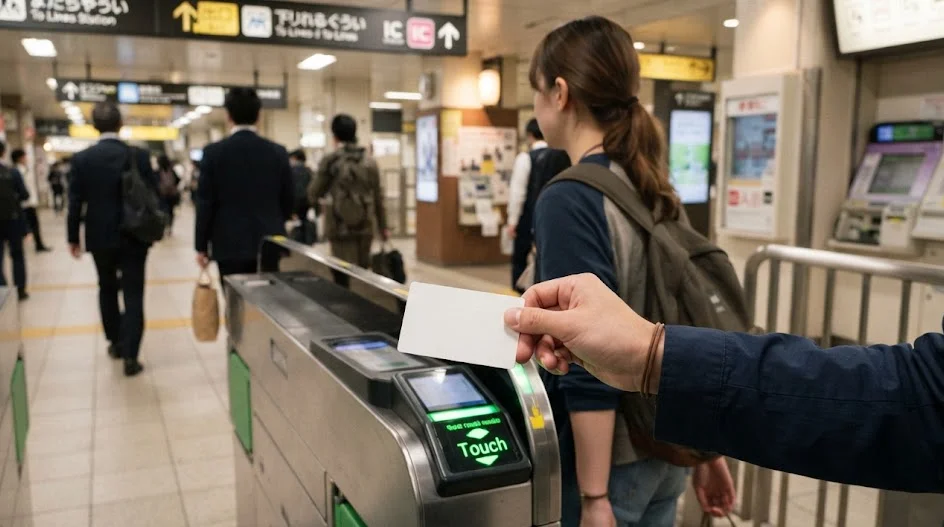
More networks means more to fall back on. We ran no speed tests, so we can’t tell you which network is fastest on your street, and nobody’s official page claims that either.
Tokyo, Kyoto and Osaka: one eSIM covers all three
You don’t need a separate eSIM for each city. These are nationwide plans on the national networks, so the same eSIM works when you land in Tokyo, ride to Kyoto and fly home from Osaka.
Airalo‘s Japan page puts it plainly: the plan covers all of Japan, including Okinawa and Hokkaido. Buy one eSIM for the whole trip.
- My phone is carrier-unlocked
- I have an iPhone XS, XR or later, or an eSIM Android
- I know how many days I’ll be in Japan
- I mostly use maps and messages, not video
- I need hotspot for a laptop or another phone
- I need a Japanese number for calls or SMS
- I’m heading to rural areas or the mountains
Three or more ticks near the bottom of that list point to Ubigi or Mobal. Mostly ticks near the top? A $10 plan from Ubigi or Airalo will do.
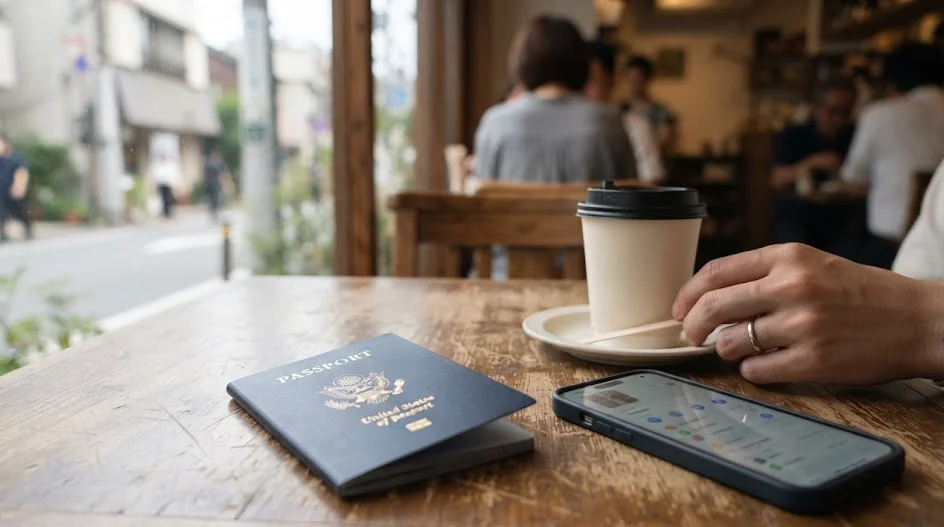
Flexible 7-Day Plans and Daily Unlimited: Airalo and Nomad
If you mostly use Google Maps, train apps and messages, a small fixed-GB plan is all you need. Airalo and Nomad offer the widest range of sizes, plus unlimited plans with a daily full-speed allowance.
Airalo: the most 7-day sizes and 3 GB-a-day unlimited
Airalo’s Japan eSIM runs on SoftBank and KDDI, and it is a 5G data-only eSIM. The plan only starts when you first connect, so installing it at home doesn’t burn days.
The 5 GB / 7 days plan is listed at $10 on Airalo’s Japan page (checked October 2026). The 3 GB / 7 days plan is $8, and 10 GB / 7 days is $17.
- Staying longer? 20 GB / 15 days is listed at $24
- 30-day plans: 5 GB $11, 10 GB $18, 20 GB $25
- Top-ups work online and the eSIM itself has no expiry
- Hotspot: allowed if your device and the network support it
The honest drawback: no NTT Docomo. And Ubigi‘s 5 GB plan costs the same $10 but lasts 15 days, so Airalo’s edge is its range of 7-day sizes and its short 3-, 5- and 10-day unlimited plans.

Android users, one detail from Airalo’s help page: set an APN before you turn on hotspot, or sharing may not work.
Nomad: good value once you need 20 GB or more
Nomad’s Japan page lists KDDI au and SoftBank, with 5G and 4G. It says plainly that its eSIMs support tethering and hotspot.
The bigger plans are where Nomad shines: 20 GB / 30 days is listed at $23 and 50 GB / 30 days at $35 (checked October 2026). Note that the plan details for these two list KDDI au only, at 4G.
Small plans start at $4 for 1 GB / 7 days. The $23 price was a sale price (regular $26), so check the page on the day you buy.
Nomad’s unlimited plans (7 days $25, 14 days $41) give 2 GB a day at full speed, then 1 Mbps. That is less daily full-speed data than Airalo’s 3 GB.
Best for Coverage and Long Trips: Ubigi on Three Networks
Ubigi is our coverage pick for one reason the others can’t match. Its Japan plan pages list KDDI, NTT Docomo and SoftBank.
That matters most when you leave the big cities: the Japan Alps, rural Kyushu, a ferry to a small island. We haven’t measured coverage there, but three networks give the eSIM more to fall back on than two.

Ubigi fixed-GB plans, from 15 days to a month
Ubigi’s 5 GB / 15 days plan is listed at US$10 (page updated 20 October 2026). That is the same price as Airalo’s 5 GB / 7 days, with twice the validity and three networks.
The 10 GB / 30 days plan is listed at US$16.50 (checked October 2026). The 25 GB / 30 days plan is $32, and 50 GB / 30 days is $55.
- “Smartstart”: the plan starts on arrival in Japan
- Must be activated within 6 months of purchase
- “Data sharing allowed”, so hotspot is permitted
- The Ubigi app shows your balance and handles top-ups
For one heavy week, the Unlimited 8 days plan is listed at US$25 (page updated 20 October 2026). It gives full speed up to 5 GB a day, then 2 Mbps, and resets every 24 hours.
Ubigi Unlimited: the best deal for heavy two-week use
Ubigi Unlimited 15 days is listed at US$39. Ubigi spells out the limit: 30 GB of full-speed data, then 2 Mbps.

The 30-day version is $65 with 60 GB at full speed, then 2 Mbps.
That honesty is the point. You know exactly what you’re buying.
Ubigi is a data-only service, so there is no Japanese number with any of these plans.
Best for Never Counting Gigabytes: Holafly Unlimited and Its Catch
Some people simply don’t want to think about data on holiday. Holafly sells only unlimited plans for Japan, priced by the number of days.
Holafly: simple unlimited, tight hotspot
Holafly’s Japan eSIM runs on KDDI and SoftBank. Listed prices on its Japan page (checked October 2026): 3 days $11.90, 7 days $27.50, 15 days $50.50 and 30 days $73.90.
Now the catch. Holafly’s page allows 1 GB of hotspot per day of your plan, so a 7-day plan includes 7 GB.
That is easy to miss when you read the page quickly. If you planned to tether a laptop for work, a few video calls could use up that allowance early in the trip.
- No local phone number for calls or texts
- A fair-use policy may apply for up to one day at a time
- Plans run from 1 to 90 days
How the “unlimited” plans really compare
Unlimited means something different at each provider. Airalo Unlimited gives full speed (up to 20 Mbps) for the first 3 GB each day, then 1 Mbps, and resets every 24 hours.
Ubigi’s 8-day plan gives 5 GB a day at full speed, then 2 Mbps; its 15-day plan gives 30 GB in total, then 2 Mbps. Nomad gives 2 GB a day at full speed, then 1 Mbps. Holafly limits hotspot to 1 GB a day.
Need the full breakdown? Our guide to unlimited data eSIMs in Japan goes deeper on each plan’s limits.
Need a Japanese Phone Number? The Mobal Route

Every eSIM above is data-only. That covers most travellers, because WhatsApp, LINE and FaceTime calls all run over data.
Some people still need a real number: a Japanese bank or app that wants an SMS code, or a landlord for a longer stay.
Mobal Voice+Data eSIM
Mobal’s Voice+Data eSIM gives you a real Japanese phone number. Mobal lists ¥4,950 upfront, then from ¥1,650 a month for 1 GB, with no contract (checked October 2026).
- Monthly data: 5 GB ¥3,190, 10 GB ¥3,630, 30 GB ¥4,378
- Incoming calls and SMS are free; outgoing calls are charged
- Payments are processed in yen
- Speeds drop to around 200 Kbps once you use your allowance
Don’t expect an instant QR code. Japanese law requires an ID check first; Mobal then posts you an access code, or you pick it up in Japan.
Mobal’s own pages name Docomo and SoftBank in one place and only Docomo in another. We’d say Docomo or SoftBank, per Mobal, and leave it there.
Not sure you need a number? Read our guide to a Japan eSIM with a phone number first. For a two-week holiday, most people don’t.
Side by Side: Networks, Listed Prices and Limits
Here are the five picks on one screen. All prices are the listed prices on each provider’s own Japan page on 24 October 2026; they change, and some are shown in your local currency.
← Swipe to see the full table →
| Provider | Networks in Japan | Example plan and listed price |
|---|---|---|
| Ubigi | KDDI, NTT Docomo, SoftBank | Unlimited 15 days, $39 (30 GB full speed) |
| Airalo | SoftBank, KDDI | 5 GB / 7 days, $10 |
| Nomad | KDDI au (SoftBank too on small and unlimited plans) | 20 GB / 30 days, $23 (KDDI au only) |
| Holafly | KDDI, SoftBank | Unlimited 7 days, $27.50 |
| Mobal | Docomo or SoftBank (per Mobal) | Voice+Data, ¥4,950 then from ¥1,650/month |
Plan your trip: the tools we use
Our pick: Ubigi for coverage, a light trip ($10) or a heavy week (Unlimited 8 days, $25).
And the cost per GB, which is our own simple division of the listed prices:
← Swipe to see the full table →
| Plan | Listed price | Cost per GB (our maths) |
|---|---|---|
| Airalo 5 GB / 7 days | $10 | $2.00 |
| Airalo 20 GB / 15 days | $24 | $1.20 |
| Ubigi 5 GB / 15 days | $10 | $2.00 |
| Ubigi 10 GB / 30 days | $16.50 | $1.65 |
| Ubigi 25 GB / 30 days | $32 | $1.28 |
| Nomad 20 GB / 30 days | $23 | $1.15 |
| Nomad 50 GB / 30 days | $35 | $0.70 |
Bigger plans cost less per GB, but only if you use the data. Weighing just these two? Our Airalo vs Ubigi comparison sets them head to head.
How we chose these five
We read each provider’s own Japan page on 24 October 2026 for networks, prices, hotspot rules and validity, and Apple’s and Google’s support pages for phone requirements. We ran no speed tests, so our coverage pick rests on Ubigi’s network list alone.
Saily was on our list, but its Japan page would not open for us, so we couldn’t verify its prices or networks and left it out.
Which eSIM for Your Trip: 7 Days, 2 Weeks, a Month or a Number
This is the part most “best eSIM” lists skip. Here is a pick for each kind of trip, using only the listed prices above.
7 days in Tokyo and Kyoto
Maps and messages only? Ubigi 5 GB / 15 days at $10: the same price as Airalo 5 GB / 7 days, with more networks and more days.
Watching video on the Shinkansen or posting lots of clips? Ubigi Unlimited 8 days at $25 gives 5 GB a day at full speed on three networks. Nomad 7 days costs the same with 2 GB a day; Airalo 7 days is $26.50 with 3 GB a day.
2 weeks around Japan
Normal use: Airalo 20 GB / 15 days at $24, or Nomad 20 GB / 30 days at $23 on KDDI au only. Want all three networks? Ubigi 25 GB / 30 days at $32.
Heavy use: Ubigi Unlimited 15 days at $39. It beats Nomad Unlimited 14 days ($41), Airalo Unlimited 15 days ($48) and Holafly 15 days ($50.50) on listed price.
3 weeks or more, or working remotely
Ubigi 50 GB / 30 days at $55 if you want the widest network list. Nomad 50 GB / 30 days at $35 is cheaper, on KDDI au only. Ubigi Unlimited 30 days ($65, 60 GB at full speed) covers the heaviest users.
Laptop or Android hotspot, or a phone number
For tethering, choose an Ubigi or Airalo fixed-GB plan, and set the APN first on Android with Airalo. Skip Holafly if hotspot is your main use. For a Japanese number, Mobal is the only pick here.
 ReaderYuki
Setting It Up on iPhone or Android Before You Fly
Install at home on Wi-Fi, switch it on when you land. That is the whole idea, and the steps below keep it from going wrong at the airport.
Step 1: Check your phone is unlocked
On iPhone, go to Settings, General, About. Apple says “No SIM Restrictions” next to Carrier Lock means it is unlocked. You need an iPhone XS, XS Max, XR or later.
Step 2: Buy and install on home Wi-Fi
Apple says you can buy a prepaid plan before you travel. Airalo starts when you first connect and Ubigi on arrival, so installing early is fine.
Step 3: On landing, switch lines
Turn on the eSIM line and data roaming for that line. Turn off data on your home line: Apple notes you might still pay roaming fees on it.
Step 4: Android: set the APN before hotspot
Airalo’s help page tells Android users to set an APN before enabling hotspot and tethering. Airalo’s hotspot help page explains where to find it.
Step 5: If it doesn’t connect
Restart the phone, check data roaming is on for the eSIM line, then open the provider’s app or help page.
Google’s Pixel help page says you can store several eSIM profiles on one phone. Using two at the same time needs a Pixel 7 or later, and your carrier has to allow it.
On other Android phones, look in your mobile network settings for an option to add an eSIM. If it isn’t there, check the provider’s compatibility list before you buy.
For a screen-by-screen walkthrough, see our guide to setting up your eSIM before landing.
If an eSIM isn’t right for you
Older or locked phones can’t use any of these. A pocket Wi-Fi router can also make sense for a family sharing one connection. We compare the options in eSIM vs pocket Wi-Fi vs SIM card.
FAQ
QDoes one eSIM work in Tokyo, Kyoto and Osaka?
Yes. Japan eSIMs are nationwide plans on the national networks, so one eSIM works in every city on your route. Airalo’s page says it covers all of Japan, including Okinawa and Hokkaido.
QWhich network is best in Japan?
We haven’t run speed tests, and no provider’s page proves one network is best everywhere. Ubigi lists KDDI, NTT Docomo and SoftBank, which gives the most to fall back on.
QCan I use my eSIM as a hotspot?
Usually, yes. Airalo allows it if your device and the network support it, Nomad supports it, and Ubigi says data sharing is allowed. Holafly allows 1 GB of hotspot a day.
QDo I get a Japanese phone number?
Not with Airalo, Ubigi, Holafly or the Nomad Japan plans. Mobal’s Voice+Data eSIM gives a real Japanese number, billed monthly in yen.
QWill a Japan eSIM work on my Android phone?
Only if the phone supports eSIM and is carrier-unlocked. Check your settings for an add-eSIM option. With Airalo, set the APN before you use hotspot.
QDo I need the app, or can I buy on the website?
Both work. Nomad says you can simply buy your plan online. Ubigi’s app shows your balance and lets you top up, and Airalo top-ups also work online.
QWhen does the plan’s validity start?
Airalo starts when you first connect. Ubigi’s Smartstart begins on arrival in Japan. Either way, installing at home a few days early is safe.
Picking a data plan for a country you haven’t seen yet can feel like guessing.
Rather than reading one more comparison, choose by trip length and network today, install it at home, and top up later if you need more.
Keep planning
- ① Install and test your eSIM before take-offAiralo and Ubigi eSIMs activate on arrival, but the install itself needs Wi-Fi. Do it at home and confirm the profile shows up in your phone settings.
- ② Save your first hotel’s address in JapaneseTaxi drivers and station staff read Japanese addresses far faster than romanised ones. Copy it from the booking confirmation into your notes app.
- ③ Set aside cash for day oneMany small restaurants, temples and rural buses are still cash-only. Airport ATMs at 7-Eleven and the post office accept most foreign cards.
Skip these and your first hour in Japan goes on finding Wi-Fi at the station instead of getting to your hotel.
🔍 How to sanity-check any price you read online
Blogs (including this one) go out of date. The official page always wins over a screenshot from two years ago.