
- Under-6s ride JR and the subway free, up to two per adult
- Ages 6 to 11 pay half the adult fare on JR and Tokyo Metro
- A toddler in their own reserved shinkansen seat pays a child fare
- Strollers skip the Tokaido Shinkansen oversized-baggage booking
- Move after the morning rush and look up the elevator exit first
- Free ride
- Under 6, up to two per adult
- Child fare
- Ages 6 to 11, half the adult price
- Stroller on Nozomi
- No oversized-baggage booking needed
- Family car
- Car 12, holiday peaks only
- Prices checked
- November 2026
On both JR and Tokyo Metro, a child’s free ride ends when they start elementary school, which in practice is around age six. Until then, both let up to two small children travel free with each adult, and after that children pay half.
So the practical answer is short: keep under-6s on a lap unless you want to pay for their own reserved seat, buy child tickets for ages 6 to 11, bring a stroller that folds fast, and travel after the morning commute.
This guide is for parents of babies up to 11-year-olds on a first Japan trip who want the rules, not an itinerary.
Everything below comes from the operators’ own pages, checked in November 2026: JR Central, JR West, JR Kyushu, Tokyo Metro, Kyoto City and JNTO. For what to actually do with children in the capital, our Tokyo with kids plan covers the days.
Prices are ranges or official fares checked in 2026; confirm on the official site before you book.
Does This Sound Like Your Family? 7 Quick Checks
Tick the lines that fit. Each one points to the part of this guide that matters most for you, so you can skip the rest.
- Our youngest is under 6
- We have a child aged 6 to 11
- Our stroller needs two hands to fold
- We have a Tokyo to Kyoto or Osaka leg
- The baby still needs feeds and changes on the go
- We travel in Golden Week, Obon or New Year
- One child only eats plain, familiar food
A child under 6 or between 6 and 11? Start with the fares section, because the age bands decide every ticket you buy. A big stroller or a shinkansen leg points you to the stroller and Nozomi sections.
Holiday dates change the seat picture more than anything else. During Golden Week, Obon and the year-end and New Year period, JR Central makes every Nozomi seat reserved, so the cheap “just hop on” option disappears.
One case deserves a second read.
A single parent with three children under six is where a free toddler quietly becomes a paid one. Item 2 below explains why, and it applies on JR and Tokyo Metro alike.
Nursing babies and picky eaters have their own sections near the end. If you only ticked those, jump straight there and keep the fare rules for the day you book trains.
Fares by Age: The 4 Categories JR Uses
Japan’s rail fares for children follow one simple pattern, and JR companies use it across the country. Learn it once and it covers the shinkansen, local JR lines and the Tokyo subway.
1. Know which of the four age bands each child is in
JR Central sorts passengers by age, not height. The bands and what each pays are on its adult and child fare page, and the table below sums them up as of 2026.
← Swipe to see the full table →
| JR category | Age | What they pay |
|---|---|---|
| Baby | Under 1 | Free with an adult |
| Infant | 1 to 5 | Free, up to two per adult |
| Child | 6 to 11 | Half the adult price |
| Adult | 12 and over | Full fare |
Plan your trip: the tools we use
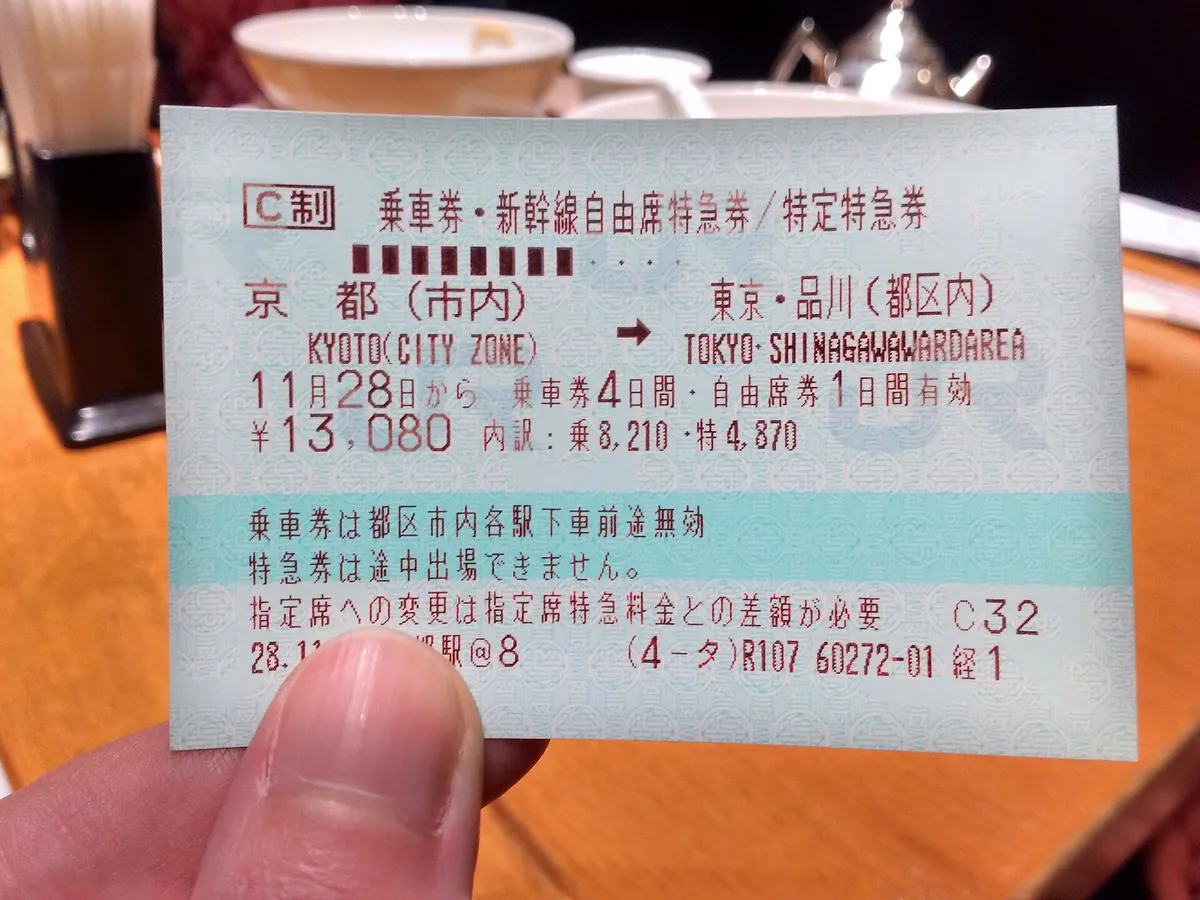
Half means half of the basic fare, the limited express and express charges, and the reserved seat charge. JR rounds down any 5 yen, so a child ticket can come out a few yen under an exact half.
JR Kyushu’s fare page uses the same 6 to 11 child band and the same half-fare rule. The pattern holds whether you are in Tokyo, Hiroshima or Fukuoka.
There is one upgrade trap. A child’s Green Car charge is the same as an adult’s, even though the basic fare underneath stays at half.
JR and Tokyo Metro both treat a 12-year-old who is still in elementary school as a child, so a sixth-grader keeps the child fare on trains and the subway.
2. The two-free-per-adult limit and the third toddler
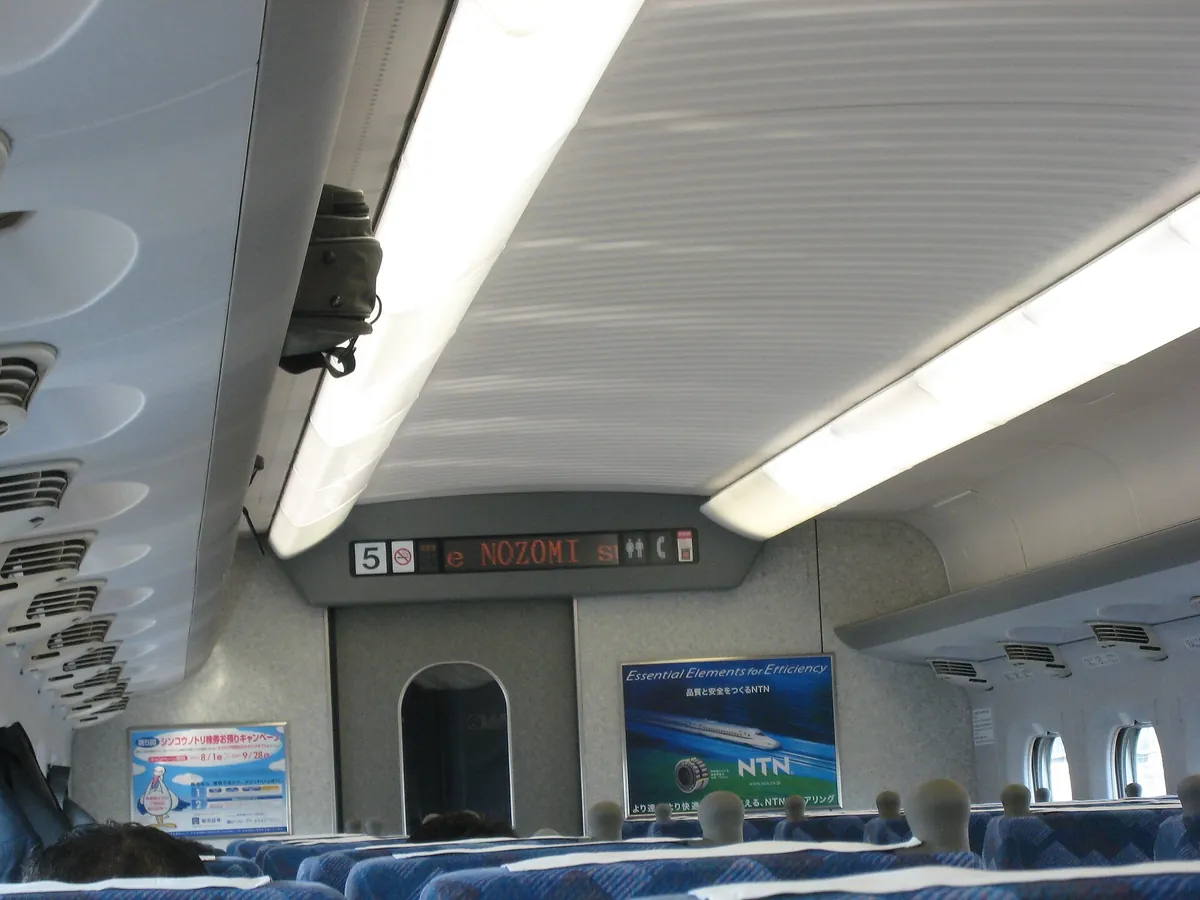
Two parents with two toddlers: everyone small rides free. One parent alone with three under-6s is different, because JR Central charges from the third infant onward, at the child fare.
JR Kyushu says the same, and so does Tokyo Metro’s age page. Tokyo Metro adds a helpful detail: up to two toddlers ride free with an adult or with a child, so a 10-year-old on a child ticket counts as an escort for a younger sibling.
Count heads per adult, not per family.
The same counting matters for a grandparent trip. Two grandparents with three under-6s are fine; one grandparent alone with all three is not.
3. A reserved seat ends the free ride
JR’s free ride covers a lap. The moment a baby or infant uses a reserved seat, a Green Car seat (unreserved Green seats excepted) or a sleeper bed, they pay a child fare.
Most families meet this rule at the seat-selection screen. Booking four seats for a family of four with a 4-year-old means buying a child ticket for that 4-year-old.
On a long leg, that is a real choice: a couple of hours with a child on your knee, or roughly half an adult ticket for their own seat. The next section puts yen on it.
Short local rides rarely raise the question. Commuter trains and subways have no reserved seats, so a toddler simply rides free inside the two-per-adult limit.
What a Tokyo to Kyoto Nozomi Costs a Family of 4
Here is a sum the usual family-travel lists skip. Take two adults, an 8-year-old and a 4-year-old riding the Nozomi from Tokyo to Kyoto one way in regular season, booked on smartEX.
- Tokyo Station
- Tokaido Shinkansen Nozomi · a little over 2 h
- Kyoto Station
Adult fares come from smartEX’s reserved-seat fare sheet: ¥13,970 one way, and ¥13,320 for a non-reserved seat. Both sheets are dated April 1, 2025 and were still the posted versions in November 2026.
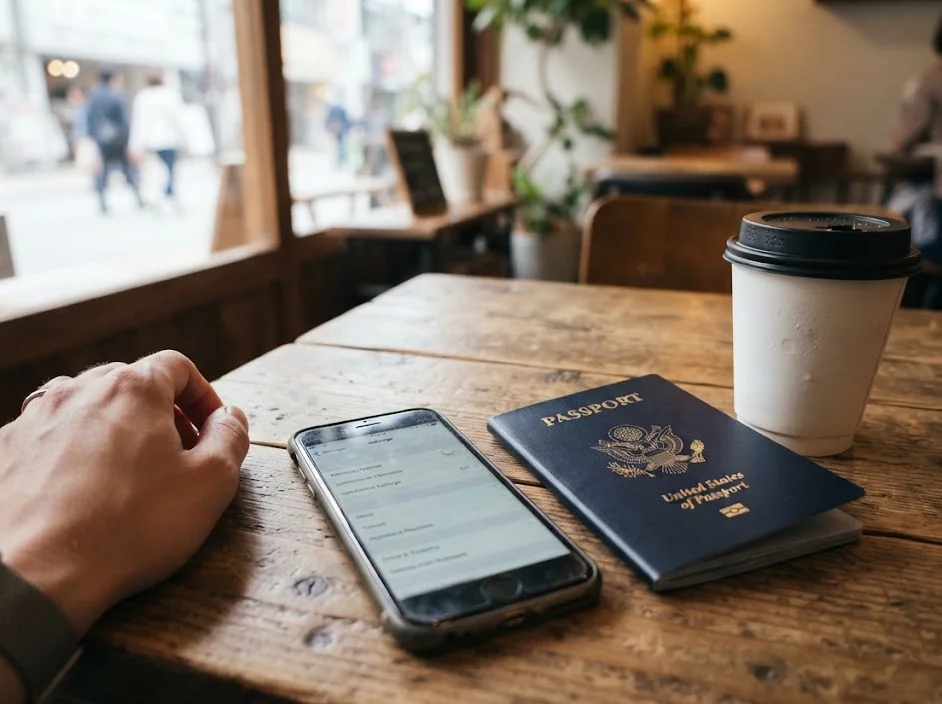
The same sheets list the child fares: ¥6,980 for a reserved seat and ¥6,660 non-reserved. All totals below are estimates as of 2026; check smartEX for your date.
← Swipe to see the full table →
| Set-up | Who pays | Estimated total |
|---|---|---|
| A. 4-year-old on a lap, 3 reserved seats | 2 adults, 1 child | About ¥34,900 |
| B. 4-year-old in own reserved seat | 2 adults, 2 children | About ¥41,900 |
| C. Non-reserved cars 1 and 2 | 2 adults, 1 child | About ¥33,300, no seat promised |
Our pick: set-up A for most families, a reserved row for about ¥1,600 more than non-reserved.
Season moves the adult fares a little. smartEX lists off-peak at ¥200 less, peak at ¥200 more and super peak at ¥400 more per adult ticket.
4. Lap or own seat: ¥6,980 a leg
The gap between A and B is one reserved child fare, ¥6,980 each way. Over a Tokyo to Kyoto round trip, the toddler’s seat costs around ¥14,000.
Is it worth it? For a nap-age child who sleeps well on a parent, maybe not. For a restless 5-year-old on a ride of a little over two hours, the extra seat buys space for everyone.
Set-up C looks cheapest, but it has two catches. No seat is promised in cars 1 and 2, and during Golden Week, Obon and New Year JR Central makes the Nozomi all-reserved, so those cars are not there to fall back on.
Book reserved for any holiday date.
Not sure whether to book online or at a station window? Our guide to shinkansen tickets online vs in person walks through both. If you prefer a reseller, Klook also lists rail tickets; compare its price with smartEX before you pay.
5. When the JR Pass maths changes for a family
The official JR Pass price page listed the 7-day ordinary pass at ¥50,000 for adults and ¥25,000 for children as of November 2026. A child means aged 6 to 11 at the time of use.
For our family, that is 2 × ¥50,000 plus ¥25,000, or ¥125,000, with the 4-year-old riding free on a lap. A Tokyo to Kyoto round trip in set-up A comes to about ¥69,800.
So the pass only starts to pay off if the rest of the week adds roughly ¥55,000 more of JR travel for the family. Whether the pass pays off depends on your route; add up the individual fares first. Our JR Pass calculator costs five common routes.
Buying online? The official site uses the child’s age on the payment date, so check birthdays before you pay. If you buy through a reseller such as Klook or GetYourGuide, make sure the child price matches the official one.
Strollers on the Shinkansen, Subway and Kyoto City Bus
Can you take a stroller on Japan’s trains and buses? Yes, on the shinkansen, the subway and buses that show the stroller mark. Each has its own small rule, and knowing them saves an awkward moment at the door.
6. Shinkansen: no oversized-baggage booking for strollers
On the Tokaido Shinkansen, JR Central requires a reservation for bags with total dimensions of 161 to 250 cm. Carry one on without booking and there is a baggage fee of ¥1,000 including tax.
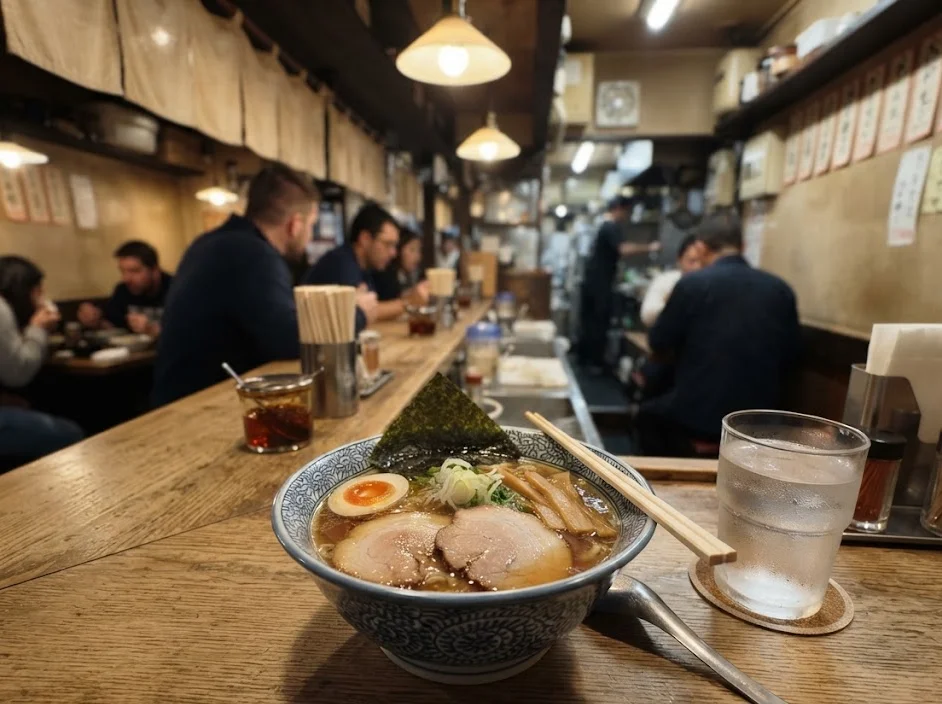
Strollers are exempt. JR Central’s oversized baggage page says the rule does not apply to strollers, which can go in the baggage racks, baggage compartments or oversized luggage spaces.
You only need a reservation if you want the oversized baggage area or compartment for the stroller. That rule is JR Central’s for the Tokaido Shinkansen; on other JR lines, ask staff.
The exemption covers the stroller, not your suitcases: a family with a stroller and two large cases still needs to reserve space for the cases.
7. Subway: every train, but keep the doors clear
Kyoto’s subway says plainly that families with strollers can use every train. It asks you to position the stroller so it does not block other passengers, and to allow extra time to get on and off.
Tokyo Metro’s manners page asks stroller users not to block other passengers’ path, and asks riders to give priority seats to commuters with infants. In practice, park the stroller away from the doors and the aisle, and hold it while the train moves.
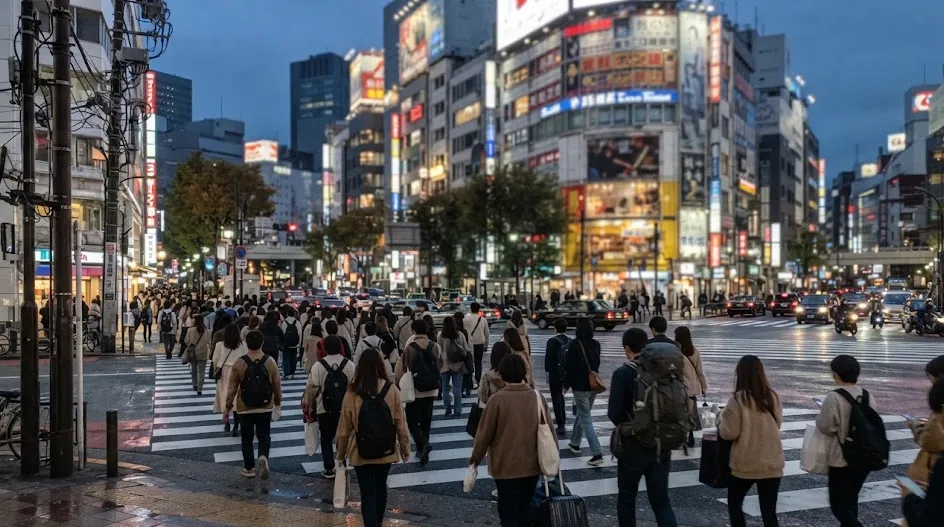
Elevators are the real time cost. A station can have several exits, and only some reach the street by elevator.
8. Kyoto city bus: backwards, locked, strapped
Kyoto City’s stroller guide for city buses sets out four steps. Face the stroller toward the back of the bus and engage the locks, fasten the baby’s stroller belt, attach the bus safety strap, and hold on the whole time.
Only buses with the stroller symbol take an open stroller. If the bus pulling in has no mark, wait for the next one, or fold the stroller and carry the child.
Kyoto’s buses are a common choice for temple days, so this rule comes up often there.
What most first-timers do
- Bring a heavy travel system with car seat
- Board trains around 8 a.m. on a weekday
- Count on non-reserved Nozomi seats in Golden Week
- Forget that big suitcases still need booking
What actually works
- Bring a light stroller that folds fast, plus a carrier
- Ride after the morning rush
- Reserve seats for every holiday-date leg
- Reserve case space; the stroller goes in a rack
Comparing light travel strollers and baby carriers on Amazon before you fly is easier than hunting for one in Japan. A carrier also covers stairs and crowded platforms where wheels slow you down.
Planning your visit?
The Family Car on the Nozomi: Car 12, Holiday Dates Only
At its busiest holiday peaks, JR Central sets aside one car on some Nozomi trains for families with children. It is the closest thing Japan’s main bullet train has to a family section, and it sells on a fixed clock.
9. How the family car works and when it sells
For Golden Week 2026, from 1 to 6 May, JR Central ran the family car on 70 Nozomi trains between Tokyo and Shin-Osaka, always in car 12. For the previous New Year period, 26 December 2025 to 4 January 2026, it ran on 64 trains.
Sales open one month before the travel date, at 10:00 Japan time. You can book through EX services such as smartEX, at station ticket windows, at travel agents or at ticket machines.
Set an alarm for 10:00 Japan time.
JR Central sets no age limit for the children, and passengers who are not families may also be seated in the car. Car 12 sits near the toilets with diaper-changing tables and the multipurpose room, but it has no seats with oversized baggage space.
That last point matters if you travel with big suitcases. Sending them ahead with Yamato luggage forwarding frees both hands for the stroller; our luggage forwarding guide explains how it works.
Dates for winter 2026 to 2027 were not yet listed when this guide was checked in November 2026. The car is set only for holiday peaks, so check JR Central’s announcements about a month before you travel.
On any Tokaido or Sanyo shinkansen, JR West describes a multipurpose room for nursing a baby or changing, with priority for customers with disabilities. The toilets include diaper-changing tables.
IC Cards and Passes for Kids: 2 Things to Sort Out
Tap cards make city trains easy for adults. For children, the card has to know the child’s age, so a little planning before the first gate saves paying adult fares by accident.
10. Child IC cards charge child fares
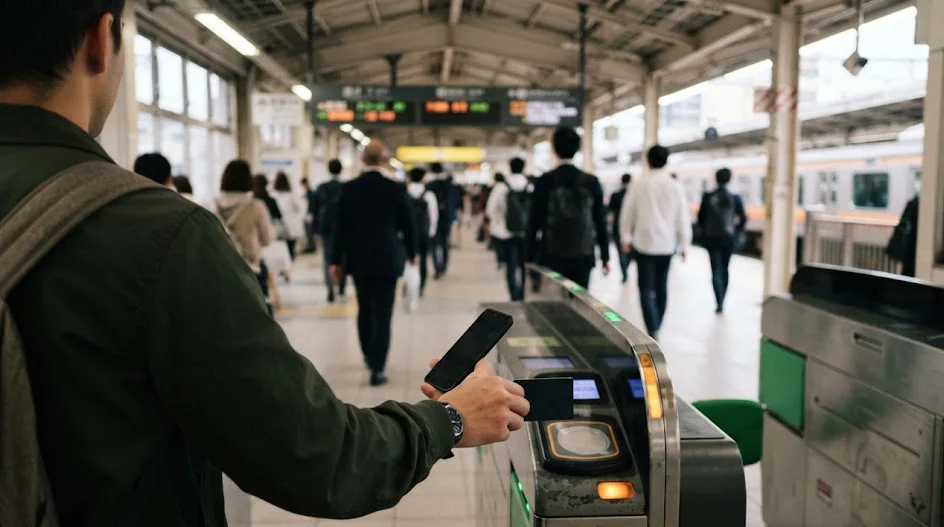
Tokyo Metro’s fare table shows the gap. For a 1 to 6 km ride, an IC card pays ¥178 for an adult and ¥89 for a child; a paper ticket is ¥180 and ¥90, as of 2026.
Child IC cards charge child fares. Buy them at a staffed counter and bring the child’s passport, and check JR East or JR West’s own pages before you fly, because the details change.
Under-6s inside the two-per-adult limit need no card at all.
On the deposit, JNTO’s IC card page says cards for international visitors, such as Welcome Suica and TOURIST PASMO, come without a deposit, while most other IC cards take ¥500.
Checking routes and elevator exits on a phone needs data. An eSIM from Airalo or Ubigi set up before the flight means maps work from the arrivals hall.
11. Tokyo Subway Ticket at child prices
The Tokyo Subway Ticket is sold to overseas visitors, with child prices at half. As of 2026, Tokyo Metro lists these:
- 24 hours: adult ¥1,000, child ¥500
- 48 hours: adult ¥1,500, child ¥750
- 72 hours: adult ¥2,000, child ¥1,000
A child’s 24-hour ticket passes the cost of single IC fares at roughly six short rides. A sightseeing day with three or four stops each way usually gets there.
Toddlers do not need one, since they already ride free inside the limit. Klook lists Tokyo Subway Tickets too, if you would rather have it sorted before landing. For which Tokyo days suit children, see our 4-day Tokyo with kids plan.
Baby Rooms, Diapers and Stroller Rental Across Japan
Where do you change a diaper or warm milk mid-day? Japan has more answers than most visitors expect, but you need to know where to look.
12. Nursing rooms and the Mama Papa app
JNTO’s family travel page describes nursing rooms with hot water dispensers, microwaves for baby food and private nursing cubicles. It points to the Mama Papa App for finding them near you.
- Nursing rooms: hot water, microwaves, private cubicles
- Stroller rental: theme parks, parks, museums, aquariums, airports
- Some stations also rent strollers
- Shinkansen: multipurpose room and diaper tables on board
Should you bring a stroller or rent one? Rent only if you know a rental point sits on your route. Otherwise bring a light stroller and a carrier, and use whichever suits the day.
Download the app before you fly.
13. One example: the Children’s Smile Spot at Ueno-okachimachi
Tokyo’s Toei network opened a baby station at Ueno-okachimachi Station on the Oedo Line in July 2023. It sits outside the ticket gates, according to the Tokyo Metropolitan Government notice.
- Nursing room open 8:00 to 20:00
- Babycal stroller rental 8:00 to 21:00
- Rental: ¥250 first hour, ¥100 per extra 30 minutes
- Vending machines for diapers and formula
Those figures come from a 2023 notice, so check before you go. It is one example of what the bigger stations can offer, not a promise that every station has the same.
Before a long day out, look up the nearest nursing room in the Mama Papa App rather than hoping the next station has one.
Food That Works for Kids in Japan
Picky eaters worry parents more than train rules. The good news is that Japan has easy fallbacks in almost every town, and you can plan around them.
14. Family restaurant chains when nobody agrees
JNTO names Saizeriya, Gusto, Denny’s and Sushiro as family restaurant options on its family travel page. A familiar chain menu takes the guesswork out of a meal when a child is tired and hungry.
Plan one chain meal a day as a safety net. Then the adventurous meals, the ramen counter or the izakaya, feel like a bonus rather than a risk.
Use the chains on travel days.
A shinkansen day is the worst time to test a new restaurant with a tired child. Eating near the station before boarding keeps the day simple.
15. Convenience-store backup and the ryokan futon question
JNTO notes that baby food is easy to find at most convenience stores. That makes the corner shop near your hotel the backup for late arrivals and early starts.
Sleeping arrangements need a question before you book. JNTO suggests asking a ryokan about futons for children before you arrive.
- On Booking.com or Agoda, filter for family rooms near a station
- Message the property about futons or extra bedding
- Ask how children are counted for the room rate
- Check for an elevator if you bring a stroller
Not sure a ryokan night suits small children? Our piece on whether a ryokan is worth it weighs it up. Booking.com and Agoda both let you send the property a question before you pay.
One Habit: Move After 9:30 a.m. and Find the Elevator First
The sources point to one rule of thumb. Tokyo Metro’s women-only cars run until about 9:30 a.m., a sign of how heavy the morning commute is, and JR Central turns every Nozomi seat reserved in Golden Week, so a free toddler rides on a lap.
Put those together and the habit is simple: book seats early, start late in the morning, and know your elevator before you leave.
Step 1: Reserve seats for every long leg
Book shinkansen seats as soon as your dates are fixed, and decide lap or own seat for each toddler at that moment.
Step 2: Start moving after the morning rush
Plan station moves after about 9:30 a.m., when the women-only car period ends and trains have more room for a stroller.
Step 3: Look up the elevator exit the night before
Check which exit has the elevator at each station you will use, so you are not carrying a stroller up stairs.
Step 4: Send big bags ahead with Yamato
Forward suitcases between hotels so your hands stay free for children and the stroller.
Arrival day is the hardest move of the trip. A pre-booked airport transfer from Klook or GetYourGuide keeps children, stroller and bags in one vehicle.
Do this and most of the rules above stop mattering.
Questions Parents Ask About Japan Trains
Does a 5-year-old need a JR Pass?
No. The JR Pass child price is for ages 6 to 11, and under JR’s general rules a 5-year-old on a lap rides free. If you want them in their own reserved seat, ask at the ticket window how that is ticketed.
Can my son ride the women-only car with me?
On Tokyo Metro, yes, if he is in elementary school or younger. The women-only cars run until about 9:30 a.m. and also take elementary school students and younger children.
Does my child pay the Green Car charge?
Yes, at the adult price. JR Central charges children the same Green Car price as adults, while the basic fare underneath stays at half.
Planning trains, strollers and meals for small children can feel like a lot to hold in your head at once.
Rather than re-reading more blogs, lock in the seats and the elevator exits now, and adjust the rest once you land.
Keep planning
- ① Install and test your eSIM before take-offAiralo and Ubigi eSIMs activate on arrival, but the install itself needs Wi-Fi. Do it at home and confirm the profile shows up in your phone settings.
- ② Save your first hotel’s address in JapaneseTaxi drivers and station staff read Japanese addresses far faster than romanised ones. Copy it from the booking confirmation into your notes app.
- ③ Set aside cash for day oneMany small restaurants, temples and rural buses are still cash-only. Airport ATMs at 7-Eleven and the post office accept most foreign cards.
Skip these and your first hour in Japan goes on finding Wi-Fi at the station instead of getting to your hotel.
🔍 How to sanity-check any price you read online
Blogs (including this one) go out of date. The official page always wins over a screenshot from two years ago.
Cover Photo: Basile Morin, CC BY-SA 4.0, via Wikimedia Commons