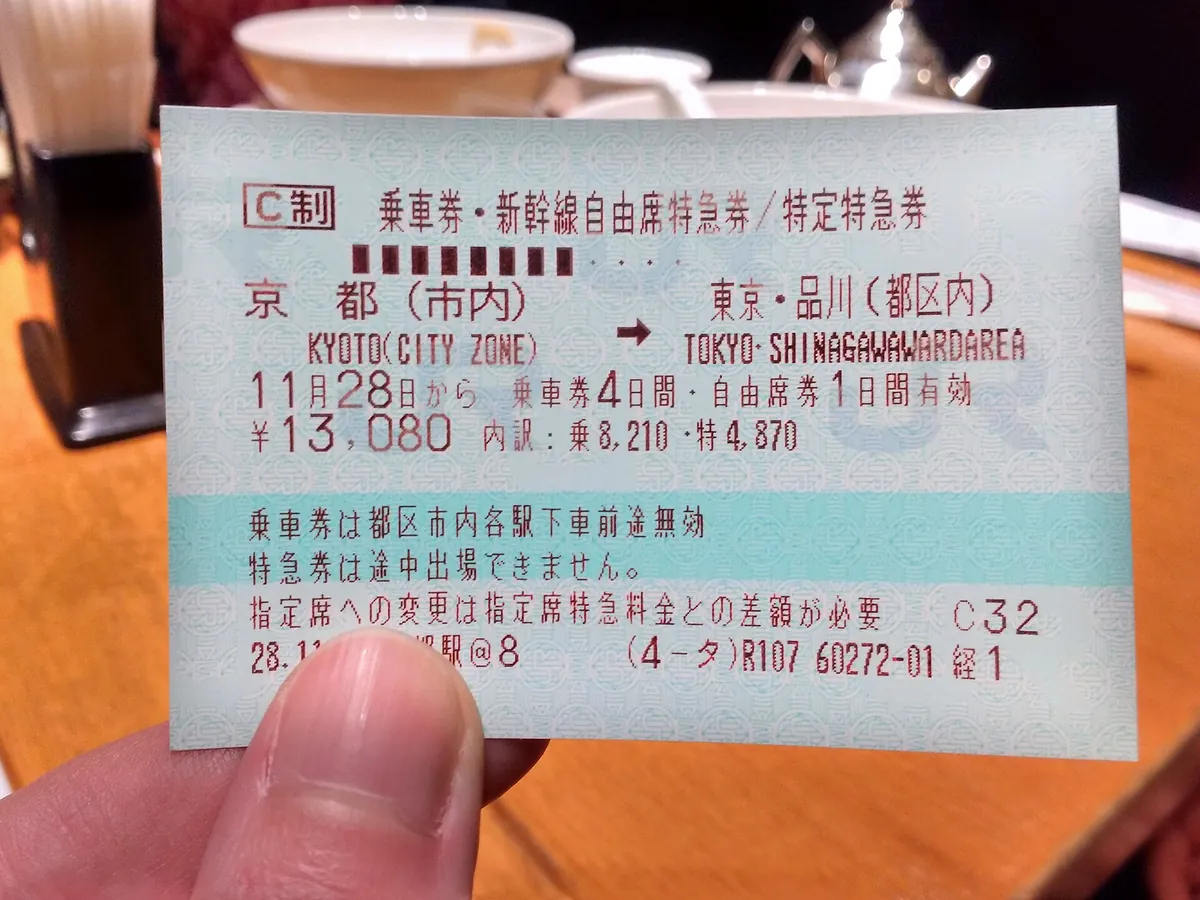

- Online: Smart EX (Tokyo–Osaka–Hakata), JR-EAST Train Reservation (north), JR-WEST (west).
- In person: a JR ticket machine with English menus, or the JR ticket office.
- Book online for peak dates and Fuji seats; buy in person for non-reserved seats or a JR Pass.
- Fastest Tokyo–Osaka
- 2 h 21 min to Shin-Osaka
- Tokyo–Kyoto fare
- ¥13,970 reserved (smartEX price)
- Seat upgrade
- Reserved is ¥650 over non-reserved
- Booking
- Needed on all-reserved Nozomi dates
- Price checked
- October 2026
Top picks
Where we would book this
Klook
One account for passes, tickets and transfers
- Best for
- JR Pass and regional rail passes, theme-park tickets, airport…
- Checked
- September 2026
Official site. Same price for you.
Where we would book this
Japan Rail Pass official site
The only source of the current pass price and rules
- Best for
- Official conditions, eligibility and the current price of the…
- Checked
- September 2026
Official site. Same price for you.
Fares, seat rules and booking windows checked in October 2026; confirm on the official JR site before you book.
A Shinkansen ticket is really two decisions: where you buy it, and which seat you pay for. Get both right and the rest is just walking to the platform.
The short version for first-time visitors: book online when the seat matters, and buy at the station when it does not. On the Tokaido line, a reserved seat costs less through Smart EX than at the station, while a non-reserved ticket costs the same either way.
This guide covers the three official JR booking sites, the station machines, and the seat choice that most guides skip. All fares below are adult, one way, and taken from JR’s own fare tables.
What decides online vs in person for your trip
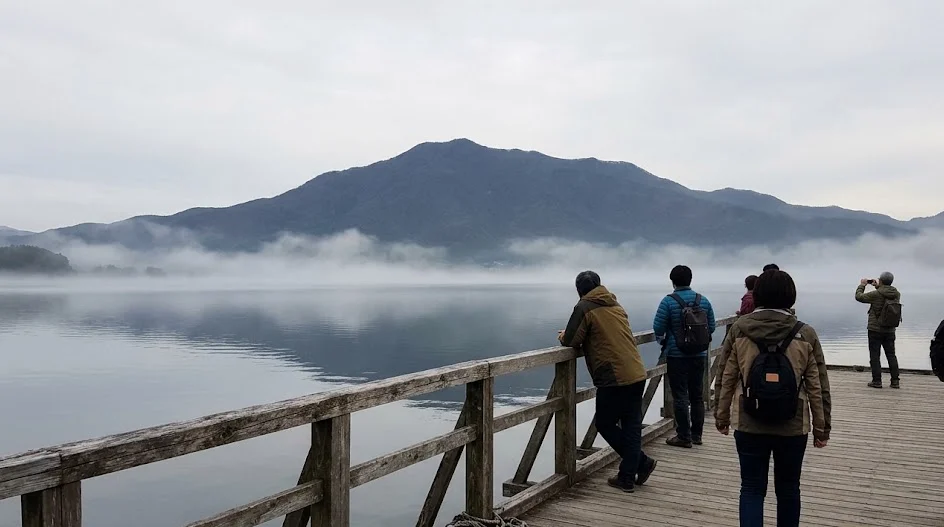
The fear behind most Shinkansen questions is being stranded at a station with no seat. That risk is real on a handful of dates each year and small on the rest.
So start with your dates and your group, not with the app. A couple riding on a Tuesday in June has very different needs from a family of five heading to Kyoto over New Year.
- Travelling over New Year, Golden Week, Obon or a 3-day weekend
- Three or more people who want to sit together
- You want a window seat facing Mt Fuji
- A suitcase bigger than a standard carry-on
- You hold a Japan Rail Pass
- Your bank card does not support 3D Secure
Ticked any of the first four? Book online, ahead of time. Ticked the last two? The station is the easier route, because Smart EX cannot be used with a JR Pass and needs a card that passes 3D Secure checks.
Nothing ticked? Either way works. Buy at the machine on the day if you prefer not to make an account.
Smart EX for Tokyo, Kyoto, Osaka, Hiroshima and Hakata
Why Smart EX is the first choice on the Tokaido line
Smart EX is JR Central’s official booking service for the Tokaido, Sanyo and Kyushu Shinkansen. That is the Tokyo–Nagoya–Kyoto–Shin-Osaka–Hiroshima–Hakata corridor most visitors ride.
Sign-up is free, with no annual fee or service fee. It cannot book other lines, and Smart EX states it cannot be used with the Japan Rail Pass.
The reason to bother is price. The smartEX basic fare for a reserved seat is lower than the same seat bought at the station. For non-reserved seats, JR Central’s FAQ says the price is the same as at the station.
Cards and the 3D Secure check
Smart EX accepts Visa, Mastercard, JCB, American Express, Diners Club and Discover. The card must support 3D Secure, and Smart EX warns that debit and prepaid cards may be declined.
Register and add your card at home, not on the platform. If the card fails, you still have time to try another one or call your bank.
A mobile data plan, for example an Airalo eSIM, keeps the app working once you land.
QR ticket or IC card at the gate
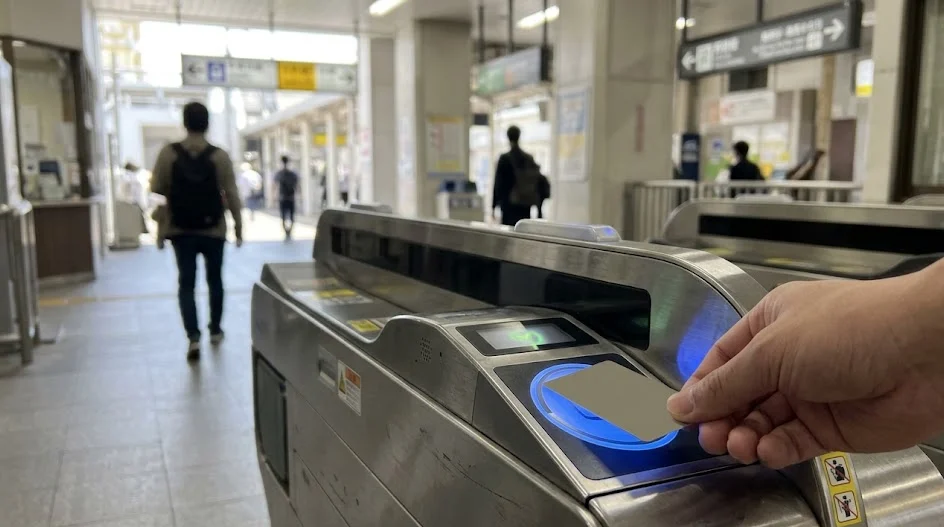
Smart EX is no longer an IC-card-only service. Your ticket can be a QR code on your phone, and you can still link a transit IC card if you prefer to tap.
Either way, no paper is involved. Keep your phone charged, since the QR code is the ticket.
How far ahead, and how often you can change
Smart EX takes bookings from 5:30 am one year before the travel date, up to 4 minutes before departure. Bookings made more than a month ahead do not have a confirmed train or seat at first; those are confirmed from one month before.
Changes are free and unlimited before departure. Cancelling before departure costs a ¥320 refund fee for standard-car seats (Green Car fees differ).
Smart EX also sells EX Hayatoku fares, discounts for booking 1, 3, 7 or 21 days ahead. Prices for some zones changed in spring 2026, so check the current amount on the EX Hayatoku page.
JR-EAST and JR-WEST booking sites for the north and west
JR-EAST Train Reservation for Sendai, Aomori and Kanazawa
Heading north from Tokyo? The English booking site for JR East lines is JR-EAST Train Reservation, the English side of Eki-net.
JNTO describes it as selling JR East rail passes and point-to-point tickets one month in advance. Use it for JR East lines heading north from Tokyo, which Smart EX does not cover.
Check the pickup and ticketless options on the site itself before you book.
JR-WEST Online Train Reservation for Hiroshima and beyond
JR-WEST Online Train Reservation covers the Sanyo, Hokuriku and Kyushu Shinkansen. On the Tokaido line it sells regular tickets only.
Bookings open at 10:00 am Japan time one month before travel and close 6 minutes before departure. You pay by credit card when you book, and one booking holds up to 6 people.
It suits a western loop such as Osaka, Hiroshima and Fukuoka, or a trip that also uses JR West regional trains.
Picking up JR-WEST tickets at an e5489 machine
JR-WEST tickets are collected at ticket machines marked e5489. Bring three things: the credit card you paid with, your identification number, and the 5-digit reservation number that starts with 4.
Machines at JR West, JR Shikoku, JR Kyushu and JR Central stations can issue them. JR West also says you can still collect on the same day after the departure time.
How to reserve a Shinkansen seat in 5 steps
The steps are the same idea online or at a machine. Only the last two differ.
Step 1: Match the booking site to your route
Smart EX for Tokyo–Osaka–Hakata, JR-EAST for the north, JR-WEST for the west. No account? Use a station machine.
Step 2: Set up the account before you fly
Register and add a card that passes 3D Secure. Fix any card problem at home.
Step 3: Pick train, class and seat
Choose reserved, non-reserved or Green Car. Select seat E for Fuji, or an oversized baggage seat.
Step 4: Pay and get the ticket
Smart EX shows a QR ticket. JR-WEST tickets come from an e5489 machine. A station machine prints paper.
Step 5: Go through the gate to your car
Scan the QR or tap your IC card. With paper, stack both tickets and insert them together.
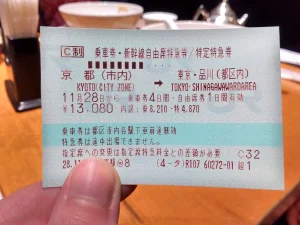
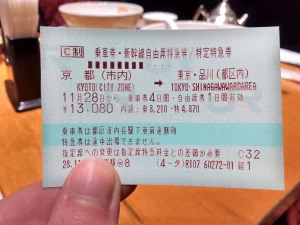
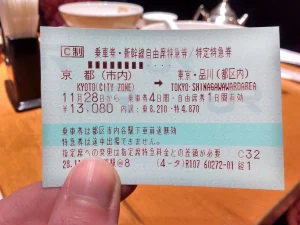
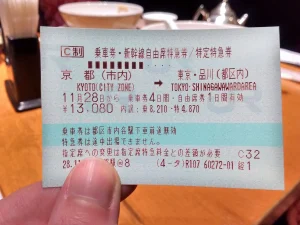
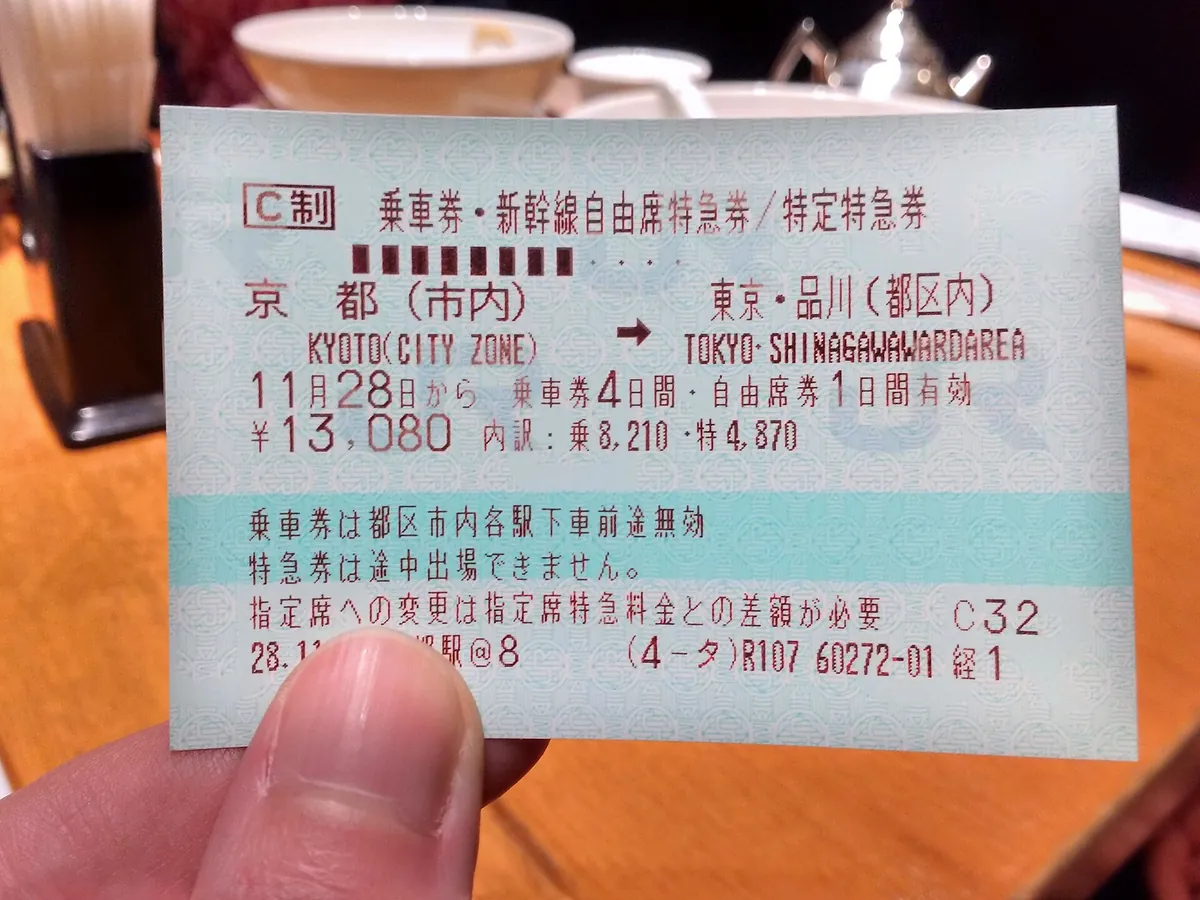
One detail catches people at the gate. A paper Shinkansen journey often comes as two tickets, the fare ticket and the express ticket.
JR Central’s instruction is to stack both tickets and insert them into the slot at the same time. Then check the car number printed on the ticket against the signs on the platform.
Buying in person: ticket machines and JR counters
Station machines with English menus
JR Central says every ticket machine in its stations has English menus and sells tickets with information in English. You need no account and no 3D Secure check.
This is the simplest route for non-reserved seats. The price matches the online non-reserved price, so there is nothing to gain by booking ahead.
Reserved seats can be bought at the machine too. On the Tokaido line they cost a little more than the smartEX price.
When the JR ticket office is the better choice
Go to a staffed JR ticket office when the problem is not the ticket itself. That covers JR Pass seat reservations, odd routings and changes you cannot make on a machine.
A station ticket can be changed once, free, to a ticket of the same type. Refunding a reserved seat ticket costs ¥340 until 2 days before travel, then 30% with a ¥340 minimum.
That one-change limit is a real difference from Smart EX. Expect plans to shift? Online is more forgiving.
Which seat to buy: reserved, non-reserved or Green Car
This is where most of the money and stress sits. The price gaps are smaller than many visitors expect.
What a seat upgrade really costs from Tokyo
These are smartEX prices, adult, one way, on a Nozomi in regular season. Station prices for reserved and Green seats are a little higher.
← Swipe to see the full table →
| Tokyo to | Non-reserved | Reserved | Green Car |
|---|---|---|---|
| Nagoya | ¥10,560 | ¥11,100 | ¥14,760 |
| Kyoto | ¥13,320 | ¥13,970 | ¥18,840 |
| Shin-Osaka | ¥13,870 | ¥14,520 | ¥19,390 |
Plan your trip: the tools we use

Our pick: a reserved seat, the cheapest way to be sure of sitting down.
Do the subtraction and the picture is clear. A seat of your own to Kyoto or Shin-Osaka costs ¥650 more than non-reserved; to Nagoya it is ¥540.
Green Car adds another ¥4,870 to Kyoto or Shin-Osaka, and ¥3,660 to Nagoya. That is a comfort purchase, not a booking trick.
Season matters a little. Reserved and Green prices drop ¥200 in off-peak season, rise ¥200 in peak season and ¥400 in super peak. Non-reserved prices do not change.
Which cars are non-reserved
Since 15 March 2025, car 3 on every Nozomi has been reserved. That leaves non-reserved seats in cars 1 and 2 only.
- Nozomi: cars 1–2 non-reserved, Green Cars 8–10
- Hikari: cars 1–5 non-reserved
- Kodama: cars 1–6 and 13–16 non-reserved
JR Central notes these car numbers are subject to change. Two cars on a busy 16-car train fill up fast, which is why the ¥650 reserved seat is cheap insurance.
Trains with no non-reserved cars at all
Some trains have only reserved seats. A non-reserved ticket does not get you a seat on them.
- Kagayaki on the Hokuriku line: all reserved, all year
- Nozomi during major peak periods: all reserved
On the Hokuriku line, the Hakutaka has non-reserved cars (usually cars 1–4; check your train), so that is the fallback if a Kagayaki is full.
On all-reserved Nozomi dates, JR Central says a non-reserved ticket gives you no seat. You may stand in the deck area, and you may be unable to board when it is crowded. Hikari, Kodama, Mizuho, Sakura and Tsubame keep their non-reserved cars as usual.
The Mt Fuji side: seat E or seat D
JR Central’s advice is simple: seat E in a standard car, or seat D in the Green Car. This applies on the Tokaido line between Tokyo and Shin-Osaka.
Seat E in a non-reserved car faces the same way, but you cannot choose it. If the view matters, a reserved seat E is the cheapest sure way to get it.
Planning to visit the mountain itself? See the Mt. Fuji day trip from Tokyo.
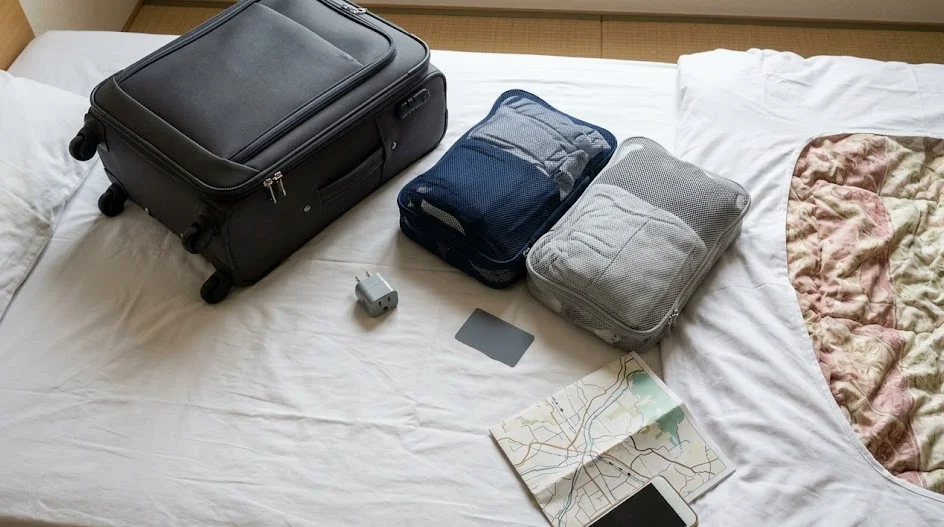
Big suitcases: oversized baggage seats
On the Tokaido, Sanyo, Kyushu and Nishi-Kyushu Shinkansen, a bag whose three sides add up to 161–250 cm needs a seat with an oversized baggage space.
Board without that reservation and you pay a ¥1,000 baggage fee. Bags over 250 cm cannot be brought on board at all.
Select the oversized baggage seat when you book, online or at the machine. Or skip the problem and send the bag ahead; see luggage forwarding in Japan.
So which seat should you buy?
What most first-timers do
- Buy non-reserved to save a little
- Assume Nozomi has 5 free cars
- Pay for Green to find a seat
- Ignore the big-bag rule
What actually works
- Pay ¥650 more for a reserved seat
- Remember Nozomi has 2, or none at peaks
- Book Green only for comfort
- Reserve a baggage seat for 161 cm+
Solo, off-peak, light bag and flexible? Non-reserved is fine, especially on a Hikari or Kodama with more free cars.
Everyone else should reserve.
Since 1 October 2026, Smart EX has also offered a new Supreme Class on selected trains. It is online only, with no paper tickets.
4 booking options side by side
← Swipe to see the full table →
| Method | Covers | Best for |
|---|---|---|
| Smart EX | Tokaido, Sanyo, Kyushu | Reserved seats at a lower price, many changes |
| JR-EAST Train Reservation | JR East lines | Sendai, Aomori, Kanazawa |
| JR-WEST Online | Sanyo, Hokuriku, Kyushu | Western loops, groups up to 6 |
| Station machine or office | All JR lines | Non-reserved seats, JR Pass holders |
Our pick: Smart EX for Tokyo–Kyoto–Osaka, the machine for spur-of-the-moment non-reserved trips.
Ticket form differs too. Smart EX uses a QR code or IC card, JR-WEST prints paper at an e5489 machine, and the station machine prints paper on the spot.
Comparing the train with a flight on the same route? See flying vs the train from Tokyo to Kyoto.
Third-party resellers: when they make sense
Many travel sites sell Shinkansen tickets. They sit between you and JR, so changes and refunds go through them rather than through the station.
That extra layer can slow things down if your plans change on the day. JR’s own sites and machines let you change or refund directly.
A family that wants English support in one place may still prefer a service like Klook. Compare its price with the official fare before you pay.
Start with the official sites.
Peak dates, sold-out trains and missed departures
All-reserved Nozomi dates through March 2027
JR Central makes every Nozomi seat reserved during major peak periods. The remaining dates in its 2026 schedule are:
- 21–23 November 2026
- 25 December 2026 to 5 January 2027
- 9–11 January 2027
- 20–22 March 2027
Earlier in 2026, Golden Week, Obon, Silver Week and the October 3-day weekend were also all-reserved. Dates for Golden Week 2027 are not published yet.
On these dates, book as soon as your trip is fixed.
If your train is sold out
- Try a departure a little earlier or later
- Switch to a Hikari, which keeps non-reserved cars 1–5
- Book Green Car if you are willing to pay for it
- Ask at the JR ticket office for other options
Outside peak periods, a non-reserved seat on a Hikari or Kodama is a fair fallback. During all-reserved Nozomi periods, those trains still have their non-reserved cars.
If you miss your reserved train
With a station ticket, JR Central allows a reserved seat ticket to be used in a non-reserved seat on the same day. Smart EX has the same rule for a later train that day, except for EX Hayatoku fares.
The catch: on an all-reserved Nozomi date there are no non-reserved seats. Change the booking before departure instead; Smart EX lets you do that for free as often as you need.
FAQ
QIs it better to buy Shinkansen tickets online or in person?
For reserved seats on the Tokaido line, online through Smart EX is cheaper and easier to change. For non-reserved seats the price is the same, so a station machine is fine.
QDo I need to book weeks in advance?
Book early for New Year, Golden Week, Obon and the 3-day weekends when Nozomi is all reserved. On other dates, Smart EX sells seats up to 4 minutes before departure, so short-notice booking is possible if seats remain.
QCan I use my JR Pass on the Nozomi?
Not on its own. JR Central says Nozomi and Mizuho need a special NOZOMI MIZUHO Ticket on top of the Japan Rail Pass. Whether the pass pays off depends on your route; see JR Pass vs individual tickets.
QCan I change my seat after booking?
Yes. Smart EX allows free, unlimited changes before departure. A ticket from a station machine or counter can be changed once for free to the same type of ticket.
QWhich side of the train is Mt Fuji on?
Seat E in a standard car or seat D in the Green Car, on the Tokaido line between Tokyo and Shin-Osaka.
Sorting out train tickets can feel like a test you have to pass before the trip even starts.
You do not need to read every forum thread; decide where you will buy and which seat you want, and adjust the rest once you are in Japan.
Keep planning
- ① Install and test your eSIM before take-offAiralo and Ubigi eSIMs activate on arrival, but the install itself needs Wi-Fi. Do it at home and confirm the profile shows up in your phone settings.
- ② Save your first hotel’s address in JapaneseTaxi drivers and station staff read Japanese addresses far faster than romanised ones. Copy it from the booking confirmation into your notes app.
- ③ Set aside cash for day oneMany small restaurants, temples and rural buses are still cash-only. Airport ATMs at 7-Eleven and the post office accept most foreign cards.
Skip these and your first hour in Japan goes on finding Wi-Fi at the station instead of getting to your hotel.
🔍 How to sanity-check any price you read online
Blogs (including this one) go out of date. The official page always wins over a screenshot from two years ago.
Cover Photo: Marek Ślusarczyk (Tupungato) Photo portfolio, CC BY 3.0, via Wikimedia Commons