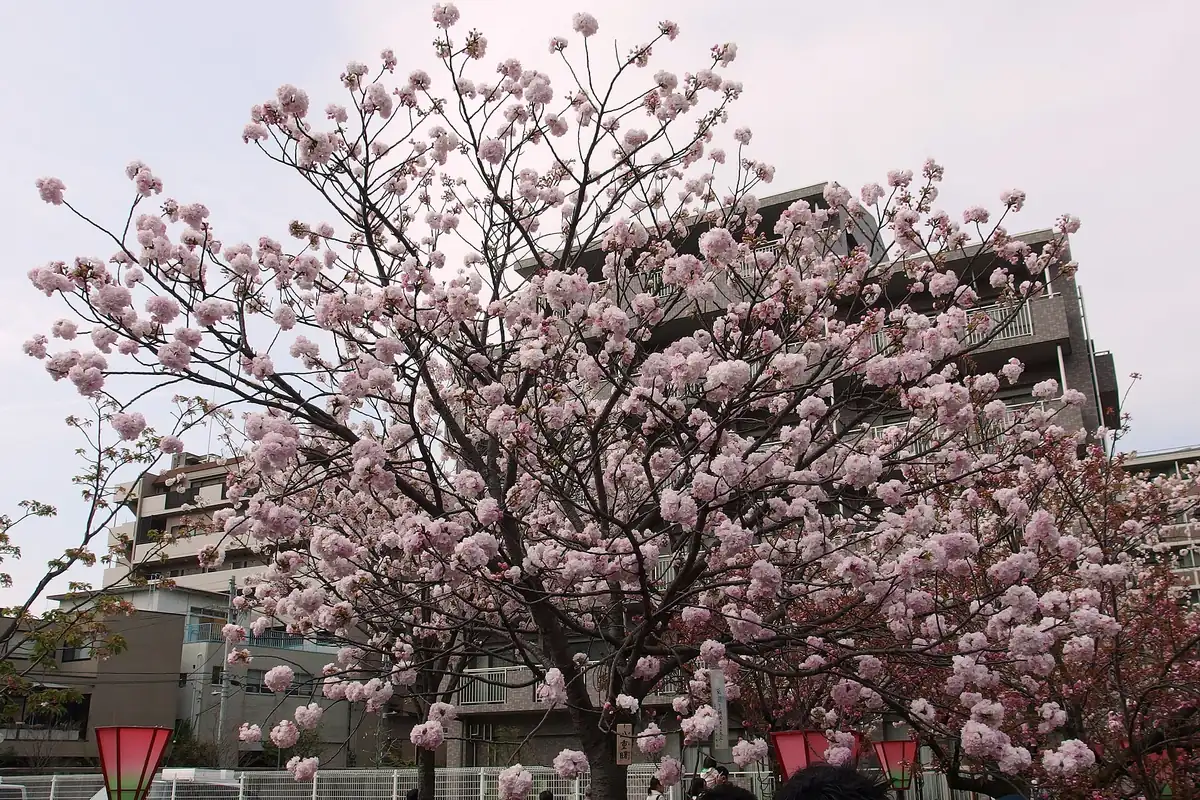

A cherry blossom forecast is a date that keeps moving. Three private weather companies publish it, revise it again and again from early in the year, and only pin it down in the last couple of weeks before the trees open.
So don’t build your trip on it. Book around your city’s long-term average full-bloom date from the Japan Meteorological Agency (JMA), keep two or three days flexible, and add a later stop further north or higher up. This guide is for people who have already picked spring and want the blossoms.
Below are 15 common mistakes, the 2026 numbers that show why they matter, and calmer or later-blooming spots in Tokyo, Kyoto, Osaka, Nara and the north.
- No 2027 forecast exists yet; Weathernews plans next-season info for February 2027.
- Forecasts come from three private firms. JMA only records the actual dates.
- Full bloom follows first bloom by about 7–9 days in the south, 4–5 in the north.
- Book on the JMA average, keep 2–3 flexible days, and add a later bloom zone.
- Mid-April or later? Head north, or pick late trees such as Ninnaji’s Omuro cherries.
- 2027 forecast
- Weathernews: due February 2027
- Tokyo avg full bloom
- 31 March (JMA 1991–2020)
- Kyoto avg full bloom
- 4 April (JMA 1991–2020)
- Late-April option
- Hirosaki festival, 16 Apr–5 May 2027
- Booking
- Refundable rooms; Mint pre-registration
- Checked
- October 2026
Bloom dates, fees and hours checked in October 2026; confirm on the official site before you go.
How the Cherry Blossom Forecast Works, and Why There Is No 2027 Date Yet
Before the numbers, a quick self-check. If two or more of these are true, the sections below will save you the most trouble.
- You booked flights before any forecast came out
- Your whole trip is only 4–6 days long
- Your dates fall in mid or late April
- You want to skip the most crowded parks
- You are counting on one famous spot on one fixed day
- You travel with kids and can’t shuffle days easily
- Your rooms are non-refundable
1. Treating one forecast as the official answer
Many sites call it “the official forecast”. There isn’t one. The JMA has not published bloom forecasts since spring 2010, and since then three private companies have done the job: Weathernews, the Japan Weather Association (which runs tenki.jp) and the Japan Meteorological Corporation.
Each uses its own network. Weathernews says it draws on about 1,400 sample trees and viewing spots plus more than 2 million user reports. The Japan Meteorological Corporation covers about 1,000 viewing spots from Hokkaido to Kagoshima and has an English app, Sakura Navi.
Japan’s tourism board shows the Japan Weather Association’s numbers on its forecast page, with a plain warning that the forecast is subject to change. The JMA itself only records what actually happened.
Read all three, and trust none of them alone.
2. Waiting for the forecast before you book
Forecasts start early but firm up late. Weathernews issued its first 2026 forecast on 8 January 2026, and the Japan Weather Association says it publishes from around February.
Right now, in late 2026, every forecaster has closed for the season. Weathernews says next-season information is due in February 2027, and the Japan Meteorological Corporation issued its last 2026 forecast on 23 April. Anyone quoting 2027 dates today is guessing.
Waiting until March to book flights leaves you choosing in a hurry. Book on averages now and use the forecast later to re-order your days.
3. Mixing up “first bloom” and “full bloom”
These are two different dates. The Japan Weather Association defines first bloom as the first day five to six or more flowers open on the sample tree. Full bloom means more than 80% of the buds have opened.
The postcard view is full bloom and the days just after it. If a forecast says Tokyo opens on 19 March, that is the start of the show, not the peak.
JMA dates come from one designated sample tree per city, usually at the local observatory. Individual parks can run a few days ahead of it or behind it.
The 2026 Numbers: How Far the Dates Moved in 11 Cities
Here is the original data, so you can see the spread for yourself. The averages are JMA’s 1991–2020 normals; the 2026 dates are JMA observations from its first-bloom and full-bloom tables.
← Swipe to see the full table →
| City | Average: first → full bloom | 2026: first → full bloom |
|---|---|---|
| Fukuoka | 22 Mar → 31 Mar | 24 Mar → 3 Apr |
| Tokyo | 24 Mar → 31 Mar | 19 Mar → 28 Mar |
| Nagoya | 24 Mar → 2 Apr | 17 Mar → 30 Mar |
| Hiroshima | 25 Mar → 3 Apr | 19 Mar → 30 Mar |
| Kyoto | 26 Mar → 4 Apr | 23 Mar → 30 Mar |
| Osaka | 27 Mar → 4 Apr | 26 Mar → 3 Apr |
| Kanazawa | 3 Apr → 8 Apr | 29 Mar → 3 Apr |
| Sendai | 8 Apr → 13 Apr | 31 Mar → 4 Apr |
| Nagano | 11 Apr → 16 Apr | 31 Mar → 6 Apr |
| Aomori | 22 Apr → 26 Apr | 13 Apr → 16 Apr |
| Sapporo | 1 May → 6 May | 18 Apr → 24 Apr |
Plan your trip: the tools we use
Our pick: plan on the average column, and treat the 2026 column as a reminder of how far a season can drift.
4. Ignoring how far a season can shift
In 2026 the full-bloom dates came in 12 days early in Sapporo, 10 days early in Aomori and Nagano, and 9 days early in Sendai. Further south the drift was small: Tokyo and Nagoya were 3 days early, Osaka 1 day early, and Fukuoka 3 days late.
So the north moved most. A trip built tightly around an average northern date can miss the peak by more than a week.
The forecast itself also moved, though less. These are Weathernews’ first-bloom forecasts for Tokyo in 2026:
← Swipe to see the full table →
| Issued | Source | Tokyo first bloom |
|---|---|---|
| 8 Jan 2026 | Weathernews, 1st forecast | 21 March |
| 11 Mar 2026 | Weathernews, 6th forecast | 19 March |
| Actual | JMA observation | 19 March |
That is one city in one year, so don’t read it as an accuracy rate. Also note that Weathernews’ Kyoto forecast is for Arashiyama, not the JMA tree, so the two Kyoto dates aren’t directly comparable.
5. Assuming the north gives you a long window
It doesn’t. On JMA averages, the gap from first to full bloom is 7–9 days from Fukuoka up to Osaka, but only 4–5 days in Kanazawa, Sendai, Nagano, Aomori and Sapporo.
Weathernews said the same thing in March 2026: about a week to 10 days from opening to full bloom in western and eastern Japan, and about 5 days in the north.
Northern trees open late and finish fast. Give a northern stop at least two nights so one rainy day doesn’t wipe it out.
Booking a Spring Trip Months Before Any Forecast Exists
You will almost always book flights before the first forecast appears. That is fine, as long as the trip has room to bend.
6. Pinning a 4–5-day trip to one city
If your whole trip sits in Tokyo and the trees peak the week before you land, there is no plan B. The fix is to cross two bloom zones.
Look at the averages: Tokyo’s full bloom is 31 March, Kanazawa’s 8 April and Sendai’s 13 April. A trip that starts in Tokyo or Kyoto and ends in Kanazawa, Sendai or further north covers more than a week of possible peaks.
For the northern leg, compare tickets with our guide to regional rail passes vs the JR Pass. Whether a pass pays off depends on your route, so add up the individual fares first.
Still deciding whether spring is right at all? Read the best time to visit Japan first.
7. Booking non-refundable rooms for the exact peak
A cheap non-refundable rate looks smart in October. In March, when the forecast says your city will peak five days before you arrive, it looks less smart.
On Booking.com and Agoda, filter for rates marked free cancellation and note the last free cancellation date. Then you can move a night north once the forecasts settle.
Keep the flexible nights at the end of the trip. That is where a later bloom zone usually goes.
What most first-timers do
- Wait for a forecast before booking flights
- Trust one company’s January date as fact
- Fix one famous park on one fixed day
- Book non-refundable rooms for the peak
What actually works
- Book flights on the JMA average date
- Compare all three forecasts from March
- Pick late-blooming backups in each city
- Use free-cancellation rates for 2–3 nights
Partner link.
Tokyo: Shinjuku Gyoen’s Mid-April Blossoms Instead of Ueno
Ueno Park is the best-known and most crowded cherry spot in Tokyo. If you want blossoms with a bit more room, and a chance of flowers after the main trees have dropped, go west to Shinjuku.
8. Choosing a single-variety park when a mixed garden lasts longer
Shinjuku Gyoen has around 900 cherry trees of about 70 varieties. That mix is the point. It stretches the season far beyond one week.
- Kanzakura: February to early March
- Somei Yoshino (about 300 trees): late March to early April
- Double-petal yaezakura: peak around mid-April
So if you land after Tokyo’s main peak, the yaezakura can still give you a full canopy of pink.
Practical details as of 2026, from the garden’s information page: entry is about ¥500 for adults and ¥250 for students 16+ and over-65s, and free for 15 and under. From 15 March the gates are open 9:00 to 18:00, with last entry at 17:30.
The garden normally closes on Mondays, but it opens every day from 25 March to 24 April. You can tap a transport IC card at the gates or buy an e-ticket.
On weekends, holidays and other busy days in sakura season, entry may require an advance reservation. Check the official site a week or two before you go.
Go on a weekday morning if you can.
Planning your visit?
Kyoto: Late Blooms at Ninnaji and the Botanical Garden
Kyoto’s famous spots fill fast at peak. These two give you later timing or a different setting. For getting around without crowded city buses, see our Kyoto bus guide.
9. Missing Ninnaji’s Omuro cherries, Kyoto’s latest
Ninnaji calls its Omuro cherries the latest-blooming in all of Kyoto. They peak after the rest of Kyoto’s main trees, so this is your best bet if you arrive once the city’s Somei Yoshino are past their best.
The Omuro area past the Chumon gate has its own cherry-season fee, about ¥800 for adults as of 2026. In the season the temple opens at 8:00 and closes at 17:00, and the fee period depends on how the bloom runs that year.
Plan it for your last Kyoto day.
10. Skipping the Kyoto Botanical Garden because it isn’t a temple
The Kyoto Botanical Garden has 500 cherry trees in a large garden rather than a narrow temple lane. Entry is about ¥500 for adults as of 2026.
Opening hours are 9:00 to 17:00, with last entry at 16:00. Getting there is simple:
- Kyoto Station
- Karasuma Line subway · about 20 min
- Kitayama Station, Exit 3
Pair it with Ninnaji on a late trip. Stay near a Karasuma Line station if you are booking through Booking.com or Agoda, and see where to stay in Kyoto for areas.
Osaka and Nara: the Mint, Expo ’70 Park and Mt. Yoshino’s 4 Zones
Osaka has one short, unusual event and one big park. Nara’s Mt. Yoshino is a day trip with a bloom that climbs the mountain.
11. Turning up at the Japan Mint without registering
The Japan Mint in Osaka opens a cherry-lined passage for one week a year. In 2026 it ran from 9 to 15 April, with 331 trees of 140 varieties, according to the Mint’s 2026 page.
Entry was by a QR code sent after advance online registration. Hours in 2026 were 10:00 to 19:15 on weekdays and 9:00 to 19:15 at weekends.
The nearest stations are Tenmabashi (Osaka Metro Tanimachi Line or Keihan Main Line) and Osakajo-Kitazume (JR Tozai Line), each about 15 minutes on foot. The dates change every year, so check the Mint’s site for 2027.
12. Overlooking Expo ’70 Commemorative Park
Outside central Osaka, Expo ’70 Commemorative Park plants Somei Yoshino, weeping cherries and sato-zakura. In 2026 the peak came in early April, and the park reported the blossoms finished by 22 April.
The Natural Cultural Garden and Japanese Garden cost about ¥450 for adults from 1 April 2026, and junior-high students and younger go free (see the fee page). Hours are 9:30 to 17:00. The park usually closes on Wednesdays, but it is open daily from 1 April to 2 May.
A good pick for families with younger kids.
13. Visiting Mt. Yoshino on the wrong day for your zone
Mt. Yoshino in Nara has about 30,000 cherry trees in four zones. The bloom moves uphill: Shimo Senbon (lower), Naka Senbon, Kami Senbon, then Oku Senbon at the top. Weathernews lists early April as the usual peak for the lower zone.
Because the zones bloom in turn, a later date can still catch flowers higher up. Check a spot page such as Weathernews’ Yoshino page in the final days. Klook lists Yoshino day tours from Osaka if you’d rather not plan the trains yourself.
Mid- to Late-April Dates: Hirosaki Castle Park and Sapporo
Only free from mid-April? Then the north is where the averages work for you.
14. Writing off April 16 onwards as “too late”
The Hirosaki Cherry Blossom Festival in Aomori Prefecture is set for 16 April to 5 May 2027. For reference, the JMA’s tree in Aomori city has an average full bloom of 26 April.
Honmaru-Kitanomaru and the Botanical Garden each cost about ¥320 for adults and ¥100 for children as of 2026. A three-facility ticket that adds Fujita Memorial Garden was about ¥520 and ¥160 (see the fee page).
In 2026 the Honmaru paid area stayed open 9:00 to 21:00 from 17 to 30 April, and 9:00 to 17:00 otherwise. Those evening hours can change with the bloom, so check before 2027.
15. Forgetting that Sapporo blooms in May on average
Sapporo’s JMA averages are 1 May for first bloom and 6 May for full bloom. In 2026, though, it came in at 18 and 24 April.
That swing is the reason to book refundable rooms here. If your dates are late April or early May, base yourself in Aomori or Hokkaido and decide the final stop in the last two weeks.
For the trains on this leg, compare the fares in our regional pass guide before you buy.
Hanami Rules That Catch People Out at 4 Popular Spots
Picnics under the trees are the whole idea, but the rules change from park to park. These are the ones confirmed on official pages:
- Shinjuku Gyoen: no alcohol and no drones (garden rules)
- Shinjuku Gyoen: busy sakura days may require booking ahead
- Japan Mint passage: no eating or drinking inside, entry by pre-registration
- Ninnaji: a separate fee for the Omuro cherry area
- Hirosaki Park: separate fees for Honmaru-Kitanomaru and the garden
Bring a bag for your rubbish and carry it out with you. It is a simple habit that keeps you out of trouble in any park.
 ReaderYuki
Dress for cold mornings too; our spring packing list covers layers.
The One Habit: Plan on the 30-Year Average, Adjust in the Last 14 Days
Nearly every mistake above comes from treating a forecast as a fixed date. The habit that fixes them is simple: book on averages, adjust on forecasts.
Step 1: Look up your city’s JMA average full bloom
Use the table above or the JMA full-bloom page. That date anchors the trip.
Step 2: Book about a week either side, plus a later zone
Add a stop further north or higher up, and keep 2–3 nights refundable.
Step 3: From early March, compare the three forecasts
Weathernews, tenki.jp and the Japan Meteorological Corporation will not always agree.
Step 4: In the last 10–14 days, re-order your days
Weathernews’ radar updates daily up to 14 days ahead. Move parks, not flights.
The 2026 data shows why. Sapporo’s full bloom arrived 12 days before its average, while Osaka’s came within a day of it.
A plan with slack absorbs both.
FAQ
QWhen will the 2027 cherry blossom forecast come out?
Weathernews says its next-season information is due in February 2027. In 2026 its first forecast appeared on 8 January, and the Japan Weather Association says it publishes from around February.
QWhich forecast is the most accurate?
No single one. Each company uses its own trees and reports. In 2026 Weathernews’ January forecast for Tokyo was 2 days off, but that is one city in one year. Compare all three.
QHow long after first bloom is full bloom?
On JMA averages, about 7–9 days in the south and 4–5 days in the north. In 2026, Weathernews put it at roughly a week to 10 days in western and eastern Japan.
QCan I see cherry blossoms in May?
Possibly in Hokkaido. Sapporo’s average full bloom is 6 May, and Hirosaki’s 2027 festival runs to 5 May. In early years, like 2026, they can be over before May.
QDo rain or wind end the season early?
Bad weather can bring petals down, but there is no reliable figure for how much. That is one more reason to keep a couple of flexible days.
Planning around a flower that won’t commit to a date can feel like guessing.
Instead of refreshing forecasts for months, lock in your dates on the averages and a second bloom zone, then let the final two weeks decide the rest.
Keep planning
- ① Install and test your eSIM before take-offAiralo and Ubigi eSIMs activate on arrival, but the install itself needs Wi-Fi. Do it at home and confirm the profile shows up in your phone settings.
- ② Save your first hotel’s address in JapaneseTaxi drivers and station staff read Japanese addresses far faster than romanised ones. Copy it from the booking confirmation into your notes app.
- ③ Set aside cash for day oneMany small restaurants, temples and rural buses are still cash-only. Airport ATMs at 7-Eleven and the post office accept most foreign cards.
Skip these and your first hour in Japan goes on finding Wi-Fi at the station instead of getting to your hotel.
🔍 How to sanity-check any price you read online
Blogs (including this one) go out of date. The official page always wins over a screenshot from two years ago.
Cover Photo: Mc681, CC BY-SA 4.0, via Wikimedia Commons