The 6:15 a.m. wind on the Shinagawa platform bites through my light sweater, even though the sun is already brightening the Tokyo skyline.
Around me, salarymen in dark coats stand perfectly still, clutching their briefcases while I shift the weight of my bag and wonder if my packable layers will hold up for the ten-hour train ride to Sapporo.
You are likely packing for a 12-day transition from the chilly northern air of Hokkaido to the mild, blooming streets of Osaka.
For this trip, you need to stop overpacking for “average” weather and instead focus on a core base layer that handles the freezing morning commutes and the overheating interior of the Shinkansen.
- Trip duration
- 12 days
- Primary base
- Osaka
- Packing strategy
- Layering
- Best season
- Spring
- Budget for gear
- ¥10,000–30,000
- Check status
- March 2026
Some links are affiliate links (marked “Partner link”). Prices are ranges checked in 2026; confirm on the official site before you book.
Temperature swings: From Hokkaido chill to Osaka bloom
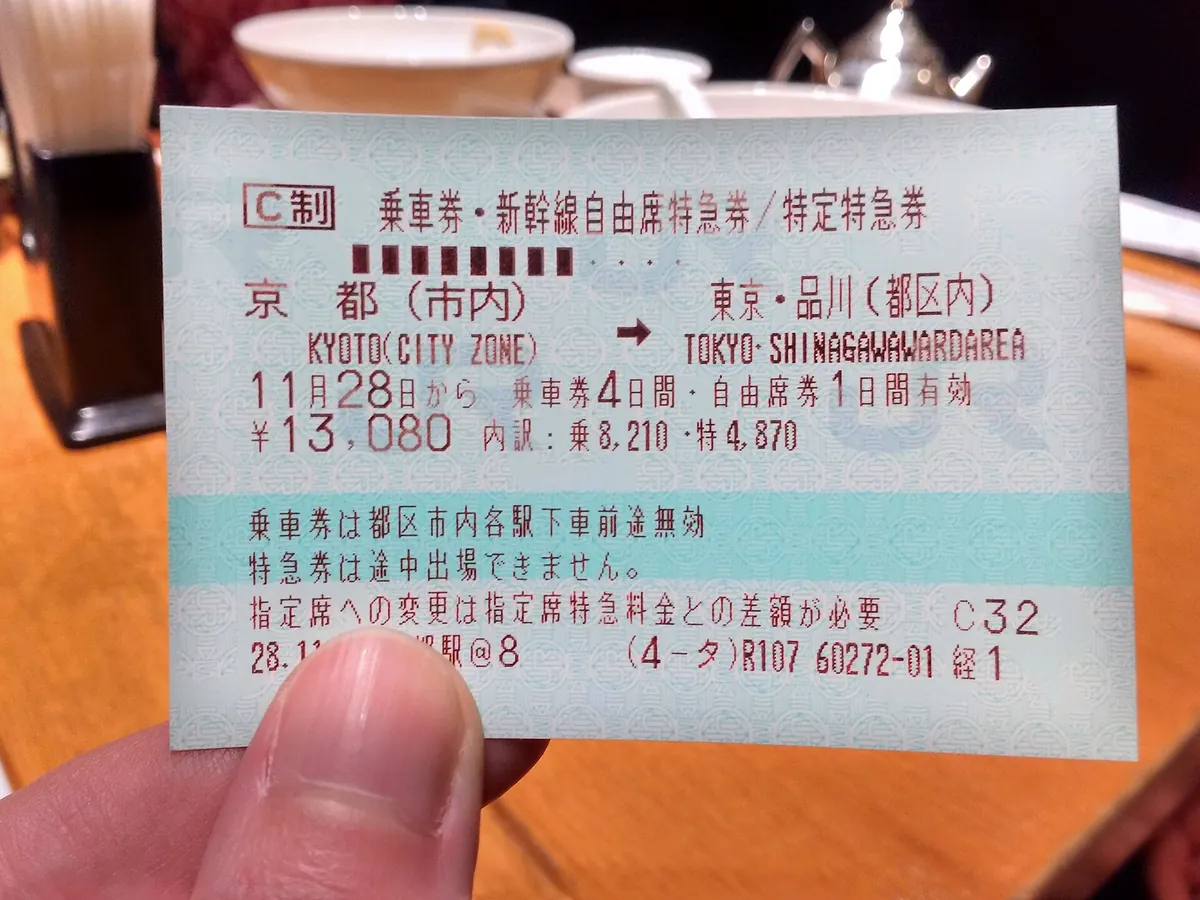
Spring in Japan is a game of extremes. You might step off a train in Sapporo into near-freezing temperatures, only to arrive in Kyoto three days later where the sun reflects off the stone paths in the afternoon.
March and April are the most deceptive months.
Morning air in the north often sits around 2°C to 5°C. By contrast, afternoons in Osaka or Fukuoka can reach a comfortable 18°C to 20°C.
If you are traveling between these regions, you need a system that adapts by the hour, not by the day.
Do not pack heavy, bulky sweaters for the entire duration of the trip.
| Service/Item | Est. Cost (Yen) |
|---|---|
| Laundry cycle | 300–700 |
| Clear Umbrella | 500–1,000 |
| Luggage Forwarding | 2,000–3,000 |
Plan your trip: the tools we use
The layering formula for variable climates
I learned the hard way that sweating on a local train after wearing too many wool layers is a mistake you only make once. Focus on materials that breathe.
Tops and insulating layers
Start with a synthetic base layer that wicks moisture away from your skin. On top, wear a light long-sleeve shirt followed by a packable down jacket.
This combination is effective because you can peel off the outer layer the moment you enter a heated cafe or a crowded train carriage.
Bottoms for long-distance travel
Stick to two pairs of trousers that are wrinkle-resistant and slightly stretchy. Avoid heavy denim, which stays wet if you get caught in a spring shower.
Darker colours hide the dust of city travel and look acceptable in most casual dinner settings.
The outer shell
Your coat should be windproof and water-resistant. A mid-length trench or a technical jacket works best.
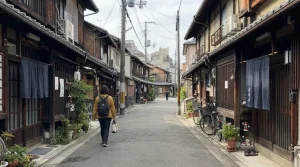
It covers enough of your body to keep the chill out, but it remains light enough to carry over your arm when you are walking through the narrow backstreets of Gion.
Shoes: Prioritizing high-step comfort over aesthetics
You will likely walk 15,000 to 20,000 steps a day. If your shoes are not broken in, the trip will be difficult to enjoy.
Avoid brand-new leather boots that feel stiff; they will leave you with blisters by the second day of exploring Osaka.
Look for a pair of walking shoes with a firm heel and a breathable mesh upper. Since you will be taking your shoes off at many shrines and ryokans, ensure they are easy to slip on and off without a complex lacing system.
That is the whole trick.
Electronics and staying connected
Connectivity is the backbone of a successful trip. I recommend using an eSIM like Airalo or Ubigi to keep your maps running without searching for public Wi-Fi.
It is much easier to manage than a physical SIM card that you risk losing.
Pack a compact power bank in your day bag. Using navigation apps constantly in unfamiliar cities drains batteries quickly, and there is nothing worse than your phone dying while you are looking for your hotel entrance in a dark alley.
Buy a reliable international travel adapter on Amazon before you leave home.
Where we would book this
Amazon
Readers already have an account
- Best for
- Travel adapters (Type A plugs), luggage, packing cubes, travel…
- Checked
- September 2026
Official site. Same price for you.
What to leave behind to save space
First-time visitors often bring things that take up valuable suitcase room. Japan provides most essentials, and convenience stores, often called “konbini,” are stocked with high-quality supplies.
Leave this at home
- A large, heavy umbrella
- Full-sized shampoo bottles
- More than two pairs of jeans
- Heavy winter boots
Bring this instead
- Buy a ¥600 clear one at a konbini
- Use the hotel-provided soap
- Lightweight, quick-dry trousers
- Comfortable, broken-in sneakers
Our pick: Buy the umbrella in Japan; it saves you the weight in your luggage.
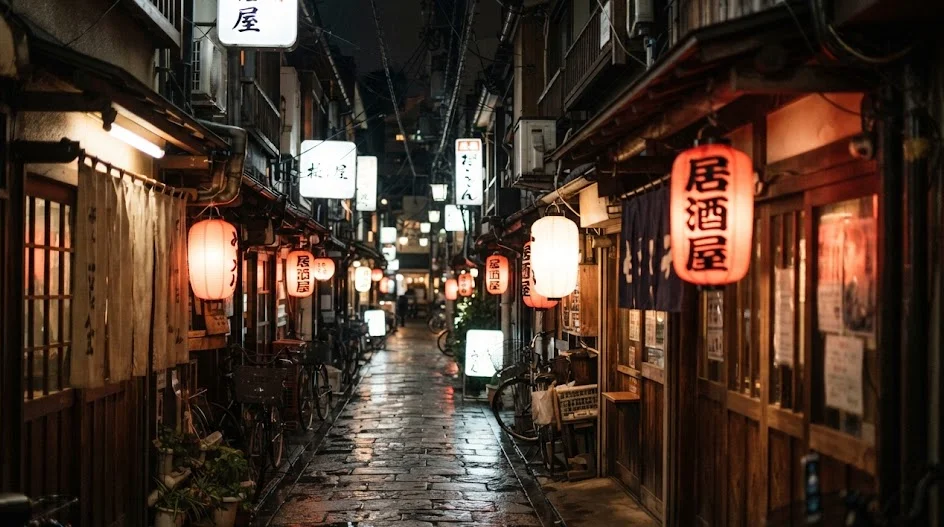
Luggage: Navigating the Shinkansen and train stations
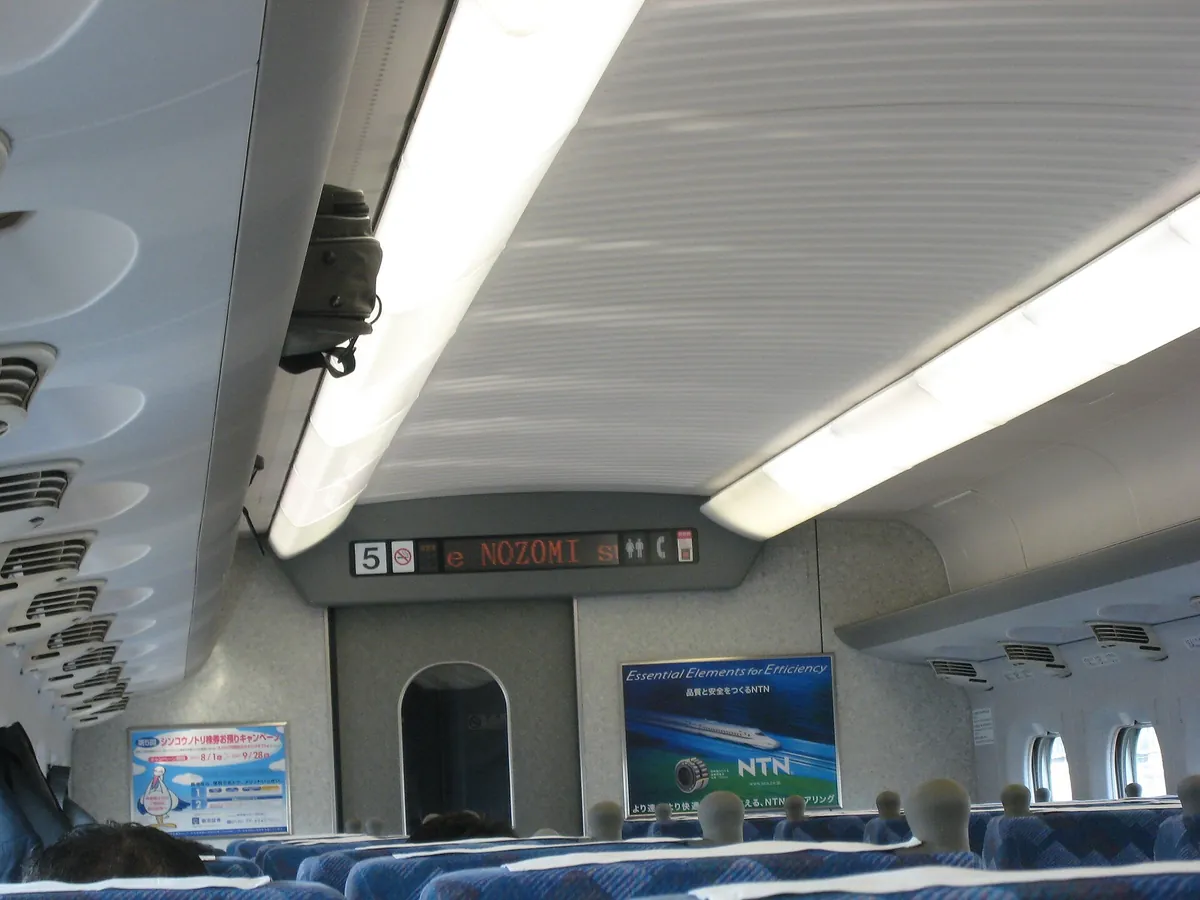
Large suitcases are a nightmare on local trains during the morning and evening rush hours. If your bag is oversized, the Shinkansen requires a reserved seat with extra space, or you may be forced to pay a fee.
Use the Takkyubin luggage forwarding service. You can ask your hotel front desk to send your main suitcase to your next destination for roughly ¥2,000–3,000 per bag.
It arrives the next day, leaving you free to move through the stations with only a small backpack.
Step 1: Ask the front desk
Confirm that your hotel offers luggage forwarding services to your next city.
Step 2: Fill out the slip
Write your destination hotel name and phone number clearly on the form.
Step 3: Pay and collect
Pay the fee at the counter and pick up your bag at the next hotel lobby.
Outfit examples for your 2026 spring trip
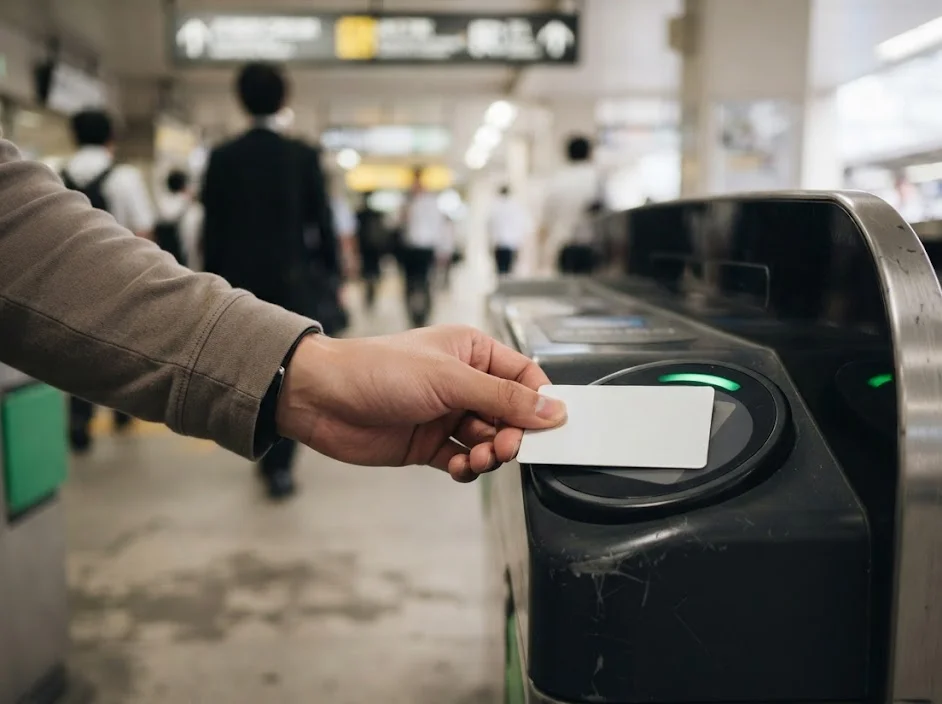
For a typical temple day, wear your most comfortable trousers, a long-sleeve thermal top, and a light jacket. If the weather looks like rain, add a thin, packable rain shell over your layer.
If you are heading out for a city evening, keep your base layers the same but swap your outer shell for something slightly more structured.
You don’t need a formal outfit for most restaurants in Tokyo or Osaka; smart-casual is the standard.
Keep your clothes neutral so everything matches.
Mastering the art of the 7-day capsule
To navigate the narrow aisles of regional trains and the frequent staircases of Tokyo subways, you should aim to fit your entire life into a single carry-on bag.
A minimalist packing strategy is not just about weight; it is about the freedom to hop off a train in a new city without dragging a massive suitcase across cobblestones.
Focus on a color palette that allows every item to mix and match. If your tops and bottoms all coordinate, you can create a week’s worth of outfits from just four pieces of clothing.
Stick to fabrics that resist wrinkling, such as merino wool or high-quality synthetics, as these handle the humidity of a rainy spring day without feeling damp or heavy.
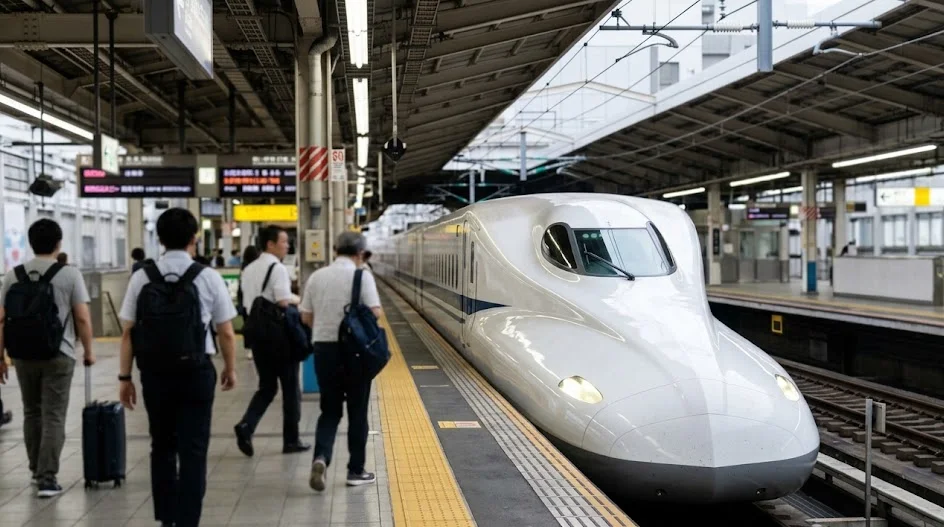
The core capsule components
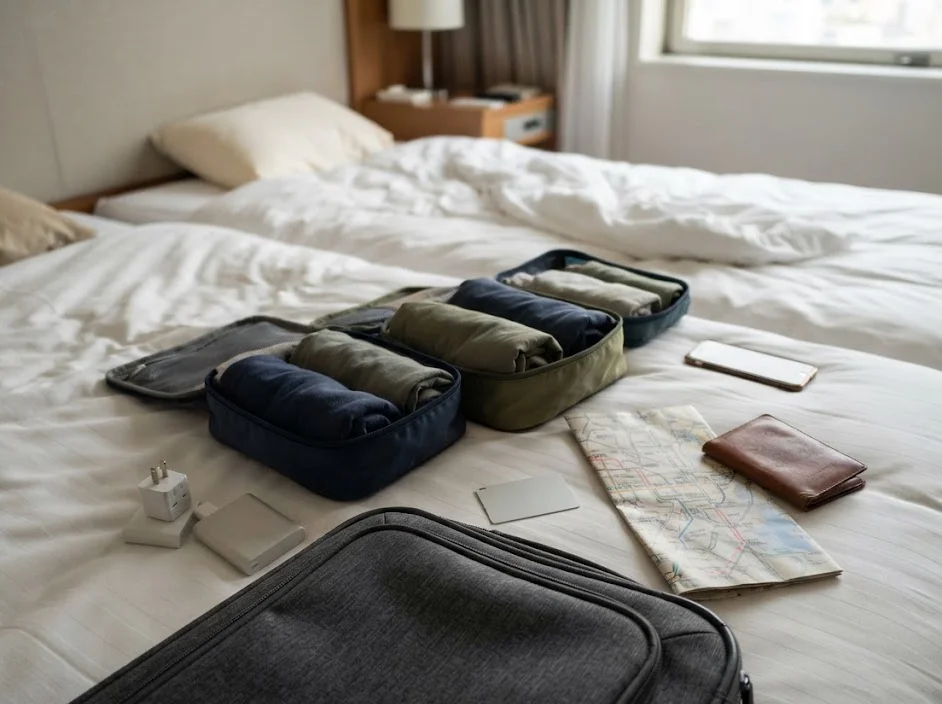
Two pairs of lightweight, versatile trousers (one dark, one neutral) and three neutral base-layer tees that can be worn alone or under a sweater are essential.
Include one mid-weight sweater, one pair of comfortable walking shoes, five sets of moisture-wicking undergarments, and one compact, waterproof windbreaker.
You do not need to bring a different outfit for every day of your trip. The social pressure to dress “perfectly” often leads travelers to overpack, yet you will find that in Japan, clean and tidy is valued far more than variety.
If you choose breathable fabrics that air out quickly overnight, you can easily rotate your core items without looking like you are wearing the same clothes repeatedly.
Resist the urge to pack “just in case” items like formal shoes or a second heavy coat. If you find yourself in a situation where you need something specific for a high-end dinner or an unexpected cold snap, Japan has a vast retail market.
You can find everything from UNIQLO essentials to local boutiques in every major station, often at a price range of 2,000 to 8,000 yen; always check the official site of the local shops before heading out.
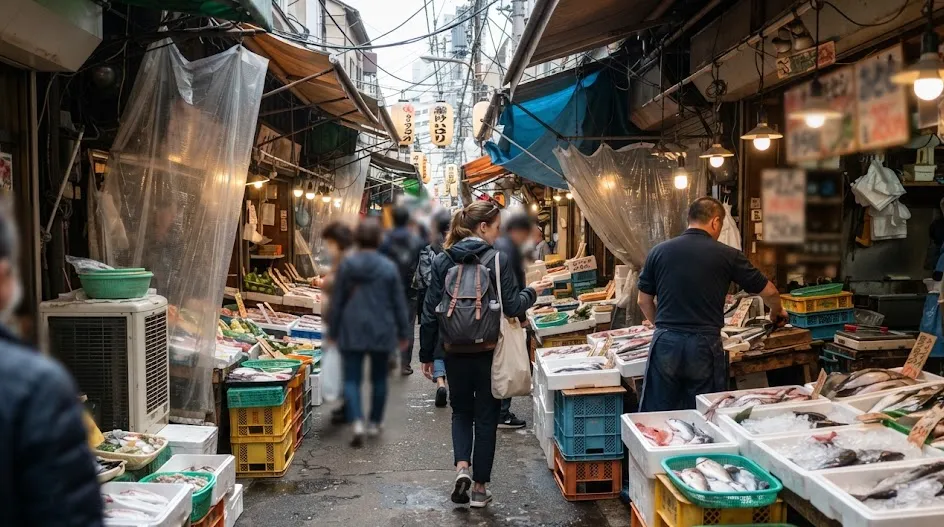
When you pack light, you gain the ability to use the overhead luggage racks on trains with ease. You also save on potential checked baggage fees on budget airlines like Peach or Jetstar, which often have strict weight limits.
Keep your bag under 10 kilograms, and you will never fear the sight of a long flight of stairs at a busy metro station.
 Reader
 Yuki
Laundry logistics: Staying fresh without the bulk
The secret to traveling for twelve days with a carry-on is accepting that you will do laundry at least once. Japanese hotels are exceptionally well-equipped for this, with coin-operated laundry facilities being a standard amenity in business hotels and even some upscale properties across the country.
Most machines are stacked units that combine a washer and a dryer into one. This is a massive convenience because you can start your load, go out to dinner, and return to find your clothes clean and dry.
You rarely need to bring your own detergent. The machines often dispense it automatically or offer single-use packets for 50 to 100 yen.
Prices for a full wash-and-dry cycle generally range from 300 to 700 yen. Check the official site of your booked accommodation on Booking.com or Agoda to see if these services are available on-site.
How to navigate laundry day
Check your hotel floor plan for the “laundry corner” or “coin laundry” room. Check the machine’s display; if it only shows Japanese, use a translation app to confirm the cycle type.
Look for a “wash and dry” setting to ensure your clothes are ready to wear immediately. Avoid busy times like Friday nights, and keep a small coin purse handy for 100-yen coins.
If your hotel does not have a facility, simply search for “coin laundry” in Google Maps. Japan has an incredible network of neighborhood laundromats that are clean, safe, and often open 24 hours a day.
These local spots are a great way to see a side of Japanese life that most tourists overlook while they are busy lining up for major attractions.
Packing for laundry means you only need to carry enough underwear and socks for about four to five days. By planning one mid-trip laundry session, you effectively cut your clothing weight in half.
This extra room in your luggage is perfect for bringing back small gifts or local stationery you might find during your travels. Treat laundry not as a chore, but as a strategic tool to keep your travel load light and your outfit rotations fresh throughout your entire spring adventure.
FAQ
QIs it worth bringing a heavy coat for Hokkaido?
Only if you are planning to spend significant time outdoors in the evening. Most travelers find a thick down jacket and a scarf enough to handle the lingering spring cold in the north.
QHow do I handle laundry if I pack so light?
Most Japanese business hotels offer coin-operated laundry machines in the basement or on guest floors. You can wash a full load for around ¥300–500.
QAre there restrictions on liquids?
The rules for carry-on luggage remain the same as international standards. However, since hotels provide shampoo and soap, you should only bring what is strictly necessary for your own routine.
QCan I use my credit card at coin laundries?
Most coin laundries operate strictly on cash, specifically 100-yen coins. Ensure you have small change ready before heading to the laundry room.
QWhat if my clothes are still damp?
Most hotel laundry units offer a “Dryer only” setting. You can run an additional 30-minute cycle if your items are thick or particularly heavy.
Planning for a multi-climate trip feels like a massive logistical puzzle until you realize the country is built to support travelers who move light.
Stop re-reading endless packing blogs and lock in the two or three essential layers that you know work for your style, then adjust the rest of your gear as you go.
Keep planning
- ① Install and test your eSIM before take-offAiralo and Ubigi eSIMs activate on arrival, but the install itself needs Wi-Fi. Do it at home and confirm the profile shows up in your phone settings.
- ② Save your first hotel’s address in JapaneseTaxi drivers and station staff read Japanese addresses far faster than romanised ones. Copy it from the booking confirmation into your notes app.
- ③ Set aside cash for day oneMany small restaurants, temples and rural buses are still cash-only. Airport ATMs at 7-Eleven and the post office accept most foreign cards.
Skip these and your first hour in Japan goes on finding Wi-Fi at the station instead of getting to your hotel.
🔍 How to sanity-check any price you read online
Blogs (including this one) go out of date. The official page always wins over a screenshot from two years ago.