
Late morning at a conveyor counter in Tokyo. A fifth empty plate goes into the slot under the belt, and the screen above the seat starts a short game. Nobody has spoken to a waiter yet, and nobody needs to.
That counter is still one of the easiest cheap ways to eat decent sushi in Tokyo, as long as you pick the right branch. For about ¥1,500 a person, eat at a conveyor chain away from the flagship stores.
For about ¥3,600–4,400, book a set at Sushi no Midori in Ginza. For a splurge, have a market breakfast at Toyosu, where each shop sets its own prices.
The money leaks in small ways. A flagship branch that charges more per plate, a dinner queue an app could have skipped, a market visited on its closing day. Each section below fixes one of those, using prices from the chains’ and markets’ own pages.
- Budget: about ¥1,500 conveyor, ¥3,600–4,400 Midori Ginza set, market breakfast varies
- Kura’s Asakusa flagship sits in its “from ¥145 a plate” tier, not ¥110
- Hama Sushi lists 9 central Tokyo stores that charge different prices
- Book Sushiro or Hama in their apps, and Kura through Google Maps
- Midori’s standing counter is in Echika Ikebukuro; weekday lunch set ¥748
- Toyosu Market closes on Sundays, holidays and some Wednesdays
- Budget meal
- About ¥1,000–1,500 per person
- Sit-down set
- About ¥3,600–4,400 (Midori Ginza, from 4 Nov)
- Cheapest base
- A standard-price chain branch
- Booking
- Apps, Google Maps or TableCheck
- Market days
- Avoid Sundays and Wednesdays
- Prices checked
- October 2026
Prices are official menu prices or ranges checked in October 2026; confirm on the official site before you go.
Tokyo Sushi at ¥1,500, ¥4,000 or a Market Splurge: What Each Buys
Budget sushi in Tokyo is not one price. It is three clear steps, and each one has a place that publishes its prices. The table below is built only from those official menus, so the totals are estimates for one person.
← Swipe to see the full table →
| Budget (estimate) | What it buys | Where |
|---|---|---|
| About ¥1,000–1,500 | Weekday standing lunch set ¥748, a ¥968 nigiri set, or about 10 conveyor plates at ¥110–145 | Midori Echika Ikebukuro; Kura or Hama branches |
| About ¥3,600–4,400 | From 4 November: tuna set ¥3,630, “Hyakka” set ¥3,850, chef’s omakase nigiri ¥4,400 (tax included) | Midori Ginza, booked on TableCheck |
| Splurge (prices vary) | A market breakfast at a sushi shop | Toyosu Market |
Plan your trip: the tools we use
Our pick: the ¥1,500 tier at a standard-price chain branch for most meals, plus one Midori Ginza set if you want a sit-down treat.
The bottom row has no number on purpose. Toyosu’s restaurants set their own prices, and none were on an official page checked for this guide.
Most visitors can eat well at the first step all week.
Where does sushi fit in a whole day of meals? Our Japan food budget per day guide sets it against breakfast, lunch and konbini costs, and How to Eat Cheap in Japan covers the rest of the menu.
- You want sushi more than once on this trip
- Your hotel is near Asakusa, Ikebukuro or Akihabara
- You would rather not queue at dinner time
- You do not read Japanese menus
- A market breakfast is on your wish list
- Most meals need to stay under ¥2,000
Two or more ticks? The next sections are written for you.
Conveyor Sushi in Tokyo: Pick the Branch, Not the Brand
Kura Sushi, Hama Sushi and Sushiro are the big three conveyor chains most visitors meet. Their base plates are cheap. The catch is that the same chain can charge more in central Tokyo, and the chains say so on their own menus.
1. Assuming every plate costs ¥110
The Kura Sushi menu shows many plates at ¥110, such as aged albacore tuna, shrimp, squid and salmon. Read the small print and it adds that prices differ at some stores, with branches grouped as “from ¥110”, “from ¥115”, “from ¥125” and “from ¥145” per plate.
Which branches sit at the top? Kura’s own ¥145 store list includes the Global Flagship Asakusa ROX, on the fourth floor of the ROX building, plus two Ikebukuro branches: Sunshine 60-dori and Ikebukuro East Exit.
That gap is the real cost. ¥145 against ¥110 is about 30% more per base plate. Ten base plates come to about ¥1,450 at a ¥145 branch and ¥1,100 at a ¥110 branch (estimates). Over a week of sushi lunches, that is a dinner’s worth of difference.
Hama Sushi flags it the same way. Its menu page lists base plates at ¥100, or ¥110 with tax, then names nine stores where prices differ:
- Akihabara Denkigai-guchi and Akihabara Chuo Kitaguchi
- Ikebukuro Green-odori and Ginza Inz
- Super Viva Home Toyosu and Ariake Garden
- Takadanobaba, Otsuka Ekimae and Gate City Osaki
Neither list says those prices are wrong. They are simply higher, and they are next to the places tourists stay.
2. Choosing a chain by its name alone
Sushiro is the hardest of the three to price in advance. Its menu page opens as a store search, and prices only appear once you pick a branch. Sushiro also announces price changes store by store; one notice, for its Stella Town store, revises the whole menu from 20 November 2026.
So no single Sushiro price can be quoted for Tokyo. Pick the branch you will actually walk into, then read its menu.
Brand matters less than branch.
3. Counting plates instead of reading them
Not every plate is a base plate. Hama’s menu also lists items at ¥120, or ¥132 with tax, and premium plates cost more at every chain. How many pieces sit on each plate was not stated on the official pages checked here, so look at the photo on the touch panel before you order.
 ReaderYuki
Ordering at Kura Sushi and Other Chains Without Japanese
The good news for first-timers is that the big chains are built for self-service. You can sit, order and pay without a single spoken sentence. Kura Sushi lays the whole flow out on its first-visit guide.
4. Waiting by the door for a server
At Kura, you check in at an automatic machine near the entrance rather than waiting to be seated. It gives you a seat, and from there you order from the touch panel at the table or from your own phone.
The chains’ official pages checked for this guide did not spell out which languages the touch panels show. Look for a language button on the screen before you start, and use the photos if you cannot find one.
Order a few plates at a time.
5. Ignoring the Bikkura Pon count
Bikkura Pon is Kura’s plate game. According to the first-visit guide, every five sushi plates you return gives you one game on the screen.
It is fun for children, but it is also a quiet nudge to order a fifth, tenth or fifteenth plate. Decide your plate count before you sit down, and let the game be a bonus rather than the goal.
- 5 plates: one game
- 10 plates: two games, and about ¥1,100–1,450 at base prices (estimate)
- 15 plates: three games, and well past the ¥1,500 budget
6. Waiting for a server to bring the bill
Kura’s first-visit page says you can pay at a self checkout, with no staff needed. That makes a quick lunch genuinely quick.
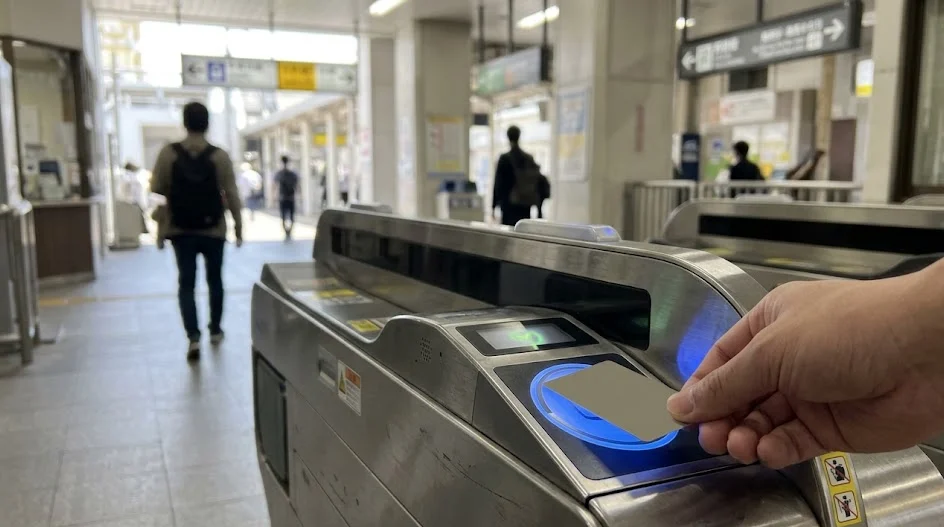
At Sushi no Midori, payment depends on the branch. The Echika Ikebukuro page lists cash, credit cards including UnionPay, PayPay, transport IC cards, QuickPay and iD. The Shibuya page lists cash, cards including UnionPay, transport IC cards, QuickPay and iD.
A topped-up Suica or PASMO covers both Midori branches.
Where we would book this
Booking.com
Largest inventory in Japan for English-speaking travellers
- Best for
- Hotels, business hotels, ryokan and apartments in every city
- Checked
- September 2026
Official site. Same price for you.
4 Ways to Skip the Sushi Queue in Tokyo
A queue is a hidden cost. It eats time you could spend elsewhere, and it pushes hungry people into the nearest, priciest branch. Every chain in this guide has a way to hold your place before you arrive, and most are in English.
7. Sushiro: check in or book in the app
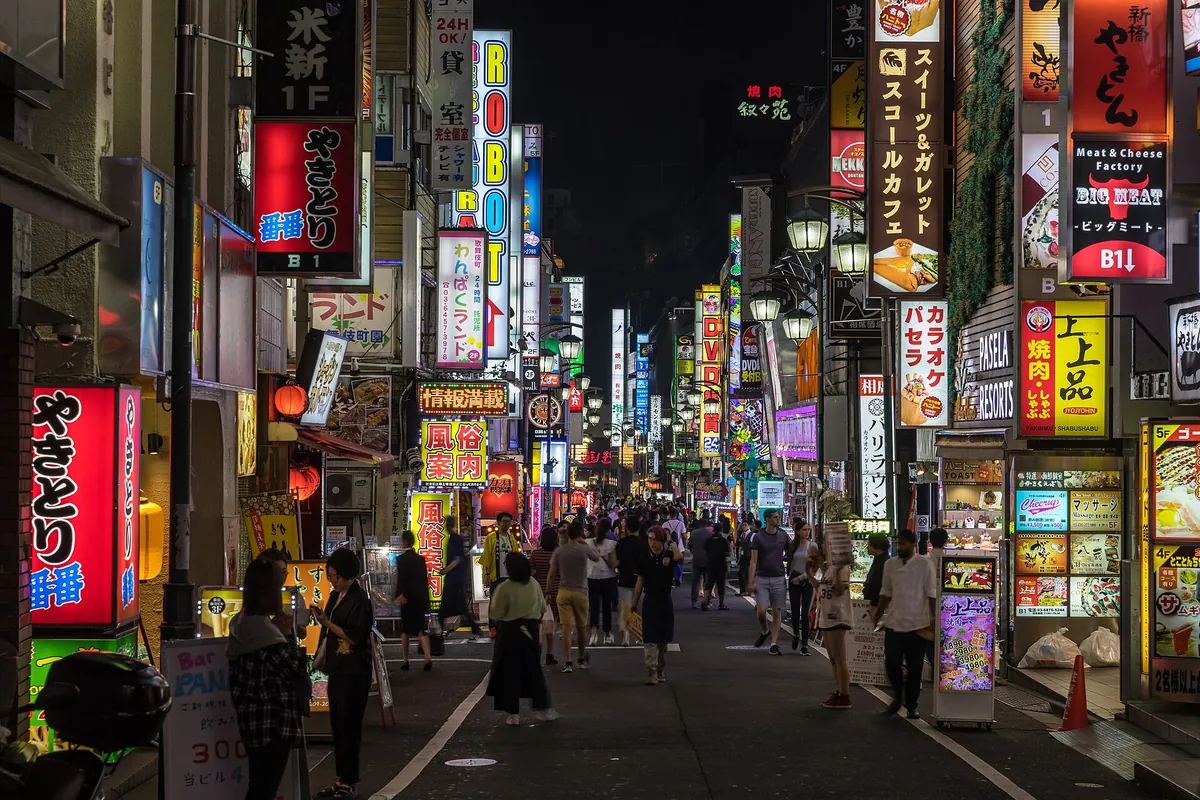
The free Sushiro app offers two options: check in for the next free seat, or book a set time. Its App Store listing includes English among the languages.
Use the same app to pick your branch and see that store’s menu. One app answers both the price and the queue question.
8. Hama Sushi: waitlist or timed booking
The Hama Sushi app offers a waitlist booking and a date-and-time booking. You need to register as a member first, and the listing gives Japanese and English as languages.
Register at the hotel, not at the door.
9. Kura Sushi: reserve through Google Maps
Kura is the easiest for a short trip. Its reservation page says you search for the branch in Google Maps and reserve from there, with no app registration. It takes timed bookings, and the booking screen switches to English.
This also helps with the branch problem from item 1. Search the Kura store name in Google Maps, check whether it is on the ¥145 list, then book.
10. Sushi no Midori: LINE ticket, door machine or TableCheck
Each Midori branch handles queues differently, so read the store page first.
- Shibuya: add the store on LINE, tap the web queue option, choose party size, get a ticket number
- Shibuya’s LINE ticket runs Mon–Fri 10:00–19:30, for up to 10 adults
- Shibuya also has a ticket machine at the door and seat booking on TableCheck
- Ginza: ticket machine at the entrance from 10:00; no smartphone queue
- Ginza sets and seats can be booked on TableCheck, in English
Midori’s Shibuya page says the LINE queue ticket only works within about 1 km of the store, so take it once you are nearby.
New to Tokyo’s apps, IC cards and station exits? Our Tokyo for first-timers guide covers the basics before you start booking meals.
Standing and Set Sushi at Sushi no Midori for ¥700–4,400
Sushi no Midori fills the gap between a conveyor belt and an expensive counter. Its branches publish their set prices online, and the range runs from a weekday lunch under ¥1,000 to a ¥4,400 omakase set in Ginza.
Only one branch here is a standing counter. The others are seated restaurants.
11. Echika Ikebukuro: Midori’s standing counter
The Echika Ikebukuro branch is a takeout shop with a standing counter, inside the Echika Ikebukuro station mall at Nishi-Ikebukuro 3-28-14. Eat-in runs 10:30–21:00, last order 20:30, and it closes only on 1 January.
The weekday lunch set, with soup, costs ¥748 from 10:30 to 14:00, tax included. That is the cheapest nigiri set with soup in this guide. Other prices on the store page, as of October 2026:
- Aburi or salmon sets: ¥693
- Ikebukuro nigiri: ¥968
- Tuna set (maguro-zukushi): ¥1,210
- Top-grade nigiri with soup: ¥1,518
So a standing meal here comes to about ¥700–1,500. Check the store page before you go, as set lists change.
Weekdays before 14:00 are the sweet spot.
12. Ginza, Shibuya and Akasaka: seated sets
The Ginza branch, at Ginza 8-3, has 82 seats. Weekdays run 11:00–15:00 (last order 14:00) and 17:00–21:00 (last order 20:30); weekends and holidays run 11:00–21:00. Its TableCheck page lists new set prices from 4 November 2026, all tax included:
- Tuna set (Gokujo maguro-zukushi): ¥3,630
- New signature “Hyakka” set: ¥3,850
- Seasonal chef’s omakase nigiri: ¥4,400
Booking only a seat gives you 105 minutes, and a seat-only booking comes with a compulsory starter (sakizuke) of ¥880, tax included. So budget about ¥3,600–4,400 for a set, and check the final amount on TableCheck when you book.
The Shibuya branch is on the fourth floor of Mark City East, at Dogenzaka 1-12-3, with 62 seats. It runs 11:00–21:00 (last order 20:30) all day, and closes on 1 January. Its dine-in prices were not on the store page.
The Akasaka branch, on the second floor of the Biz Tower at Akasaka Sacas, opens 11:00–22:00. Its page lists weekday lunch nigiri from about ¥1,000, served 11:00–15:00, so it is a calmer lunch option if you are staying nearby.
Toyosu or Tsukiji: Market Sushi Without a Wasted Trip
A market breakfast is the splurge many visitors plan around. It is also where the calendar catches people out. Toyosu and Tsukiji both close on days visitors don’t expect.
13. Toyosu Market: check the closed days first
The Tokyo Metropolitan Government’s Toyosu Market visitor page gives opening hours of 5:00–17:00, except Sundays, public holidays and other market-closed days. Restaurants keep their own hours.
JNTO’s Toyosu sheet lists extra closed days in late 2026: Wednesday 11 and 18 November, and 2, 9, 16, 23 and 31 December. Sunday 27 December is open.
The market’s restaurant page counts 38 restaurants across three buildings. There are 13 in the Management Facilities Building, 22 in the Fisheries Intermediate Wholesale Market Building and 3 in the Fruit and Vegetable Building. Many open as early as 4 a.m., and visitors queue for sushi.
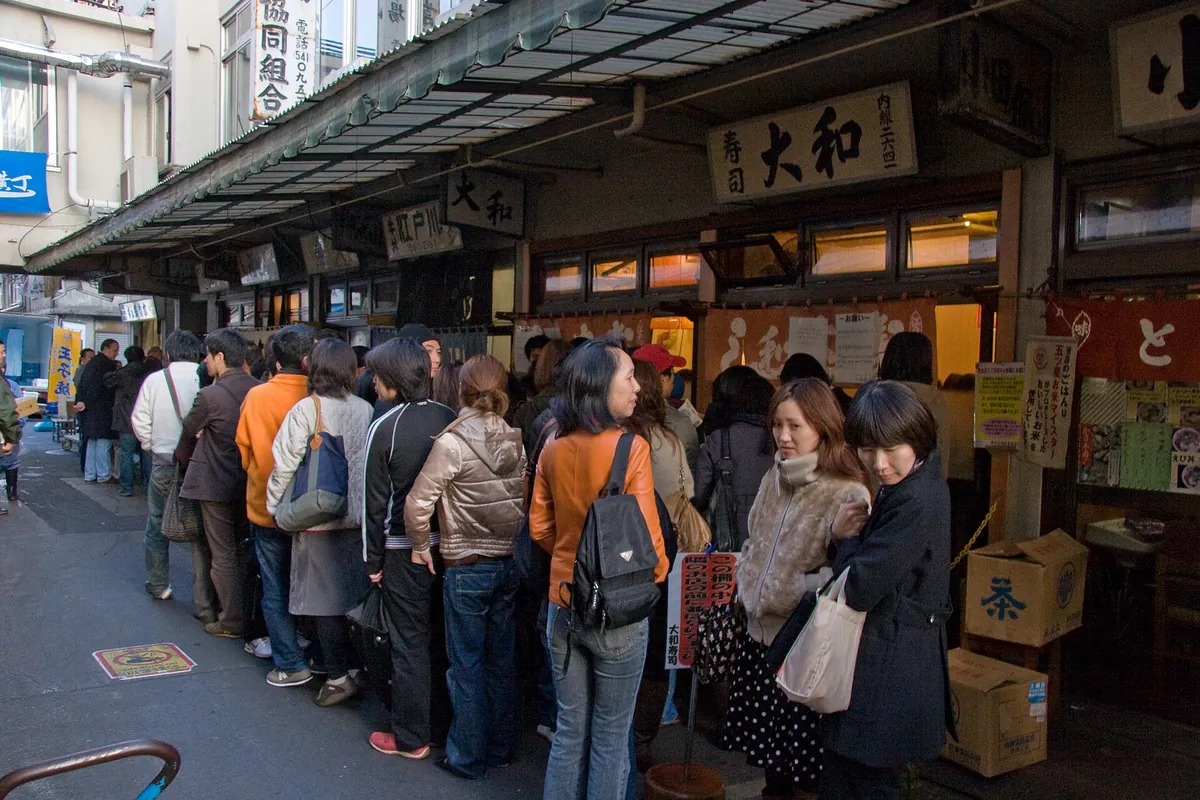
Its Japanese restaurant list names sushi shops including Sushi Dai, Iwasa Sushi, Sushi Bun, Ryu Sushi and Yamato Sushi. Hours and days differ by shop, and no prices were on the official pages, so treat any number you read elsewhere as unconfirmed.
Want to see the tuna auction too? JNTO’s sheet puts it at around 5:30–6:30. The deck takes 100 people a day by lottery, entered from the Toyosu visitor page, while the second-floor Visitor’s Walkway needs no booking and opens from 5:00.
- Shimbashi Station
- Yurikamome Line toward Toyosu
- Shijo-mae Station
- 1 min walk
- Toyosu Market
From Toyosu Station on the Yurakucho Line it is about a 20-minute walk, and a Toei bus from Shimbashi takes 15–20 minutes. There is no visitor parking.
14. Tsukiji Outer Market: after 9:00, before 14:00
The Tsukiji Outer Market gives visitor hours of 9:00–14:00, and warns that many shops close on Sundays and some Wednesdays. Its guide page asks visitors to give professional buyers priority until 9:00.
Bring yen. Most shops take yen only, card acceptance depends on each shop, and there is no exchange counter. Eat inside the shop or in a space set aside for eating, not while walking.
Tsukijishijo Station (Oedo Line) and Tsukiji Station (Hibiya Line) are both about a minute away. If you want a guide to explain the stalls, food tours of Tsukiji and Toyosu are listed on Klook and GetYourGuide; compare what is included before you book.
Want more than sushi near the markets? Our Tokyo local food guide sorts Edo dishes by district, Tsukiji included.
Where Tokyo Sushi Budgets Go Wrong, and the Fix
None of these mistakes is dramatic on its own. Put three of them in one trip, though, and the cheap sushi plan quietly turns into a mid-range one. Here they are side by side, each matched with a fix taken from the official pages above.
What most first-timers do
- Eat at the Asakusa flagship at ¥145+ a plate
- Join a chain queue at dinner time
- Go to Toyosu on a Sunday or Wednesday
- Reach Tsukiji at 13:30
- Walk into Midori Shibuya and wait
What actually works
- Pick a branch outside the higher-price lists
- Book in the app or through Google Maps
- Check the Toyosu calendar first
- Arrive at Tsukiji soon after 9:00
- Take the LINE ticket from within 1 km
The calendar mistake is the most expensive one, because it costs a whole morning. Do not plan market sushi for a Sunday or a Wednesday. Tuesday, Thursday, Friday and Saturday are the safest days, once you have checked for public holidays.
The branch mistake is the most common. It costs only ¥35 a plate at Kura, which feels like nothing until you multiply it by every meal.
One more pattern is worth naming. The Midori lunch deals at Ikebukuro and Akasaka are weekday only, so a Saturday lunch there will cost more than the table suggests.
Small gaps, every day.
The 3-Step Check Before Any Sushi Meal in Tokyo
One habit fixes most of the problems above: check the branch page and the calendar before you leave the hotel. It takes a few minutes on a phone, and it decides whether you pay ¥110 or ¥145 a plate, queue or walk in, and find a market open or shut.
Step 1: Check the branch, not just the chain
Open Kura’s ¥145 store list, Hama’s list of nine stores, or Sushiro’s store menu. If your branch is on a higher-price list, try the next station.
Step 2: Hold your place before you go
Book Sushiro or Hama in their apps, Kura through Google Maps, or Midori Ginza on TableCheck. For Midori Shibuya, take the LINE ticket once you are within about 1 km.
Step 3: Match the day to the place
Midori’s cheapest lunch sets are weekday only. Toyosu closes Sundays, holidays and listed Wednesdays; Tsukiji’s shops thin out on Sundays and some Wednesdays.
Why does this matter so much? Kura’s own store list puts its Asakusa flagship, the branch many visitors pass while sightseeing, in the top price tier. Nothing about the shop front tells you that. The store list does.
The same goes for Sushiro, where the menu page refuses to show prices until you choose a store. The information is there; it just sits one tap deeper than most people look.
Check first, then eat.
FAQ
QIs sushi cheaper at lunch than at dinner in Tokyo?
At Sushi no Midori, yes on weekdays. The Echika Ikebukuro lunch set is ¥748 from 10:30 to 14:00, and Akasaka lists weekday lunch nigiri from about ¥1,000. Conveyor chains price by the plate, so the lunch saving there comes from skipping the queue.
QHow many pieces are on a conveyor sushi plate?
The chains’ official pages checked for this guide did not state it. Look at the photo on the touch panel or the plate itself before you order, and count pieces rather than plates if you are comparing branches.
QCan I just walk in?
Yes, but you may queue. Kura takes bookings through Google Maps, Sushiro and Hama through their apps, and Midori Ginza on TableCheck, so booking is the safer choice at busy times.
QDo I need cash for sushi in Tokyo?
For the markets, yes. Tsukiji says most shops take yen only and card acceptance depends on each shop. Midori’s Ikebukuro and Shibuya branches take cards and transport IC cards, and Kura has self checkout.
QIs the Toyosu tuna auction worth an early start?
Only if you like early mornings. The auction runs around 5:30–6:30, the deck is by lottery for 100 people a day, and the walkway opens from 5:00 without booking. Pair it with breakfast at a market restaurant.
Trying to eat well in Tokyo without watching every yen can feel like a second job before you even land.
Rather than reading one more list of sushi spots, pick your branches and check your market day tonight, then let the rest of the meals happen as they come.
Keep planning
- ① Install and test your eSIM before take-offAiralo and Ubigi eSIMs activate on arrival, but the install itself needs Wi-Fi. Do it at home and confirm the profile shows up in your phone settings.
- ② Save your first hotel’s address in JapaneseTaxi drivers and station staff read Japanese addresses far faster than romanised ones. Copy it from the booking confirmation into your notes app.
- ③ Set aside cash for day oneMany small restaurants, temples and rural buses are still cash-only. Airport ATMs at 7-Eleven and the post office accept most foreign cards.
Skip these and your first hour in Japan goes on finding Wi-Fi at the station instead of getting to your hotel.
🔍 How to sanity-check any price you read online
Blogs (including this one) go out of date. The official page always wins over a screenshot from two years ago.
Cover Photo: Violette79, CC BY 2.0, via Wikimedia Commons