
Sound familiar? Every major guidebook insists you need a nationwide Japan Rail Pass to take day trips from Osaka. It completely failed our Kansai itinerary. The reality is that private regional railways are faster.
Only have one or two spare days? Skip the overpriced JR lines. You can reach ancient temples, harbor walks, and cedar forests for a few thousand yen using local trains.
- Time needed
- 1 day per destination
- Typical cost
- ¥1,500–5,000 round trip
- Base
- Namba or Umeda
- Booking
- Koyasan express trains only
Top picks
Where we would book this
Booking.com
Largest inventory in Japan for English-speaking travellers
- Best for
- Hotels, business hotels, ryokan and apartments in every city
- Checked
- September 2026
Official site. Same price for you.
Where we would book this
Klook
One account for passes, tickets and transfers
- Best for
- JR Pass and regional rail passes, theme-park tickets, airport…
- Checked
- September 2026
Official site. Same price for you.
Some links are affiliate links (marked “Partner link”). Prices are ranges checked in 2026; confirm on the official site before you book.
How to choose your Osaka 1-day side trip route
Your choice depends heavily on where you are sleeping in Osaka. Namba favors southern routes, while Umeda favors the west.
Do not pick a town just because someone said you have to go. Pick based on your transit tolerance. Are you okay with a two-hour train ride each way?
That is the whole trick.
- I want to see wildlife and parks without hiking.
- I prefer eating and city views over more temples.
- I am okay with a two-hour train ride each way.
- My hotel is near Osaka Station or Umeda.
- I want to use my existing ICOCA card for everything.
Matching the train lines to your hotel
Staying near Osaka Station means you have direct access to the JR Kyoto Line and the Hanshin network. It is ideal for western routes.
If you booked your hotel on Agoda near Namba, you are sitting on the Kintetsu and Nankai hubs. This means southern routes require zero extra transfers.
You will waste 30 minutes just crossing the city if you choose a route from the wrong station. Map it out before you leave the room.
Best day trips grouped by atmosphere
These four towns offer completely different atmospheres from the neon lights of Dotonbori. We checked schedules to confirm exact fares.
Each option utilizes a different railway operator. Do not assume you need to rely on the national rail network to get around.
Nara: Best for ancient temples and park wildlife
Nara was Japan’s first permanent capital. It is famous for the massive Todai-ji temple and the hundreds of free-roaming deer.
Many first-timers assume they must use the JR Yamatoji Line. This is a common routing mistake that wastes precious sightseeing time.
The critical choice here is taking the Kintetsu-Nara Station route. It drops you right at the edge of Nara Park.
If you take the JR train, you face a grueling 15-minute uphill walk through heavy commuter traffic. Avoid it if you can.
- Osaka-Namba Station
- Kintetsu Nara Line Rapid Express · 40 min
- Kintetsu-Nara Station
- 5 min walk
- Nara Park entrance
Buy deer crackers inside the park, but hide them in your bag until you are ready to feed them.
You can easily book a guided walking tour on Klook if you want the historical context. It saves you from reading plaques all day.
Round-trip fares run roughly ¥1,100–1,500 per person. Well — that is just the base fare. Check the official site for the latest express surcharges.
Skip the JR line entirely.
Himeji: Best for feudal castle architecture
If you want to see an authentic feudal fortress, Himeji Castle is the undisputed top choice. It visually dominates the skyline.
Unlike Osaka Castle, which is a modern concrete reconstruction, Himeji is original wood from the 1600s. The interior is massive.
This is the one route where the JR network actually wins. The Special Rapid service covers the distance in just 65 minutes.
Do not pay for the Shinkansen from Shin-Osaka. The local rapid train costs much less and is almost as fast for a day trip.
- JR Osaka Station
- JR Kobe Line Special Rapid · 65 min
- JR Himeji Station
- 15 min walk straight down the main avenue
- Himeji Castle
We suggest grabbing castle entry tickets on Rakuten Travel or KKday during the busy spring cherry blossom season.
Lines at the ticket gate can take an hour in April. Buying ahead of time lets you walk right past the massive crowds.
Expect to spend ¥3,000–3,200 round trip. Check the official JR West site for the latest standard fares before traveling.
Kobe: Best for late afternoon strolls and dinner
Most guides treat Kobe as a morning trip. We think that ruins the pacing of your itinerary entirely.
Kobe is best treated as a late afternoon and dinner trip. Spend your morning exploring Osaka first.
Take the Hanshin railway line to Kobe-Sannomiya around 3 PM. It costs a few hundred yen less than the JR equivalent.
Stroll the waterfront, check out the red brick warehouses, and sit down for a famous wagyu beef dinner.
- Osaka-Umeda Station (Hanshin)
- Hanshin Main Line Limited Express · 35 min
- Kobe-Sannomiya Station
- 10 min walk
- Kobe Harborland
Booking a restaurant ahead of time via Viator or your hotel concierge is a smart move. Good steakhouses fill up by 6 PM.
If you decide to stay overnight, find a business hotel on Booking.com near the harbor for excellent night views.
Eat dinner and head back.
Train tickets cost around ¥600–700 round trip. Check the Hanshin railway site to confirm prices before you ride.
Koyasan: Best for mountain cedar forests
Koyasan is totally feasible as a day trip from Namba on the Nankai Koya Line. It offers a quiet retreat into the mountains.
However, you must take the Limited Express Koya and commit to an early morning departure.
Attempting it on standard commuter trains burns over five hours in transit. You will be tired before you even see a temple.
- Namba Station (Nankai)
- Limited Express Koya · 80 min · reserved seat
- Gokurakubashi Station
- Koyasan Cable Car · 5 min
- Koyasan Station
Express train tickets sell out fast in autumn. Book them on the Nankai site as soon as reservations open.
Once you reach the top, you can use the local buses to navigate the sprawling temple complexes and giant cedar forests.
You can book a meditation experience on GetYourGuide to break up the endless temple viewing. It adds great context.
Fares are roughly ¥4,000–5,000 round trip including the cable car. Yes, it sounds like a lot. But the cable car alone is worth it.
Side by side route comparisons
Comparing transit times and rough costs helps clarify which option fits your remaining budget and energy levels.
These totals are estimates for round-trip travel from central Osaka as of 2026.
← Swipe to see the full table →
| Destination | Best for | Est. Round Trip (Yen) |
|---|---|---|
| Nara (Kintetsu) | Ancient temples & wildlife | ¥1,100–1,500 |
| Himeji (JR) | Feudal architecture | ¥3,000–3,200 |
| Kobe (Hanshin) | Harbor views & wagyu beef | ¥600–700 |
| Koyasan (Nankai) | Mountain forests & history | ¥4,000–5,000 |
Plan your trip: the tools we use
Our pick: Nara via Kintetsu for the best balance of travel time and historical impact.
Partner link.
The alternatives to individual train tickets
Buying paper tickets for every single ride gets old fast. You have a few options to skip the ticket machines.
Digital IC cards for seamless transfers
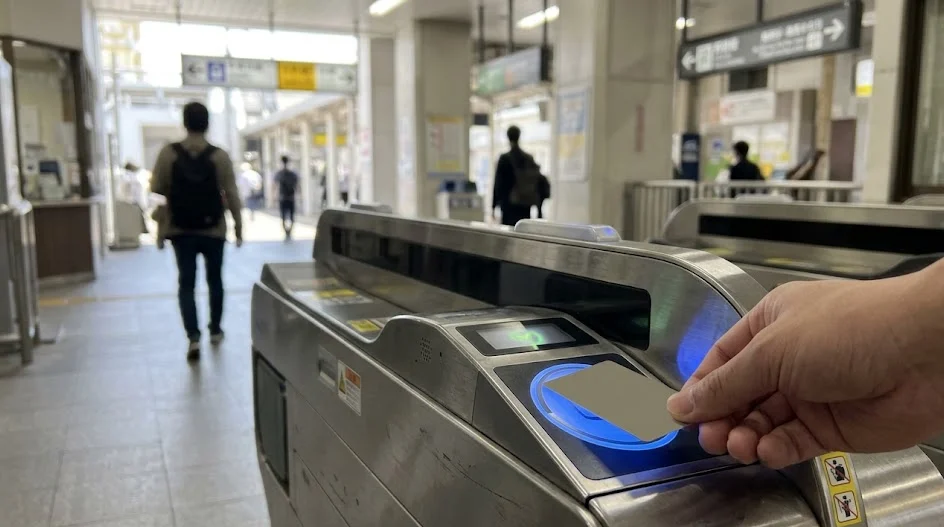
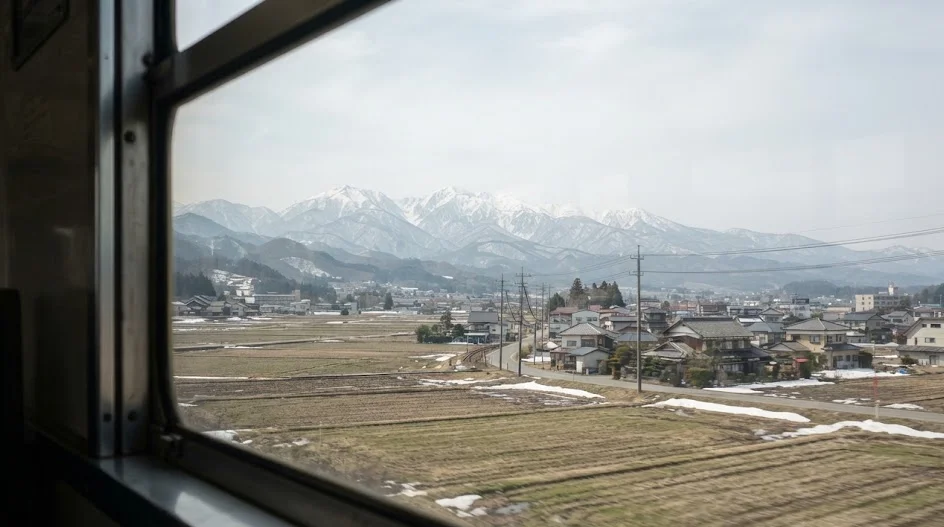
Instead of figuring out exact fares, just tap your phone or a physical ICOCA card at the gates. It does the math automatically.
This works on Kintetsu, Nankai, Hanshin, and JR local lines without buying separate tickets. It is the absolute easiest way to travel.
You will need a reliable data connection to top up digital cards. Grab an eSIM from Airalo or Ubigi before you fly.
Tapping saves precious minutes.
Regional railway passes
The Kansai Railway Pass covers most private railways but entirely excludes the JR network. Do you really need it?
Probably not. Whether the pass pays off depends on your route. Add up the individual fares first before you buy anything.
If you plan to visit Koyasan, Nara, and Kobe on consecutive days, you might actually break even on the upfront cost.
You can order this pass on KKday and pick it up at Kansai Airport when you land.
Luggage forwarding for overnight stays
If you decide to turn a day trip into an overnight stay, do not drag suitcases on these commuter trains.
Use Yamato luggage forwarding to send your heavy bags to your next major hotel. It costs about ¥2,000 and rarely fails.
Pack a small overnight bag instead. You can find cheap travel adapters on Amazon if you need a spare for your ryokan.
Tips for getting the most out of transit
Navigating massive stations like Umeda or Namba is half the battle. You need a solid game plan to survive the crowds.
Follow these steps to make sure you catch your train.
Step 1: Check your starting station
Confirm if you are leaving from JR Osaka, Umeda, or Namba. They are huge complexes with different rail operators.
Step 2: Load your digital IC card
Make sure you have at least ¥3,000 loaded on your phone or physical card before you walk up to the gates.
Step 3: Find the correct ticket gate
Look for the specific logo of your railway. Kintetsu gates look completely different from standard JR gates.
Step 4: Tap and board the rapid
Unless you are riding a limited express with a reserved seat, just tap through and sit anywhere on the fastest train.
Avoiding the brutal commuter rush
Osaka is a working city. Trains between 7:30 AM and 9:00 AM are packed shoulder-to-shoulder with salarymen.
Plan to leave either before 7:00 AM or after 9:30 AM to get a seat. Standing for an hour ruins the morning.
Private railway stations are physically separate from JR stations, even when they share similar neighborhood names.
We once missed a 9:00 AM Hankyu train because we wandered around the JR Osaka ticket gates. Give yourself extra transfer time.
What most first-timers do
- Assume JR trains are always best
- Buy a national pass for regional trips
- Commute during peak rush hour
- Walk 15 minutes uphill to Nara Park
What actually works
- Ride private railways to the door
- Pay with a simple ICOCA card
- Leave after 9:30 AM to get a seat
- Take the Kintetsu line to Nara
How we chose these Kansai destinations
We focused on towns that offer a distinct contrast to Osaka’s urban sprawl. We wanted entirely different vibes.
We checked all route times using the official 2026 timetables for Kintetsu, Hanshin, Nankai, and JR West.
We excluded destinations that require more than two hours of one-way transit on standard local commuter trains.
Prices are ranges checked in 2026. We reviewed tour availability on GetYourGuide and KKday to ensure they still operate.
We also checked hotel rates on Booking.com for readers who decide to turn their day trip into a short stay.
Who each 1-day Osaka side trip option is for
Every traveler wants something different from their spare day in Kansai. Still not sure which to pick?
- Nara is for travelers who want maximum historical impact with minimal transit time from central Osaka.
- Himeji is for architecture buffs willing to ride the rapid trains to see a pristine, original castle.
- Kobe is for couples seeking a relaxed evening stroll, harbor views, and a high-end steak dinner.
- Koyasan is for early risers who want to escape the concrete city for serene mountain cedar forests.
Our final advice? Pick just one side trip and spend the rest of your time enjoying Osaka itself.
FAQ
QIs a Japan Rail Pass required for these trips?
No. The JR Pass is often terrible value for short regional trips around Kansai. You will waste money buying one. Private railways are usually cheaper and drop you closer to the actual tourist sites. Pay out of pocket instead.
QCan I combine Nara and Kobe in one single day?
Technically yes, but it is a miserable experience. You will spend over four hours just sitting on various trains. Pick one destination per day to actually enjoy the local atmosphere and food. Rushing ruins the whole experience.
QDo I need to book train tickets in advance?
For standard local and rapid trains, you just tap your IC card at the gate. There are no reserved seats on commuter lines. The only exception is the Limited Express Koya to Koyasan, which requires a reserved seat ticket booked ahead of time.
QWhere should I stay in Osaka for the best transit access?
If you plan to use Kintetsu or Nankai, a business hotel near Namba is ideal. It cuts down on daily transfer times. If you are relying on JR or Hanshin lines, find a room near Umeda using Agoda. Both hubs are excellent starting points.
QWhat happens if it rains all day?
Himeji Castle is miserable in heavy rain because you have to cross massive open courtyards. You will get soaked. If the weather turns bad, stay in Osaka and explore the covered shopping arcades. Save the side trips for clear skies.
QWill my phone data work in the Koyasan mountains?
Coverage is generally fine in the main temple areas, but gets spotty on the hiking trails. Prepare accordingly. Download your route maps while on your hotel Wi-Fi before you head up the mountain. Do not rely entirely on cellular data.
 ReaderYuki
Figuring out which train lines to take out of Osaka can feel overwhelming.
Pick the one destination that excites you most, tap your IC card at the gate, and figure the rest out when you arrive.
Keep planning
- ① Install and test your eSIM before take-offAiralo and Ubigi eSIMs activate on arrival, but the install itself needs Wi-Fi. Do it at home and confirm the profile shows up in your phone settings.
- ② Save your first hotel’s address in JapaneseTaxi drivers and station staff read Japanese addresses far faster than romanised ones. Copy it from the booking confirmation into your notes app.
- ③ Set aside cash for day oneMany small restaurants, temples and rural buses are still cash-only. Airport ATMs at 7-Eleven and the post office accept most foreign cards.
Skip these and your first hour in Japan goes on finding Wi-Fi at the station instead of getting to your hotel.
🔍 How to sanity-check any price you read online
Blogs (including this one) go out of date. The official page always wins over a screenshot from two years ago.
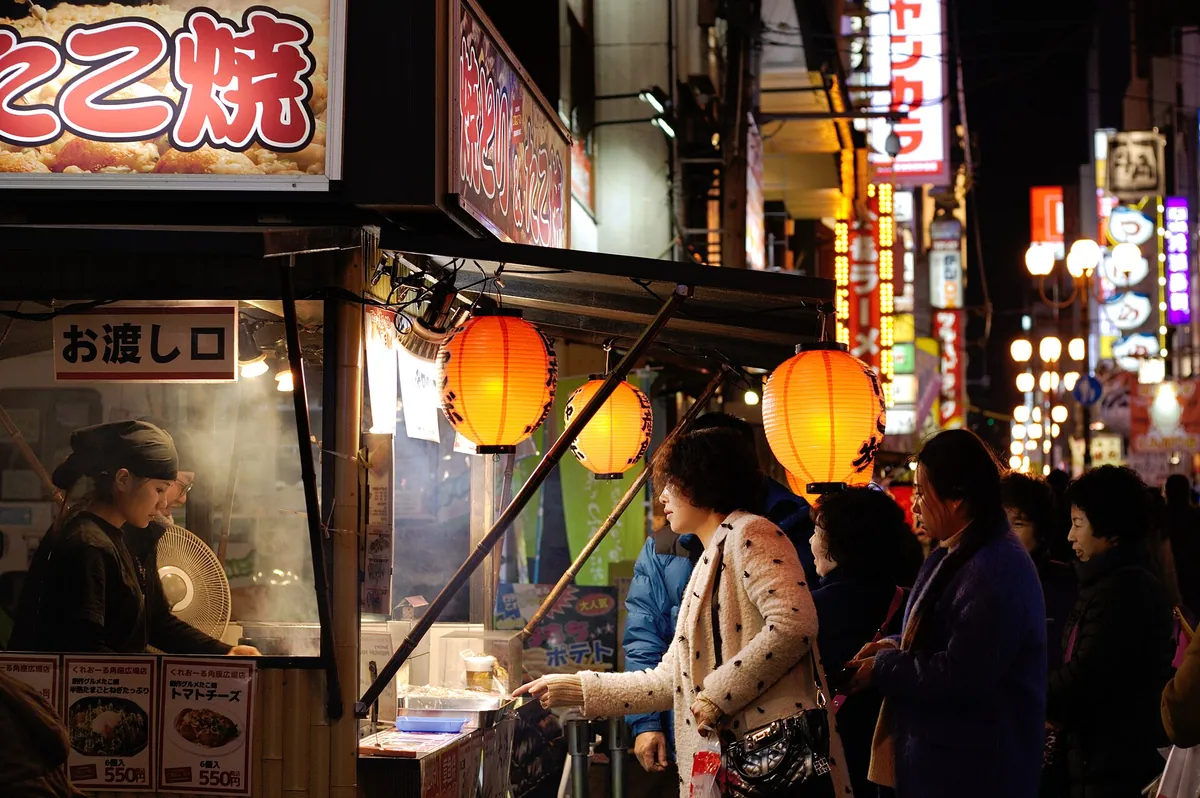
Cover Photo: jetsun, CC BY-SA 3.0, via Wikimedia Commons