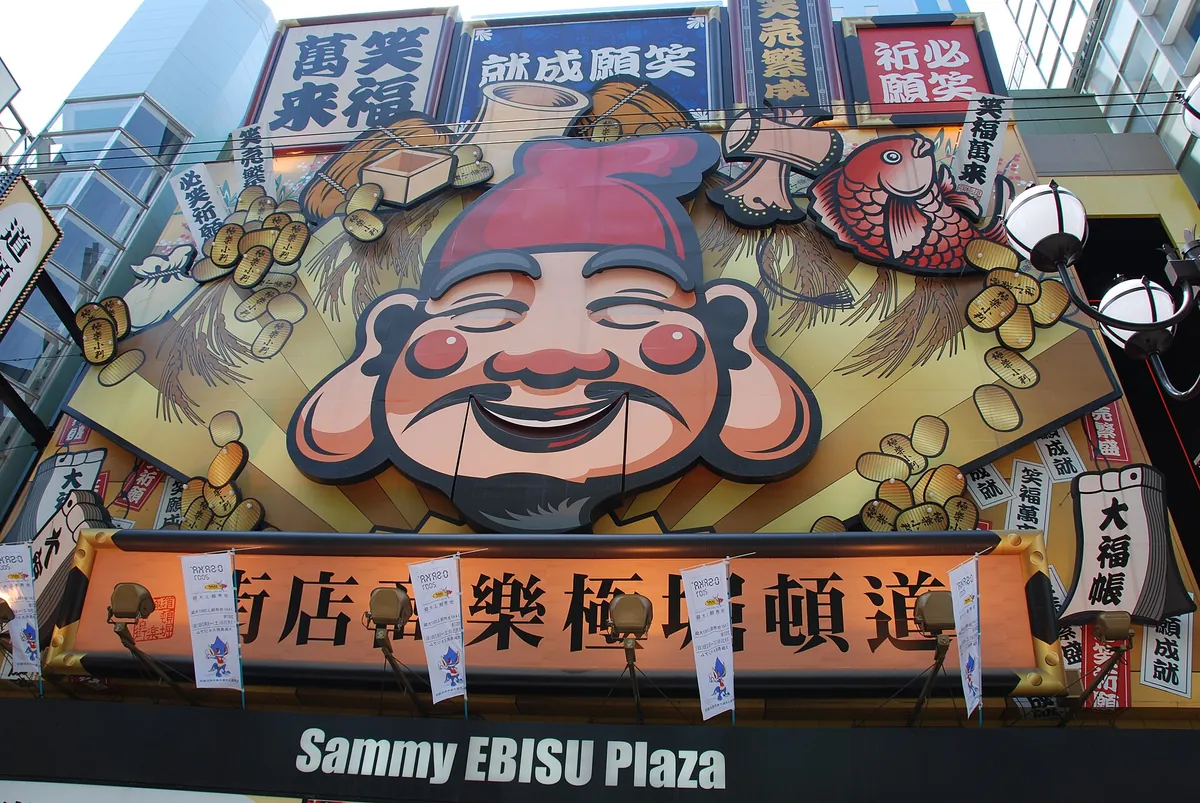
- Best for nightlife and food: Namba area
- Best for Kyoto and Nara day trips: Umeda area
- Best for theme park fans: USJ area
- Avoid: Remote suburban stations
Forty minutes after stepping off the Haruka Express at Tennoji, we stood on the platform realizing we had booked a hotel three stops too far into the suburbs. That wasted time is exactly what you want to avoid on a short Osaka trip, especially if you plan to visit Kyoto or Nara.
If you are only visiting Kyoto, close this and read the Kyoto-only plan. For everyone else, your base is the single most important decision for your 3–5 day trip. We recommend staying in Namba for food, Umeda for transit, or near USJ if the park is your only priority.
- Time needed
- 3–5 days
- Typical cost
- ¥12,000–22,000 per night
- Base
- Namba or Umeda
- Booking
- Booking.com or Agoda
- Best season
- Spring or Autumn
Top picks
Where we would book this
Booking.com
Largest inventory in Japan for English-speaking travellers
- Best for
- Hotels, business hotels, ryokan and apartments in every city
- Checked
- September 2026
Official site. Same price for you.
Where we would book this
Agoda
Frequently cheaper for Asian and Japanese chains
- Best for
- Same hotels as Booking.com, often different prices
- Checked
- September 2026
Official site. Same price for you.
Some links are affiliate links (marked “Partner link”). Prices are ranges checked in 2026; confirm on the official site before you book.
Choosing the right base for your Osaka rhythm
Your choice comes down to one question: do you prefer being in the middle of the neon-lit food scene, or do you want to be five minutes from the train line heading to Kyoto? Many visitors mistakenly prioritize a lower room rate over the cost of 40 minutes of extra transit per day.
- I want to walk to Dotonbori at midnight.
- I am visiting Kyoto twice or more.
- I have a child who needs a stroller.
- I am carrying large suitcases.
- I prefer luxury business hotels over ryokan.
- I need quick access to Kansai Airport.
That is the whole trick. If you choose the wrong base, the train transfers will consume your morning energy.
Best for food and late-night exploration: The Namba choice
If you want to step out of your hotel and smell takoyaki within five minutes, Namba is your destination. This area is the soul of Osaka, where the Dotonbori canal lights illuminate the evening sky.
The northern Namba district
Hotels here put you within walking distance of the Namba station complex. You can easily access the Nankai line for the airport or the Midosuji subway line for central transit.
For example, a modern business hotel near the Namba Parks complex often provides a quiet retreat while remaining in the center of the action. Prices for a double room range from ¥15,000 to ¥25,000 per night on Booking.com.
The southern Namba trap
Be wary of hotels listed as “Namba” that are actually near the Imamiya-Ebisu or Shin-Imamiya stations. While these look close on a map, the walk to the central Dotonbori area is long and often tedious.
We once made this mistake and ended up taking a taxi back every night because we were too tired to walk the extra kilometer.
Best for day trips to Kyoto and Nara: The Umeda choice
Umeda is the transport beating heart of Osaka. If you plan to spend two days in Kyoto and one in Nara, staying near Umeda (also called Osaka Station) is the smartest move you can make.
The Umeda station maze
Umeda is a massive underground labyrinth that connects several private railway lines. You should practice locating your platform on the day you arrive to avoid morning stress.
Even if your hotel is just outside the station, finding the specific gate for the JR Kyoto Line can take 15 minutes. Check the layout on the JR West official site before you arrive.
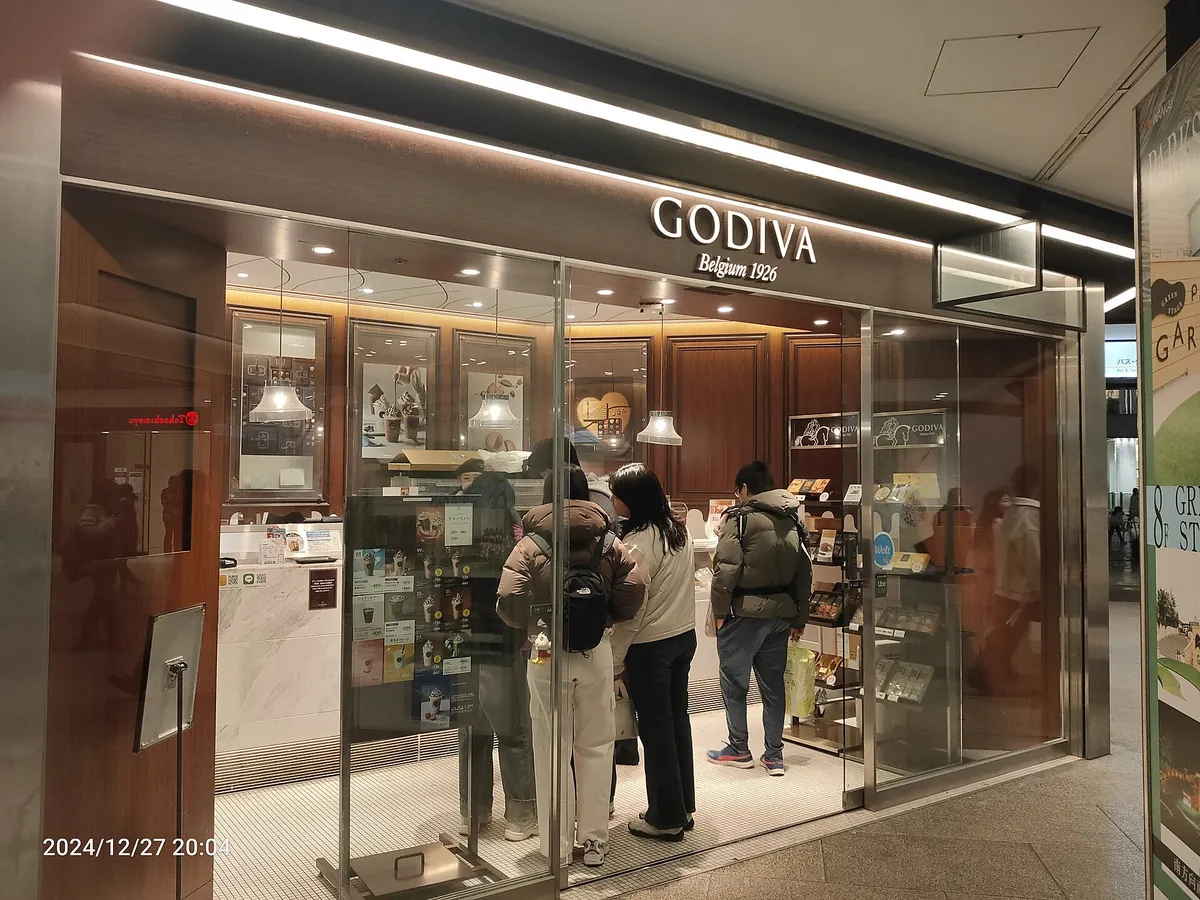
Business hotels in Umeda
Hotels in this district tend to be larger and more suited to travelers who value professional efficiency over street-food charm. You can find excellent options on Agoda that are directly connected to the station basement.
Expect to pay between ¥18,000 and ¥30,000 per night depending on the season and proximity to the main terminal.
If you stay in Umeda, use the underground walkways to stay dry if it rains.
Best for theme park access: The USJ area choice
If Universal Studios Japan is the anchor of your trip, staying near the park is convenient but isolating. The area is highly functional, often featuring large hotels designed for families and groups.
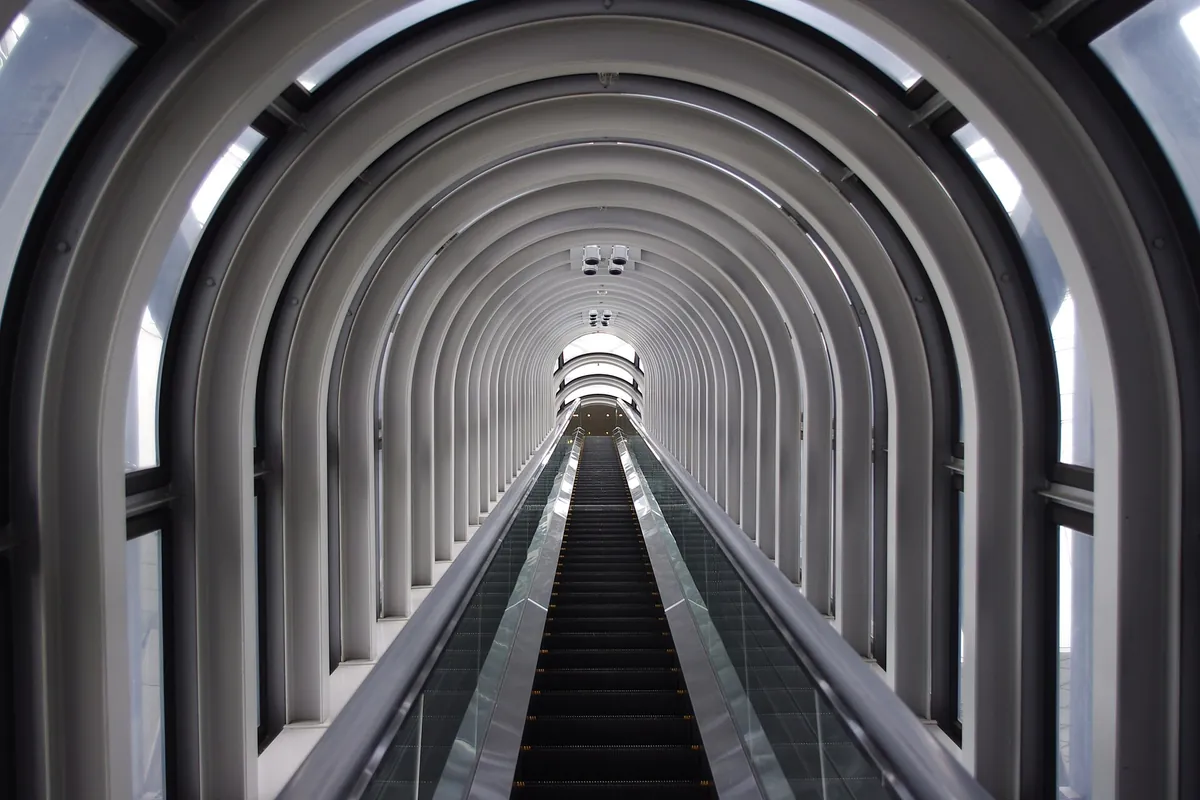
Staying at the park gates
Staying at one of the official hotels near Universal City station is ideal if you have kids. You can head back for a nap midday and return for the night parade.
Prices often climb higher during weekends or holidays, ranging from ¥20,000 to ¥40,000 on Booking.com. Always book your park tickets in advance via Klook or GetYourGuide to save time at the gate.
The trade-off for nightlife
The drawback is that once you leave the park area, you are a solid 20-to-30-minute train ride away from the energy of Namba. If you want to enjoy Osaka’s legendary nightlife, you will find yourself rushing to catch the last train back to the USJ district.
In our experience, this effectively cuts your evenings short.
Side-by-side comparison of Osaka bases
← Swipe to see the full table →
| Area | Best For | Est. Cost/Night |
|---|---|---|
| Namba | Foodies & nightlife | ¥15,000–25,000 |
| Umeda | Kyoto/Nara day trips | ¥18,000–30,000 |
| USJ Area | Theme park access | ¥20,000–40,000 |
Plan your trip: the tools we use
Our pick: Namba for a first-time trip because you want the food experience.
Partner link.
The hidden cost of suburban chain hotels
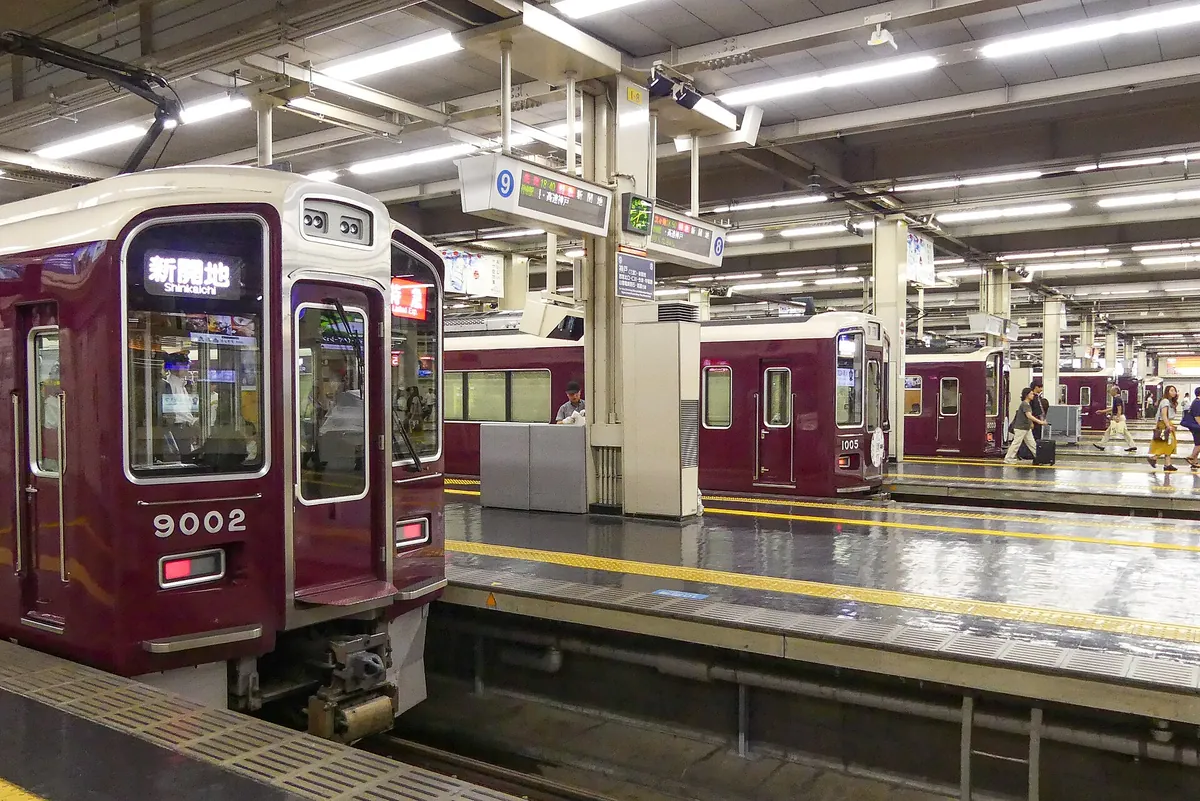
Many travelers try to save money by booking a hotel 15 minutes outside of the main hubs. While the nightly rate might be ¥5,000 lower, the cost of transit and the loss of precious time often negate the savings.
What most first-timers do
- Book the cheapest room on the map
- Ignore train line names
- Choose a hotel in the outskirts
What actually works
- Check distance to Midosuji Line
- Stay within 10min walk of a hub
- Read hotel reviews for noise
You lose the ability to drop off shopping bags or freshen up between sightseeing stops.
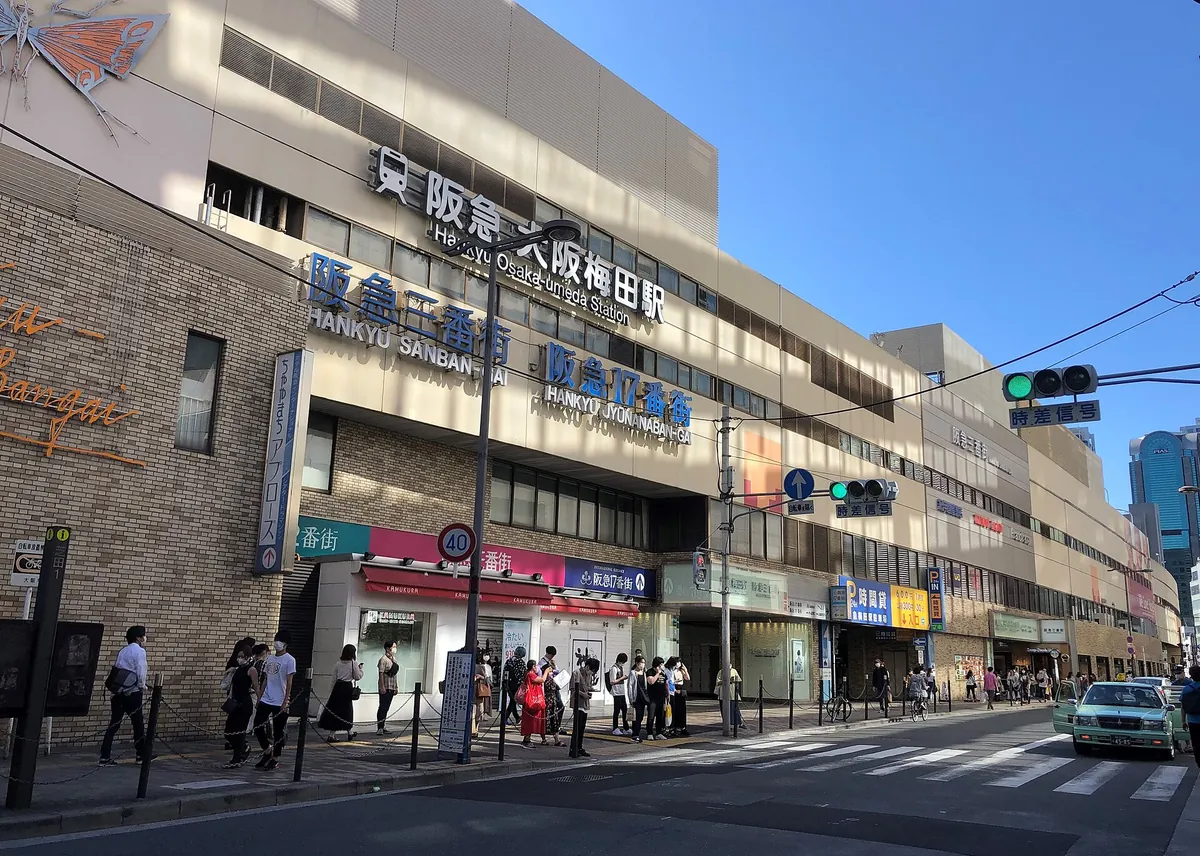
Tips for getting your base right
Setting up your base is about more than just a bed. Follow these steps to ensure you don’t waste your vacation time in transit.
Step 1: Search for proximity
Use the “show on map” feature on Agoda to find hotels within 500 meters of the station.
Step 2: Verify the transit
Open Google Maps and check the travel time to Kyoto Station from your specific hotel.
Step 3: Check the exits
Find out which numbered station exit is closest to your hotel to avoid dragging bags up stairs.
One time we booked a hotel that required a bus ride from the train station. We ended up walking in the rain for twenty minutes with heavy suitcases.
How we chose these recommendations
We based these recommendations on our personal experience navigating Osaka’s complicated train networks. We looked at standard booking platforms like Agoda and Booking.com to compare prices for the current season.
We verified train route times using the official JR West and Osaka Metro websites as of 2026. We could not verify specific bed comfort or breakfast quality, as these vary by individual hotel management.
 Reader
 Yuki
Decoding the “Business Hotel” classification
In North America or Europe, the term “business hotel” often implies a lack of personality, but in Osaka, it is a gold standard for travelers who value efficiency. These properties are the backbone of the city’s hospitality industry, designed specifically for people who spend their days moving between districts.
When searching for a room, prioritize these chains: APA Hotel, Dormy Inn, Daiwa Roynet, and Sotetsu Fresa Inn. They are reliable, clean, and predictably compact.
You will find that even the most affordable rooms are managed with extreme precision, offering high-speed Wi-Fi, coin-operated laundry machines, and pajamas tailored for a comfortable night’s sleep after a day of walking.
Do not let the small room size deter you.
While the footprint is often tight, the design maximizes every centimeter. You will find wall-mounted desks, clever luggage storage under the bed frame, and high-quality bathrooms that outperform many luxury hotels abroad.
The true benefit is the location; these hotels are almost always situated within a three-minute walk of a subway entrance or a major train junction.
Evaluating the “Onsen” factor
If you want to treat yourself without leaving your accommodation, look for a Dormy Inn. These specific hotels often feature a rooftop or basement natural hot spring bath.
After a 20,000-step day exploring the Umeda or Namba streets, soaking in an onsen while looking out over the city skyline is a transformative experience. They also offer complimentary evening ramen, which is a massive relief when you are too tired to hunt for a restaurant after a late flight.
- Check for “large public bath” in the amenities filter on Booking.com.
- Look for properties that offer free morning shuttle buses to main stations.
- Verify if the room includes a private toilet and shower; some older or budget-tier options share facilities.
If you prefer a more luxurious stay, the St. Regis or the Conrad provide spacious layouts, but you pay a premium for space that you might not even use if your goal is to spend your hours out in the city.
For most travelers, a standard business hotel in a perfect location is far superior to a sprawling room in a remote neighborhood.
What to do when your first-choice area is fully booked
Osaka’s hotel inventory can vanish rapidly during high-demand periods like the cherry blossom season in April or the autumn foliage peak in November. If you cannot find a reasonably priced room in Namba or Umeda, do not panic.
The city’s transit network is circular and highly interconnected, meaning you have viable “Plan B” locations that keep you connected without forcing you into the suburbs.
Look toward the Tennoji area if Namba is sold out. Tennoji is a major hub on the JR Loop Line and the Midosuji subway line, making it just as accessible as Namba for travel to Kyoto or the airport.
The area is home to Abeno Harukas, the tallest skyscraper in Japan, and offers a slightly more relaxed pace than the neon intensity of Dotonbori. You can reach the Namba core in about seven minutes by train for roughly ¥200.
Prioritize the Midosuji subway line at all costs.
If you are struggling to find a booking, pull up a map of the Midosuji line. This is the city’s primary artery.
As long as your hotel is located within a five-minute walk of any station on this line, you can reach the heart of Umeda or Namba in under fifteen minutes. Do not settle for hotels on obscure private lines that require multiple transfers, as these will frustrate you every single day of your trip.
Alternative hubs for the flexible traveler
- Shin-Osaka: Ideal if your entire trip is built around day trips to Kyoto, Kobe, and Hiroshima. It is less “fun” in the evenings, but you will always find a seat on the train.
- Hommachi: Located perfectly between Umeda and Namba. It is a business district that empties out at night, making it quieter and often cheaper than the direct tourist hubs.
- Kyobashi: A local favorite that provides direct JR access to Kyoto, bypassing the Umeda station chaos entirely.
If you are still seeing “no availability” on your primary dates, check Agoda for “last-minute” deals that often pop up two weeks before the arrival date. Many travelers cancel their bookings as plans solidify, and supply can fluctuate significantly.
Always check the official site of the hotel chain as a secondary step, as they sometimes keep inventory that does not get pushed to the larger third-party platforms.
FAQ
QIs it better to stay in Osaka or Kyoto?
If you prioritize temples and atmosphere, choose Kyoto. If you prefer food, nightlife, and better transport links for multiple day trips, stay in Osaka.
QHow do I handle luggage between cities?
Use Yamato Transport luggage forwarding services to send your bags from your hotel in Tokyo to your hotel in Osaka. It is easier than lugging suitcases on the bullet train.
QIs the JR Pass worth it for Osaka?
Whether the pass pays off depends on your route — add up the individual fares first. For local Osaka travel, you are almost always better off using an IC card.
QWhat is an IC card?
It is a rechargeable tap-and-go card for trains and buses. You can add it to your phone wallet for quick access at the station gates.
QAre Osaka hotels safe for families?
Yes, Japan is generally safe, and most hotels are well-equipped. Look for “family-friendly” or “non-smoking” filters on Booking.com to narrow your choices.
QDo I need to book my hotel months in advance?
For popular seasons like cherry blossoms or autumn leaves, yes. Otherwise, booking four to eight weeks ahead usually secures a reasonable rate.
Planning your base feels like a high-stakes puzzle when you are looking at a map of a dozen train lines.
Lock in the hotel that puts you near the main transit line and let the rest of your itinerary adapt to the city’s pace.
Keep planning
- ① Install and test your eSIM before take-offAiralo and Ubigi eSIMs activate on arrival, but the install itself needs Wi-Fi. Do it at home and confirm the profile shows up in your phone settings.
- ② Save your first hotel’s address in JapaneseTaxi drivers and station staff read Japanese addresses far faster than romanised ones. Copy it from the booking confirmation into your notes app.
- ③ Set aside cash for day oneMany small restaurants, temples and rural buses are still cash-only. Airport ATMs at 7-Eleven and the post office accept most foreign cards.
Skip these and your first hour in Japan goes on finding Wi-Fi at the station instead of getting to your hotel.
🔍 How to sanity-check any price you read online
Blogs (including this one) go out of date. The official page always wins over a screenshot from two years ago.
Cover Photo: jetsun, CC BY-SA 3.0, via Wikimedia Commons