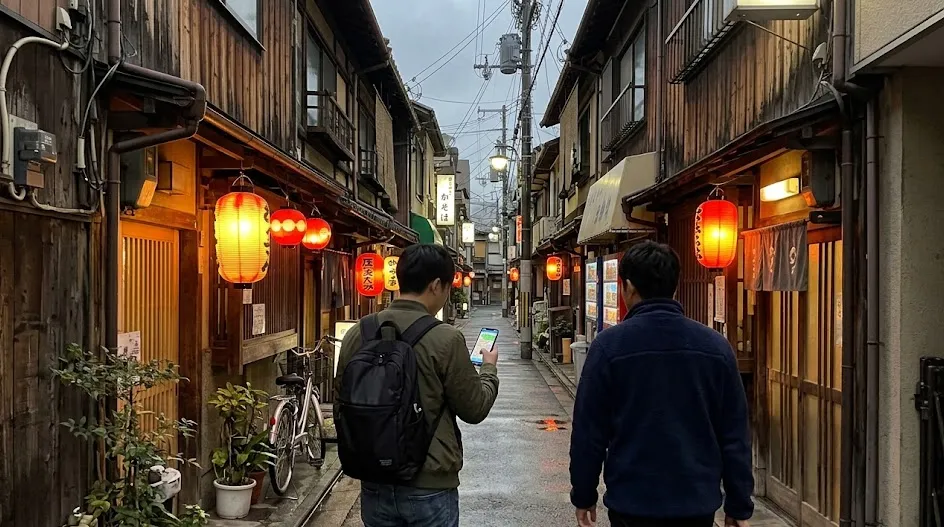
- Insurance is necessary to avoid paying full-price out-of-pocket for medical visits.
- Buy a policy if your home insurance excludes international emergency coverage.
- Skip extra trip cancellation add-ons if your hotel bookings are fully refundable.
- Time needed
- 15 minutes to purchase
- Typical cost
- ¥4,000–¥9,000 per person
- Best practice
- Buy before your flight
- Coverage
- Emergency medical focus
- Price checked
- 2026
Some links are affiliate links (marked “Partner link”). Prices are ranges checked in 2026; confirm on the official site before you book.
You are standing in the clinic lobby near Namba Station at 7:00 PM, holding a damp towel against your child’s forehead. The receptionist is shaking her head, pointing firmly at a sign that says cash only for non-residents.
The total for this consultation and basic medication is going to be significantly higher than a standard co-pay back home.
If you are a first-time visitor, you likely assume your domestic health insurance covers you here. It almost never does.
Without a private travel insurance policy, you are personally liable for every yen of your medical care, including expensive emergency transport.
What medical coverage actually means for a tourist
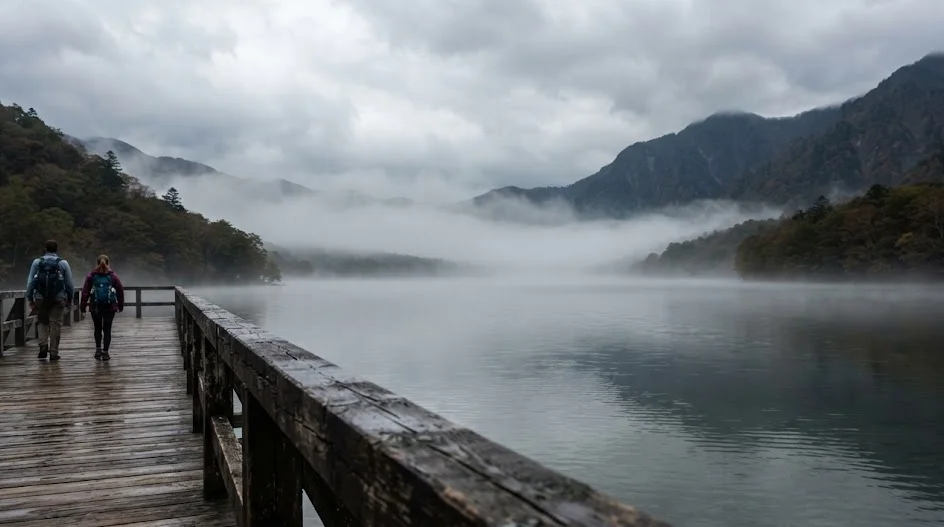
Japan maintains a sophisticated national health insurance system, but it is strictly reserved for residents who pay into the system through their taxes. As a visitor, you are considered a private patient regardless of your home country status. You cannot simply present a card and walk away without a bill.
The reality of clinic billing
Most small-to-medium clinics in areas like Umeda or Shinjuku do not have the infrastructure to process international insurance claims. They require payment in cash or via a local credit card at the time of service.
You then have to keep every receipt and medical report to file a claim with your provider once you return home.
Why evacuation coverage is the non-negotiable part
While a routine fever or a twisted ankle might cost you ¥10,000–¥30,000 in out-of-pocket expenses, an emergency is a different scale. If you are injured on a hike in the Japan Alps or require specialized transport, costs can quickly climb into the millions of yen.
You need coverage for medical evacuation, not just the visit itself. Most standard travel policies include this as a baseline. Do not assume your home insurance provides the same protection.
What travel insurance costs for a 14-day trip
For a standard two-week visit to Japan, premiums are generally affordable when compared to the potential financial disaster of an uncovered medical emergency.
As of 2026, you should budget roughly ¥4,000–¥9,000 per person depending on the level of coverage. Always verify the specific terms on the provider’s official website.
← Swipe to see the full table →
| Plan Type | Estimated Cost | Best For |
|---|---|---|
| Basic Medical | ¥4,000–¥6,000 | Short, low-risk trips |
| Full Coverage | ¥7,000–¥12,000 | Families or remote travel |
| Cancel-for-Any-Reason | ¥15,000+ | High-budget, inflexible bookings |
Plan your trip: the tools we use
Our pick: A mid-tier medical-focused plan, as it covers the highest risks without paying for unnecessary trip cancellation perks.
The math: comparing out-of-pocket costs vs insurance
It is helpful to view insurance as a hedge against the worst-case scenario rather than a way to recoup the cost of a flu visit. If you encounter a minor issue, you will likely pay the full amount upfront anyway.
The insurance exists for the events that would otherwise drain your savings.
Consider the typical financial burden of a medical incident in Tokyo or Osaka. A simple consultation and prescribed antibiotics at a private clinic will set you back ¥8,000–¥15,000.
An ambulance transfer, while technically free to call, often results in being taken to a hospital that demands an immediate, substantial deposit for admission.
When the policy pays off
If you fall and break a limb while walking through the narrow lanes of Gion, you are looking at surgery and multiple nights in a hospital. This can easily cost ¥300,000–¥800,000.
In this scenario, your policy will pay for itself a hundred times over. Paying the premium is the only way to avoid a five-figure bill for basic medical care.
Who should buy a policy and who can skip it
Skip it if…
- Your credit card provides high-limit medical cover
- You have a specific international health insurance plan
- You are extremely confident in your home provider
Buy it if…
- You are hiking or visiting remote rural areas
- You are traveling with young children or seniors
- Your home medical plan explicitly excludes Japan
Do not rely solely on the insurance provided by your credit card. Many only cover common carrier accidents or small portions of emergency medical costs.
Always call your card issuer before you leave and ask for a document that confirms they provide full-scale international medical and evacuation coverage in Japan.
The best alternatives for managing your trip
While insurance protects your health, other planning choices protect your budget. You can often manage your trip costs by choosing the right booking strategy rather than relying on expensive “trip cancellation” insurance.
If you book flexible rooms through Booking.com or Agoda, you eliminate the need to insure your accommodation costs.
Regional passes and transport tickets
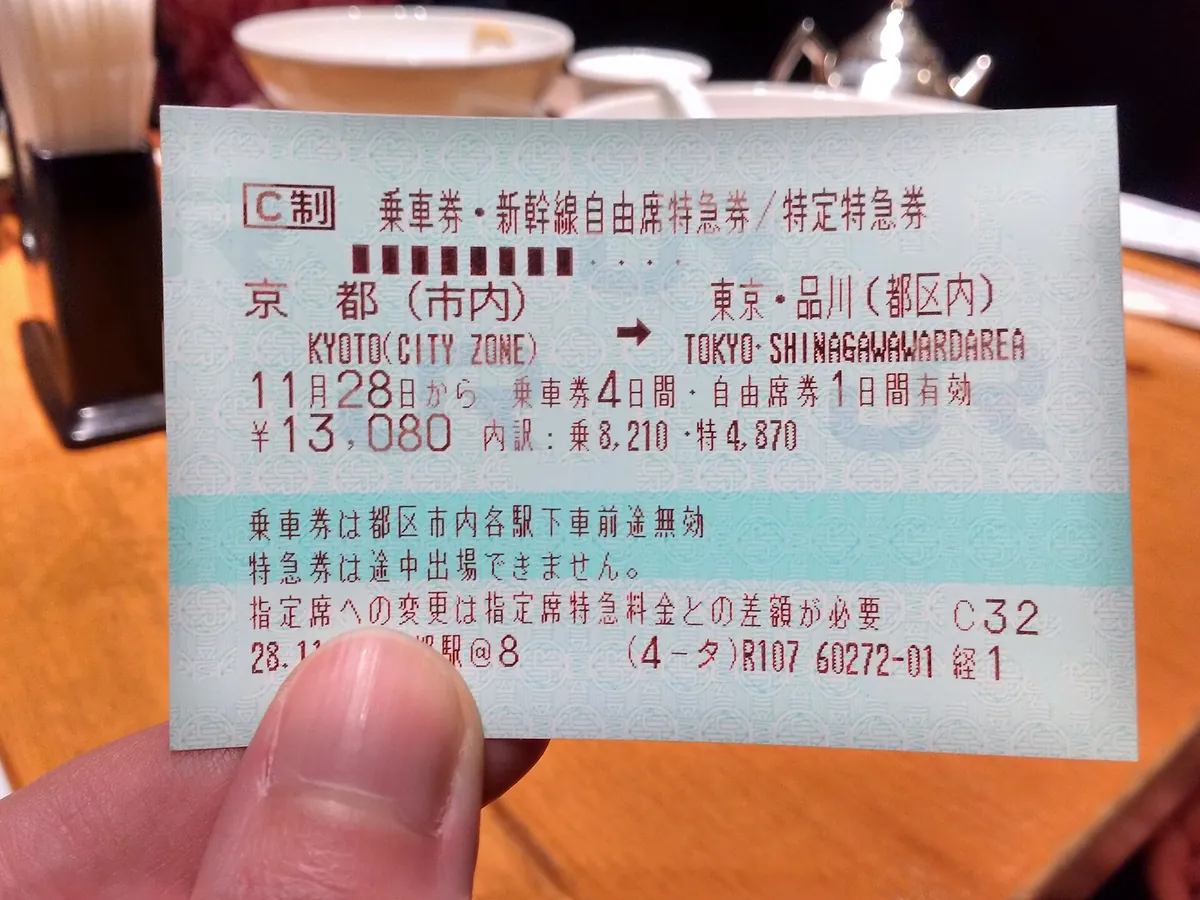
Whether the JR Pass pays off depends on your route; always add up individual fares using a calculator before buying. For most travellers, purchasing single shinkansen tickets via the official site or Klook is more efficient. This prevents you from paying for days of travel you do not actually use.
Connectivity as a safety tool
Having a reliable internet connection is a medical safety essential. You need to be able to use navigation apps to find the nearest hospital or translate symptoms for a doctor. I recommend an eSIM from Ubigi or Airalo to ensure you have data the moment your plane lands in Japan.
How to secure your coverage before your flight
Step 1: Search for medical-focused plans
Use a aggregator site to find plans that prioritize medical evacuation and hospital stays.
Step 2: Check the policy documents
Ensure that Japan is not excluded and that the provider has an emergency 24/7 hotline.
Step 3: Save the emergency numbers
Store these in your phone and print a paper copy to carry in your day bag.
Step 4: Purchase the policy
Do this at least a week before you depart so you are covered for last-minute issues.
One mistake I made during an early trip was waiting until I reached the airport to purchase insurance. The policy did not activate until 24 hours after purchase, leaving me without coverage for the first day of travel. Buy it well before you leave home.
Essential medical info for 14 days in Japan
Beyond your passport, you should have a list of your current medications and any allergies written in Japanese. You can ask your hotel front desk for help translating these if necessary.
Clinics in tourist areas like Kyoto or Hiroshima are often used to foreigners, but they appreciate having a clear, written record of your health status.
Always carry a physical copy of your insurance information in your day bag. If you are incapacitated, a local official or doctor will need to find this information quickly.
A digital-only copy on your phone is not enough if your battery dies or the screen is broken during an accident.
Why pre-existing conditions require specific attention
Many travelers assume that standard travel insurance acts as a catch-all for health issues, but this is a dangerous misconception when dealing with pre-existing conditions.
If you take regular medication or have recently visited a doctor for a chronic issue, your standard policy might refuse to pay for any related complications in Japan. This often leaves travelers facing massive, surprise bills for basic care.
You must verify the pre-existing condition waiver clause during your purchase process. Some insurance providers offer this automatically if you buy your policy within a specific timeframe—usually 14 to 21 days—after making your first trip deposit.
Others require you to pay a supplemental premium to ensure that your specific health history is covered. Neglecting this step means your insurance could effectively be void the moment you seek treatment for a condition you already have.
Before buying, gather a list of all your current prescriptions and recent medical consultations. If you have any doubt about coverage, call the provider directly and ask them to confirm in writing that your specific condition is eligible for coverage under the plan.
It is better to spend an extra hour on the phone than to discover a policy exclusion while sitting in a clinic in Osaka.
Checklist for high-risk travelers
- Confirm if your policy includes a waiver for pre-existing conditions.
- Check the specific time window required to trigger the waiver.
- Ensure your current medications are legal in Japan by checking the Ministry of Health guidelines.
- Keep a copy of your doctor’s note for your medication translated into English.
Prices for policies that include comprehensive health coverage for chronic conditions can range from ¥8,000 to ¥16,000, but checking the official site for your provider is the only way to know the exact cost.
Do not gamble on the idea that an insurer will overlook your medical history. If they find proof of a non-disclosed condition, they will almost certainly deny your claim. For those with complex health needs, this specific coverage is the most important part of your insurance investment.
Managing financial loss from non-medical disruptions
While we emphasize medical care, your financial exposure in Japan often shifts once you start booking non-refundable experiences. If a flight delay or a sudden train strike leaves you stranded, you might be out of pocket for hotel nights or pre-booked entry fees.
These costs add up quickly, especially in cities like Tokyo where high-end accommodation rates are quite steep.
Travel insurance often includes trip delay or interruption coverage. However, you need to read the fine print regarding what qualifies as a valid event.
Most policies will cover you if your flight is canceled due to severe weather. But they rarely cover you if you simply decide to change your plans because you found a better spot.
If you prefer flexibility, booking through platforms like Booking.com or Agoda with free cancellation options is a smarter financial strategy than relying on an insurance claim.
Keep in mind that insurance is for events outside of your control. If you miss your Shinkansen because you spent too long at a cafe, no policy will reimburse you.
However, if a natural disaster or a major transit disruption occurs, having a policy ensures that you can book a new hotel or train ticket without draining your travel budget.
Always keep digital copies of your booking confirmations from Klook or GetYourGuide, as these are mandatory documents when submitting any reimbursement request.
When disruption coverage matters most
- During typhoon season in August and September.
- If you are booking multiple domestic flights within Japan.
- When you have non-refundable tour deposits that exceed ¥50,000.
If you find that your trip involves high-value, non-refundable reservations, prioritize a plan that lists high limits for trip interruption. While the cost of these plans ranges from ¥6,000 to ¥14,000, checking the official site remains the standard rule for accurate pricing.
Insurance should act as a safety net for unpredictable events, not as a refund service for your own scheduling changes. By balancing flexible bookings with a solid medical-focused policy, you maintain control over your money regardless of what happens on the road.

FAQ
QDo I need insurance for a short trip?
Yes, even short trips carry the risk of accidents. Without insurance, you are liable for all medical costs out-of-pocket.
QIs national health insurance available to tourists?
No, Japan’s national health system is strictly for residents. Tourists must use private travel insurance.
QWhat should I do if I need a doctor?
Use Google Maps to find a clinic with English-speaking staff. Have your insurance details ready for the registration desk.
QCan I use my home insurance?
Usually no. Domestic policies rarely cover international medical emergencies or medical repatriation to your home country.
QIs medical evacuation included?
Most reputable travel policies include emergency evacuation. Always verify this on your policy documents before departure.
 ReaderYuki
So, is it worth it?
Yes, it is entirely worth it for the peace of mind alone. The cost is negligible compared to your overall trip budget, yet the protection it provides against potentially ruinous medical bills is essential. You are not buying it for the routine moments, but for the one day when things go sideways.
If you are still on the fence, look at your total flight and hotel costs and imagine losing that money if a medical emergency forces you to cancel. A small policy removes that anxiety. Lock in your insurance today and focus on the rest of your trip planning.
Most people find that finalizing medical coverage allows them to actually stop worrying about the “what ifs” of their trip.
Stop re-reading blogs about safety and lock in your insurance so you can focus on the fun parts of your itinerary.
Keep planning
- ① Install and test your eSIM before take-offAiralo and Ubigi eSIMs activate on arrival, but the install itself needs Wi-Fi. Do it at home and confirm the profile shows up in your phone settings.
- ② Save your first hotel’s address in JapaneseTaxi drivers and station staff read Japanese addresses far faster than romanised ones. Copy it from the booking confirmation into your notes app.
- ③ Set aside cash for day oneMany small restaurants, temples and rural buses are still cash-only. Airport ATMs at 7-Eleven and the post office accept most foreign cards.
Skip these and your first hour in Japan goes on finding Wi-Fi at the station instead of getting to your hotel.
🔍 How to sanity-check any price you read online
Blogs (including this one) go out of date. The official page always wins over a screenshot from two years ago.